


Young Kosovo citizens, many born after the 1998-99 war, are taking centre stage in daily protests held in Prishtina against the war crime convictions of four former Kosovo Liberation Army leaders by the Kosovo Specialist Chambers in The Hague.
Kosovo’s youngsters, many of whom were born at the end of the 1990s, have been at the forefront of daily protests in Prishtina against the September 16 first instance convictions of four former Kosovo Liberation Army, KLA, leaders by the Kosovo Specialist Chambers in The Hague.
“The KLA means everything,” is a common phrase heard among young people joining the daily protests in Prishtina.
Many of them were born after the 1998-99 Kosovo war or were too young to remember it. Their understanding of the war has been shaped by the experiences of growing up in a post-war society, including family stories of war and of relatives who theybhave never met and know only through stories of how they fought or were killed.
Protests have been taking place daily in Prishtina since the September 16 first-instance verdict. Several protests have also taken plsce in other cities across Kosovo and been organised by diaspora in cities across Europe. Former Kosovo President Hashim Thaçi and former KLA commanders Kadri Veseli, Jakup Krasniqi, and Rexhep Selimi were convicted of the war crimes of arbitrary detention, cruel treatment, torture, and murder from April 1998 to June 20, 1999, in Kosovo and several locations in Albania.
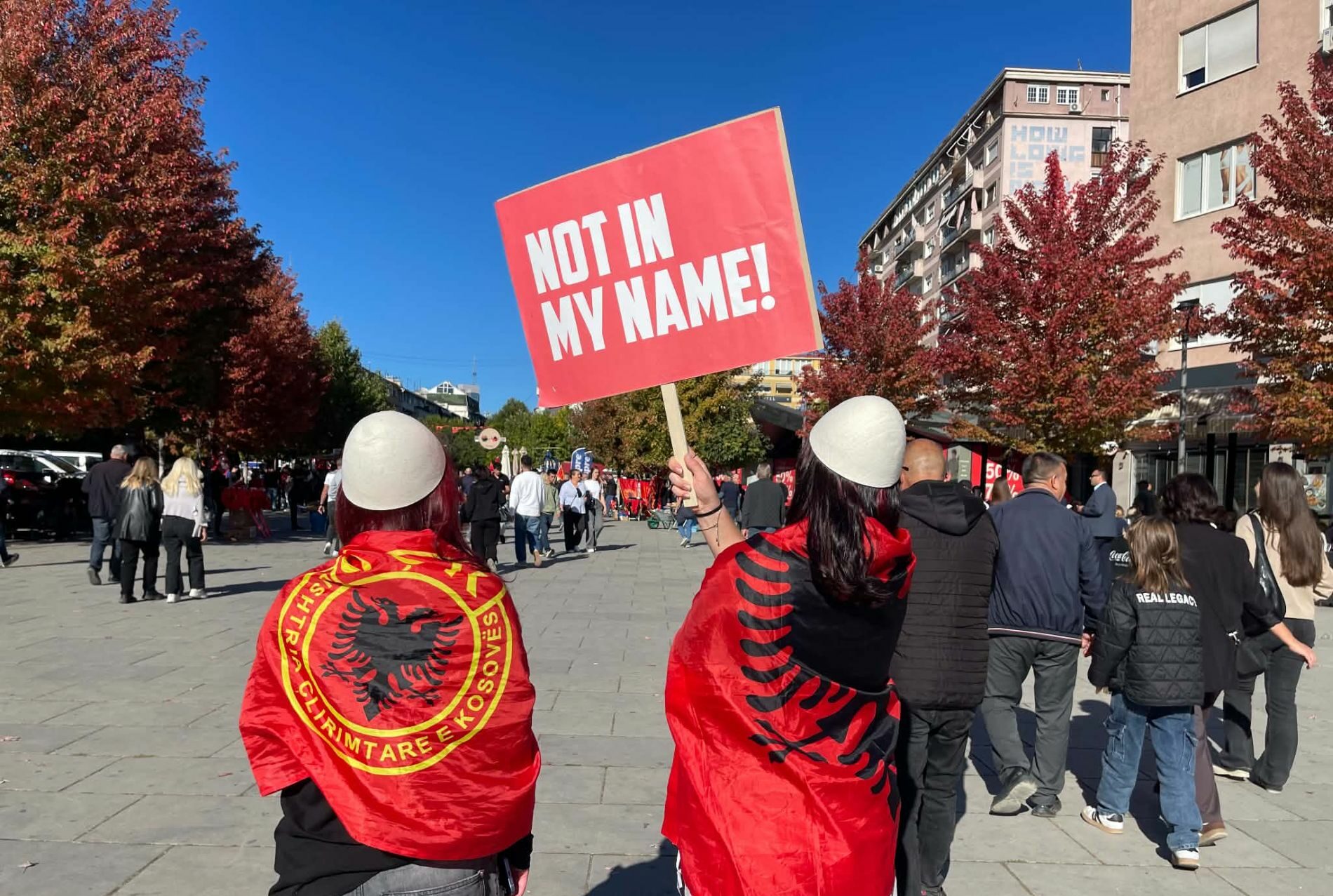
Young Kosovo citizens carrying “Not in My Name” banner and KLA flag join the march in Prishtina on October 1. Photo: BIRN
Thaçi and Krasniqi were sentenced to 25 years in prison, Veseli to 18 years, and Selimi to 13 years. All four were acquitted of crimes against humanity. The verdict can be appealed and the defence teams have announced they are preparing to challenge it.
The judge Charles Smith III’s choice of words “in the name of the people of Kosovo” when announcing the sentences sparked a spontaneous movement as protesters adopted the slogan “Not In My Name.”
The judge explained that the four men had a common criminal purpose as part of a joint criminal enterprise to control Kosovo and used violence against opponents that included other ethnic communities, those who collaborated with Serbian forces, and other political movements of the time that did not express support towards the KLA.
This conclusion is widely considered to go against the KLA as a whole and has increased the public perception of the court being biased, despite the judge explaining that the trial is about individual accountability and not against the KLA as an organisation.
The protests are an expression of support for the four convicted former KLA leaders, but also against convictions the protesters consider undermine the just war against Serbian repression and the lack of justice for crimes committed against Kosovo Albanians during the war.
Prishtina Insight spoke to some of the most active protesters about why they are taking to the streets and what the KLA means to a generation that did not experience the war.
Area Gega, 20, Suhareka
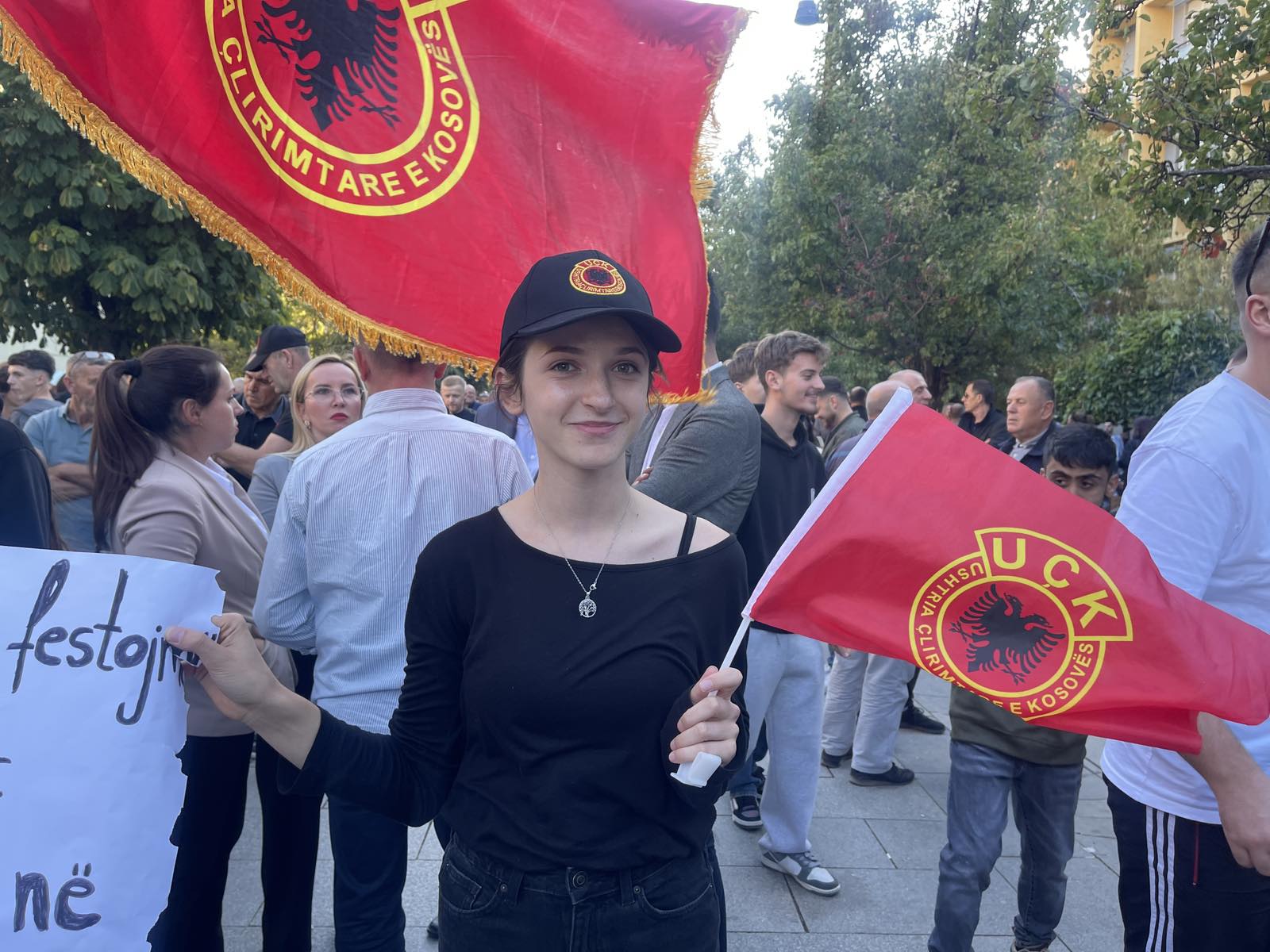
Photo: BIRN/Ardita Zeqiri
Carrying a Kosovo Liberation Army flag, 20-year-old Area Gega from Suhareka was heading towards Prishtina’s main square, Skënderbeu, to join the October 1 march against the verdict.
Thousands joined the protest that day—the 16th day of rallies against the verdict. It coincided with the 29th anniversary of a demonstration in 1997 when Kosovar students demanded the right to return to public schools and educational faculties following years of having to study in private premises under Slobodan Milosevic’s regime.
Gega was born after the war. She told Prishtina Insight that she considers joining the protests “a personal obligation. I did not experience the war, but I grew up in its spirit and shadow.”
Her uncle was killed in the war, her father is a veteran, and another uncle was disabled by wounds sustained during the war. Therefore, “the KLA means freedom to me,” she said.
“I grew up with stories about the war and I think this verdict is unjust. The least we can do is come here and raise our voices. This is the moment when we most need to be united and speak with one voice.”
Arlind Bala, 24, Mitrovica
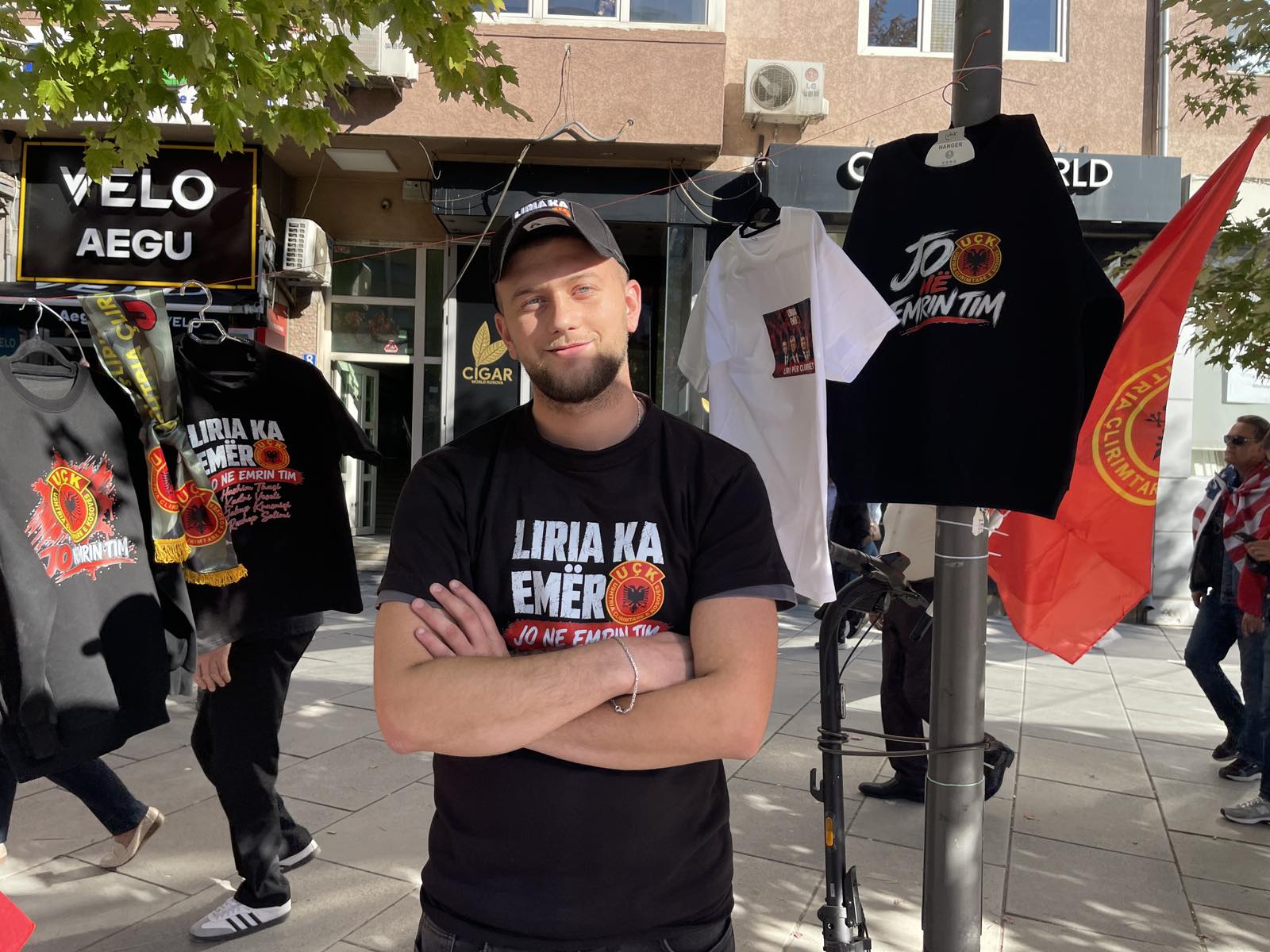
Photo: BIRN/Ardita Zeqiri
Like Gega, Arlind Bala was born after the war. He also says that his understanding of the KLA comes mostly from his family.
“They fought for all of us,” Bala said.
For him, the KLA represents the generation that fought for the freedom and opportunities he and his peers enjoy today.
“I had an uncle in the KLA. Even today, if something happened, I would be the first to put on the uniform”, he further noted.
Diellza Dërmaku, 28, Gjilan
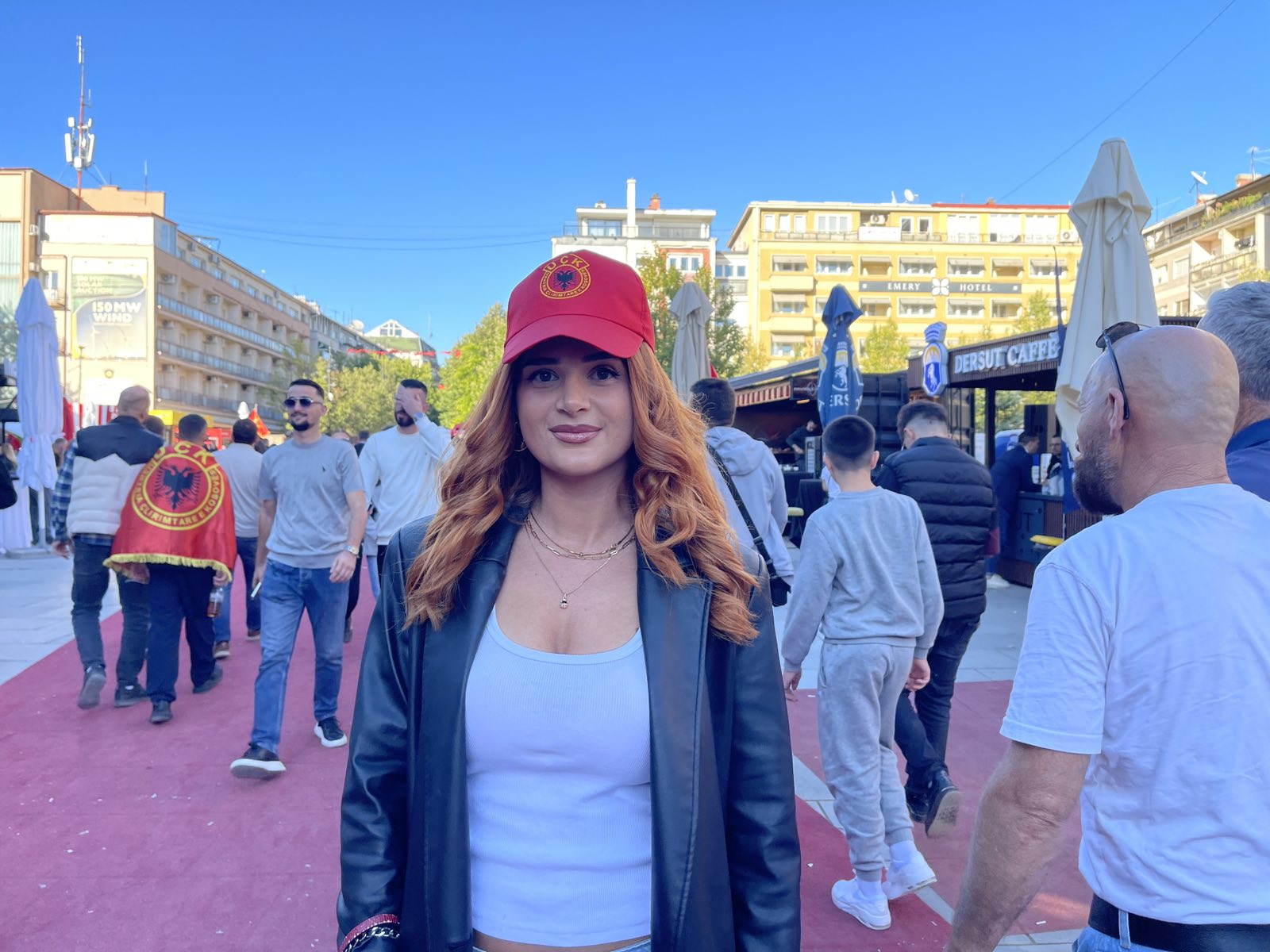
Photo: BIRN/Ardita Zeqiri
Diellza Dërmaku was born in Gjilan in 1998. Despite being an infant during the Kosovo war and not remembering its atrocities, she explains that she “grew up in its spirit”.
“It is very important for me to come to these protests. My father is also a war veteran, we have family members who were political prisoners,” she said.
Dërmaku said she believes young people should learn more about the war and its legacy.
“Every young person should inform themselves and come out, because apart from independence, [the KLA] is the most important thing that has happened in Kosovo.”
Diart Shala, 27, Prishtina
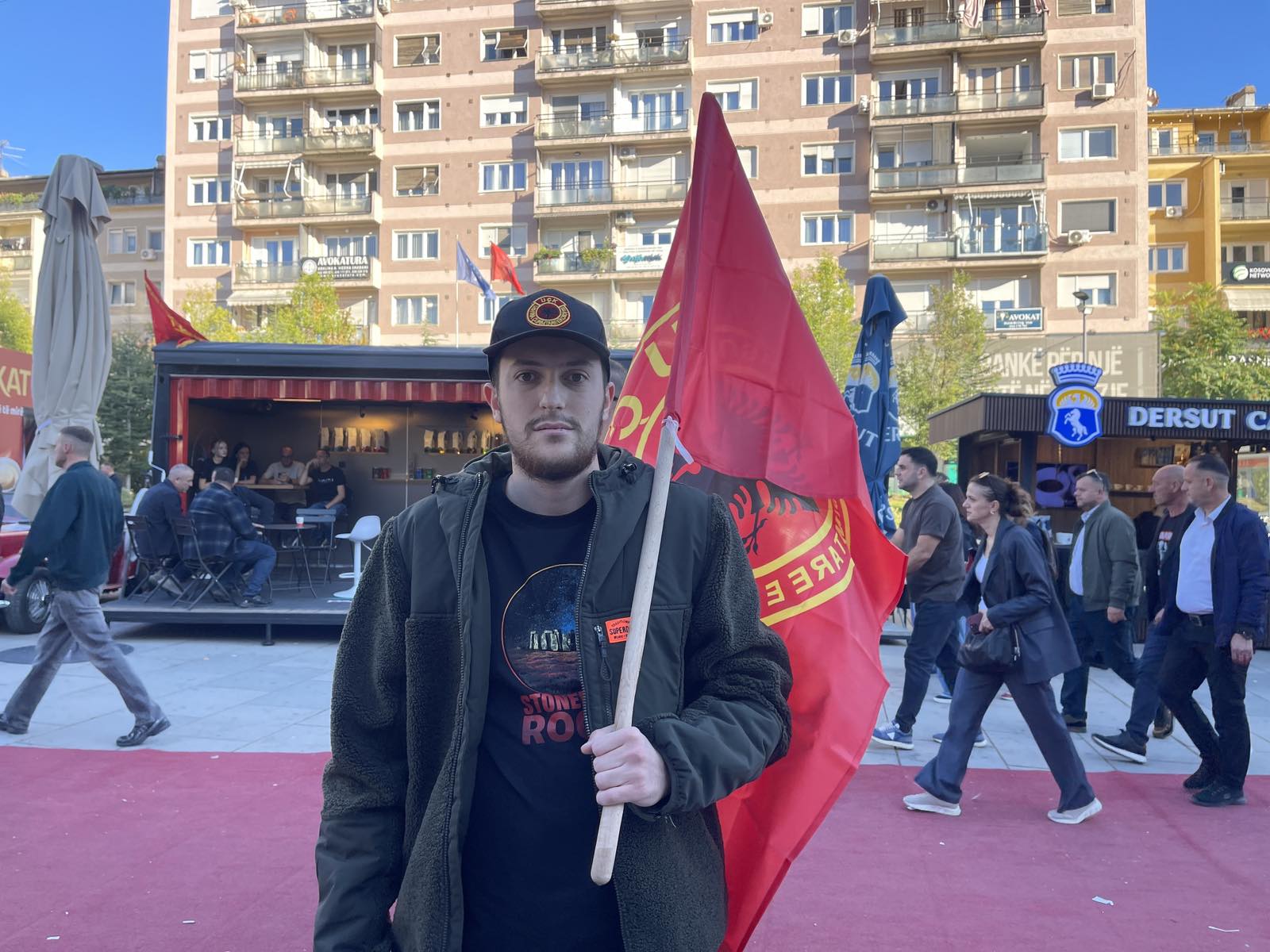
Photo: BIRN/Ardita Zeqiri
Diart Shala, who was born in Prishtina in 1999, says the KLA represents the sacrifice of the generation before him.
“The name itself says it: a liberation army. It is the war and sacrifice our parents made so that we could have freedom today,” he said.
Shala believes that everyone should protest the verdict in the honour of those who had the courage to fight for freedom.
“It is the blood of the martyrs that brought us this freedom, so that today we can protest, live, and work in freedom. This is why we need to come out and protest.”
Igballe Islami, 33, Mitrovica
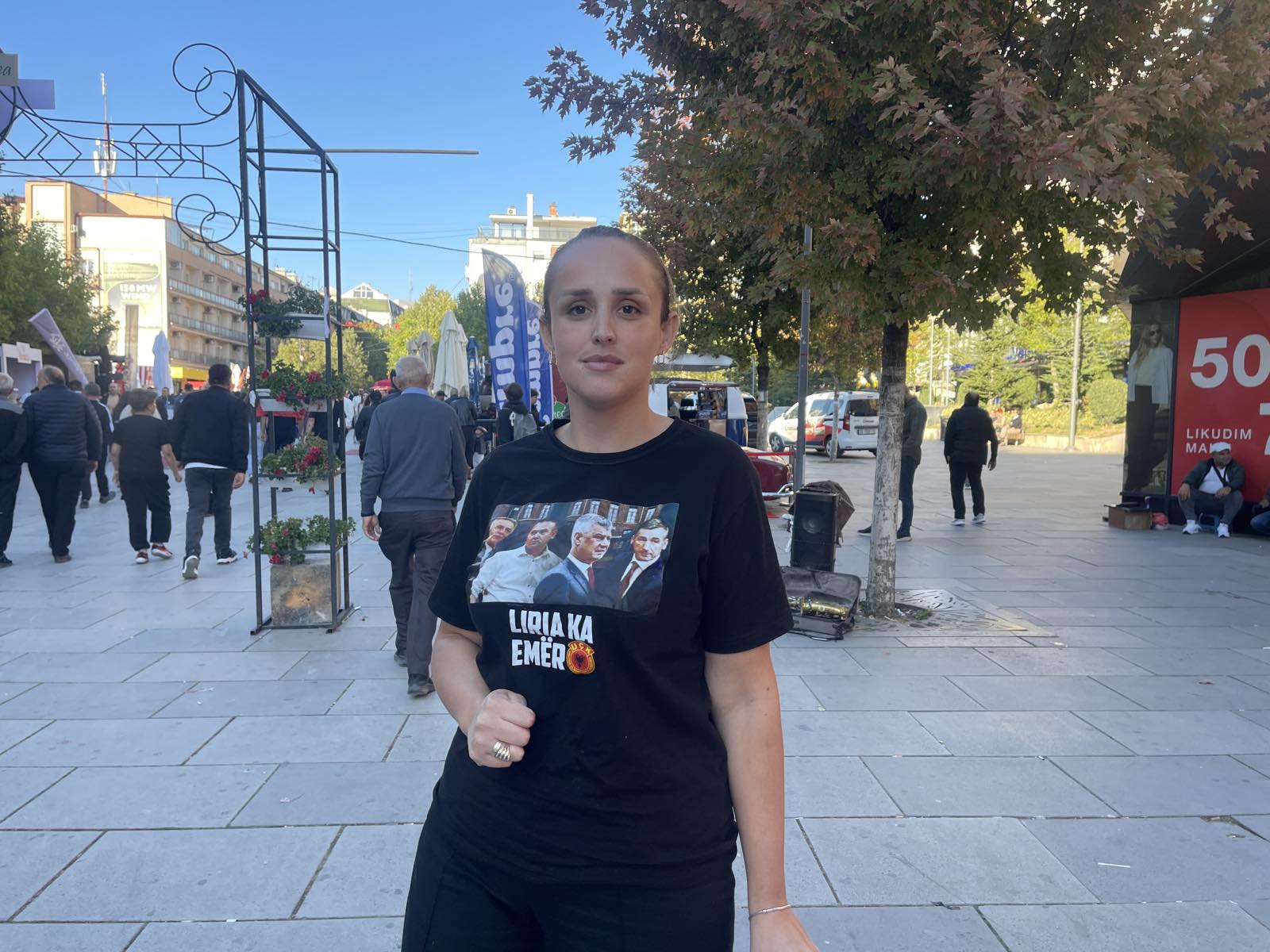
Photo: BIRN/Ardita Zeqiri
Igballe Islami, from Mitrovica, unlike the others Prishtina Insight spoke to, was old enough to remember the war, yet a child nonetheless. Born in 1993, “I was six years old and I still have memories… I remember the war.”
She now attends the protests with her children, around the same age she was at the time.
“Like every day and night, I come to the protest with my children because the KLA’s war was fundamental to our freedom and independence,” Islami said.
Islami has two uncles who were killed during the war and another who remains missing. Around 1,600 persons remain missing from the Kosovo war, the vast majority being ethnic Albanians.
“As long as there is no justice for these crimes in Kosovo, people should rise up,” she said, adding that, “the KLA was a liberation struggle of a people that had been oppressed for years.”
Diar Rrustemi, 19, Lipjan
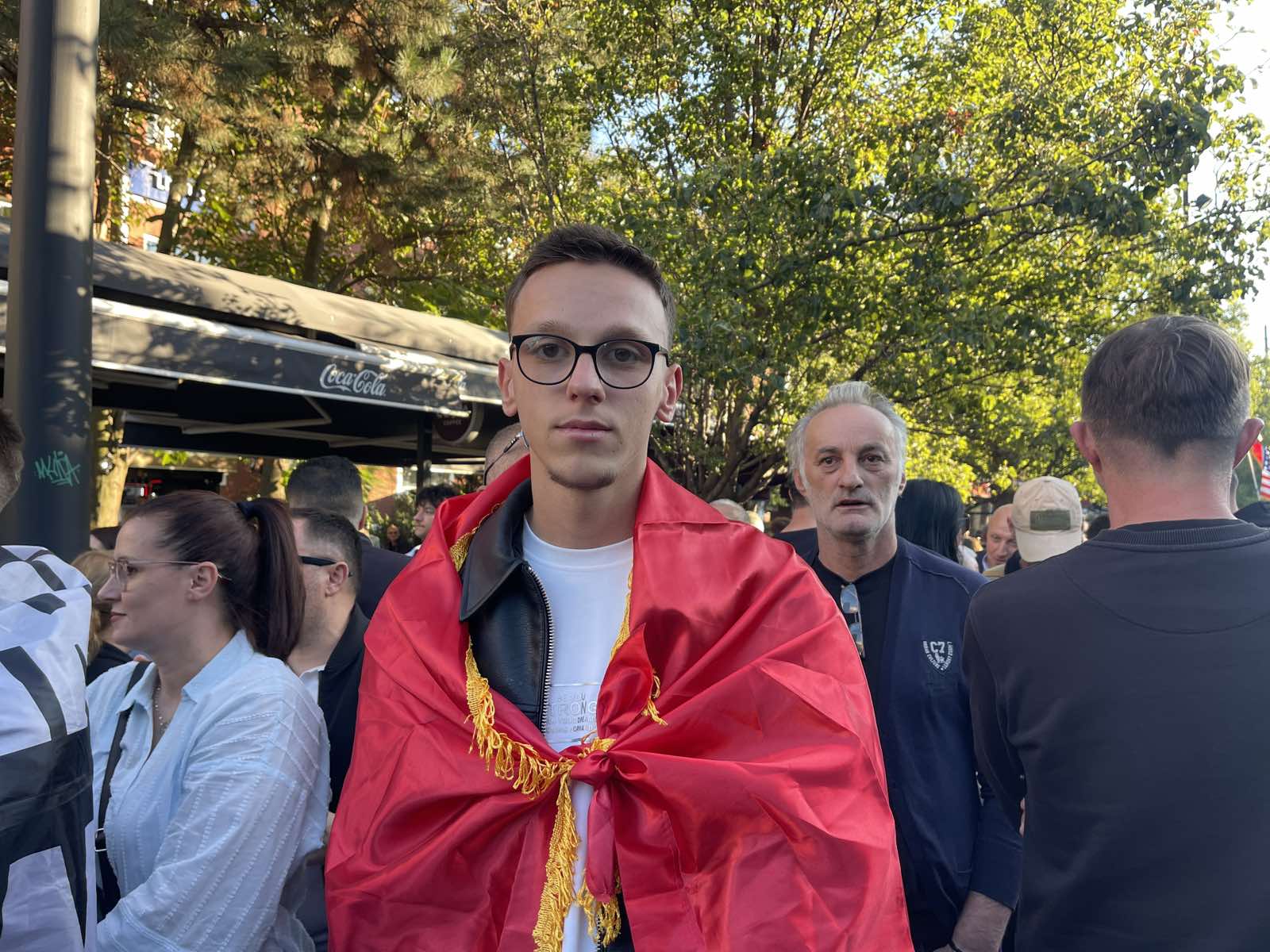
Photo: BIRN/Ardita Zeqiri
Diar Rrustemi, a 19-year-old student from Lipjan, was born almost a decade after the end of the war.
He said that, “the KLA is a liberation army, while I see the Special Court as unjust.”
“Thanks to them, the KLA soldiers, we enjoy freedom today,” Rrustemi believes.
He is happy “to see people my age coming out in such large numbers.”
Ron Kafexholli, 19, Prishtina
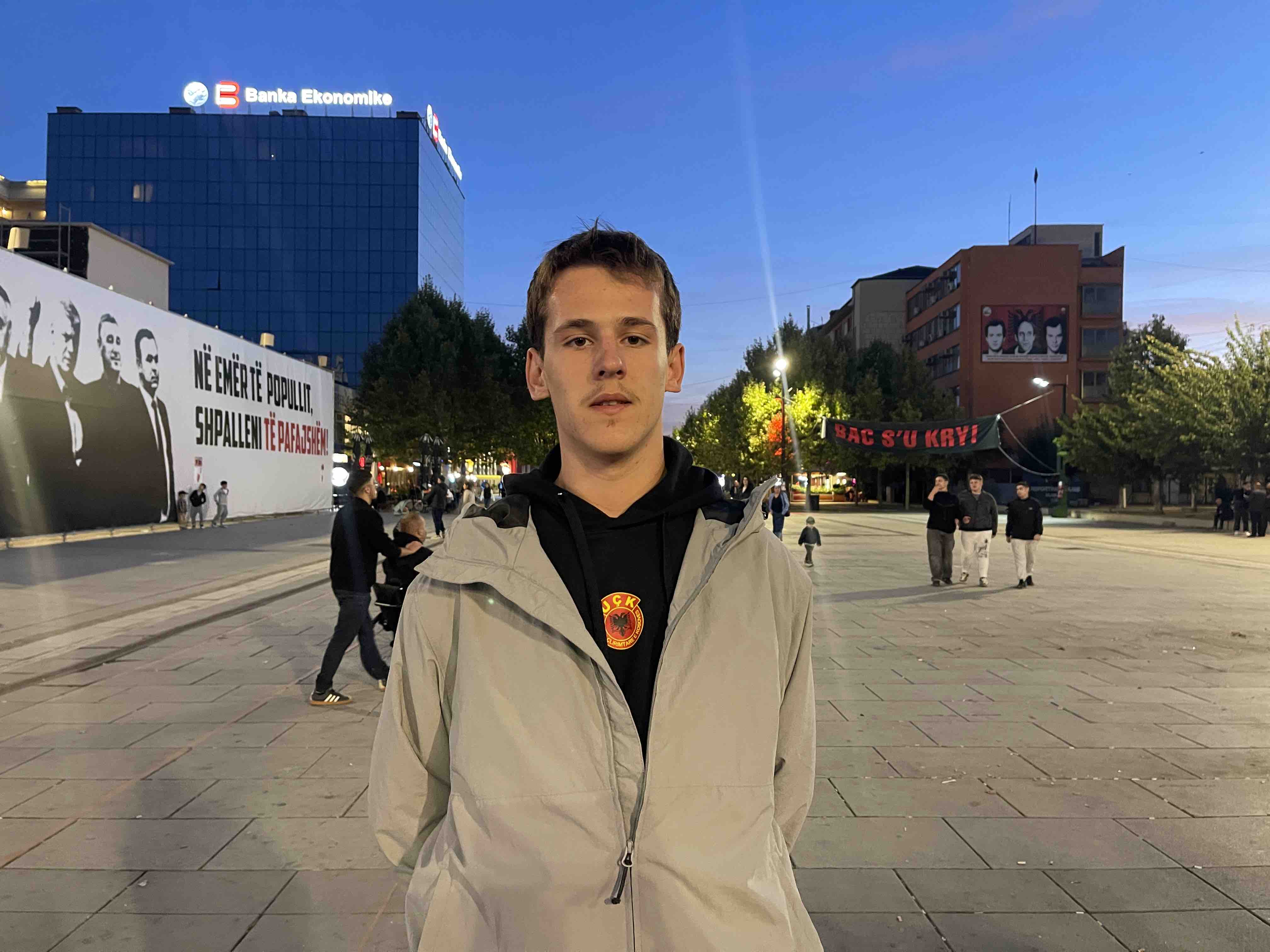
Photo: BIRN/Ardita Zeqiri
Ron Kafexholli is also 19 years old. He is a student and activist from Prishtina and has been attending the protests every evening and even helping the organisers from the Liria Ka Emër (Freedom Has a Name) movement.
For him, the KLA represents the sacrifice of people who were prepared to give everything for Kosovo.
“These people were ready to give everything for Kosovo, and for us not to come out in protest now would be wrong,” he said.
Kafexholli sees the KLA “as pride, even though unfortunately I did not experience it myself.”
Arton Lika, 25, Kaçanik
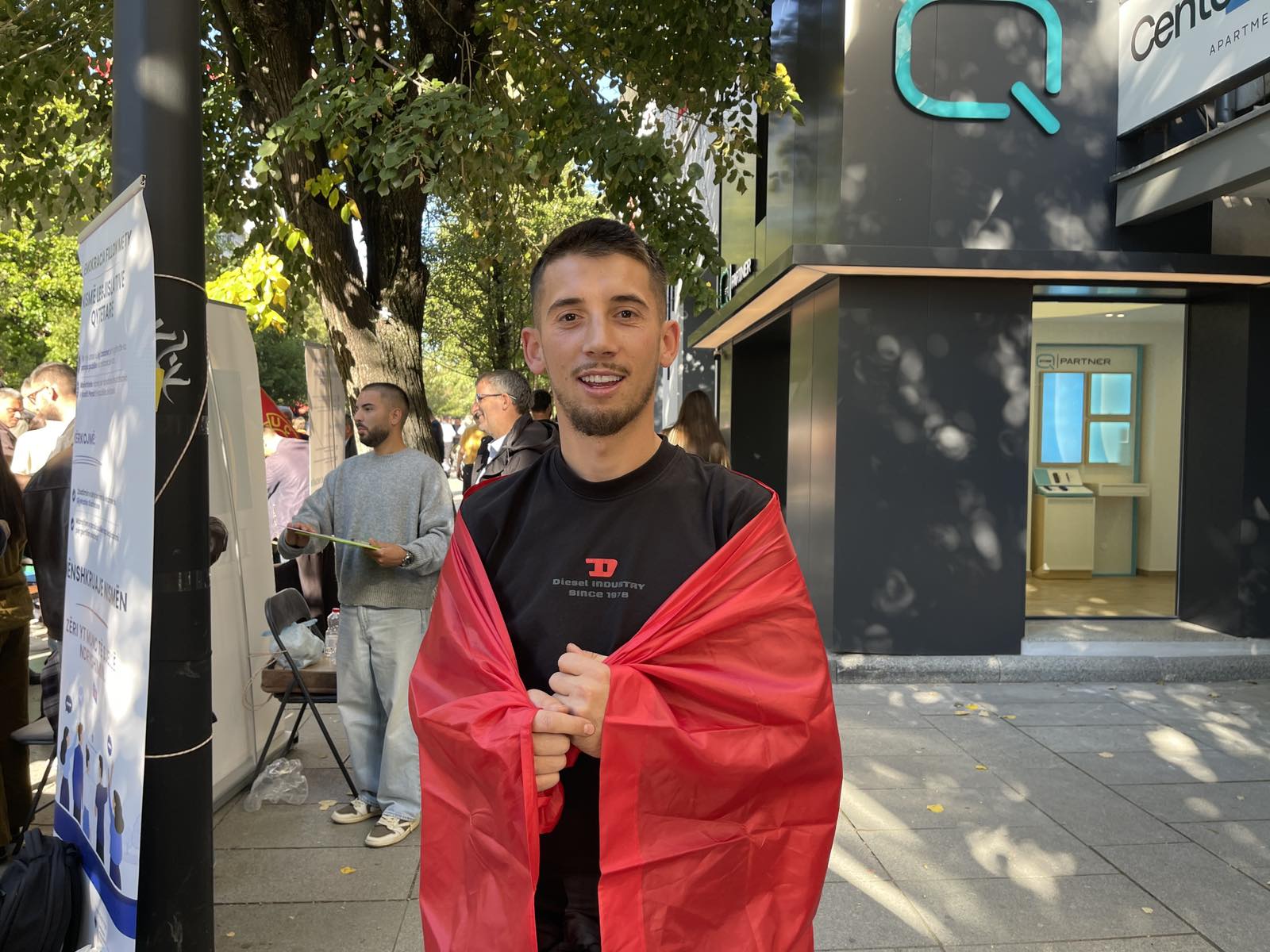
Photo: BIRN/Ardita Zeqiri
For 25-year-old Arton Lika from Kaçanik, the connection to the KLA is also personal. His father is a KLA veteran.
“The KLA means everything. My father is also a veteran. I come out because I feel there is an injustice,” Lika said.
Similarly to the others, for Lika tge KLA represents the fight for freedom.
“It is a liberation army,” he emphasizes. “It is worth coming out every day.”
Interviews were carried out on October 1 and 2, 2026.