


Kosovo’s Competition Authority, the institution tasked with preventing monopolies, investigating price-fixing and inspecting major corporate mergers, has stopped functioning after an internal dispute among its leadership escalated into institutional paralysis.
Kosovo’s Competition Authority, the state body responsible for policing monopolies and protecting fair market competition, has been paralysed for more than a year by an internal power struggle that has stopped decision-making, and allowed dozens of corporate mergers to proceed without inspection.
For more than 14 months, the Authority’s decision-making Commission has failed to convene.
A months-long investigation by Kallxo.com found that while commissioners continued receiving salaries despite not having any meeting, disputes over conflicts of interest escalated into allegations of physical violence, death threats, and political interference.
A watchdog without decisions
Under Kosovo’s Law on Protection of Competition, the Competition Commission consists of five members, although a quorum of three is sufficient for decision-making.
Today, only three members remain: Chairperson Neime Binaku-Isufi, Deputy Chair Kaltrina Sela and Commissioner Nafije Osdautaj. The other two commissioners, Salie Gashi Loku and Florent Mehmeti, resigned in 2025.
Despite retaining the legal quorum, the Commission has not held any decision-making meeting since April 2025, according to commissioner Nafije Osdautaj.
“No, she hasn’t called us to a meeting since April 2025. We haven’t even been informed about what is happening in the institution,” Osdautaj told Kallxo, referring to Chairperson Binaku-Isufi.
She said she repeatedly requested meetings because the Commission remained capable of reaching decisions.
“I keep writing to her, asking her to convene the meeting because we have a quorum. Lately she either does not reply or says, ‘I know what I’m doing – I’m the chairperson.'”
Each commissioner received more than 16,000 Euros in annual salary despite the Commission’s inactivity.
In a written response to Kallxo, the Competition Authority did not explain why meetings had not been convened.
“The Commission operates and holds meetings in accordance with the legal requirements on quorum and the standards of institutional integrity,” the Authority said in its response.
Cable operator investigation as turning point
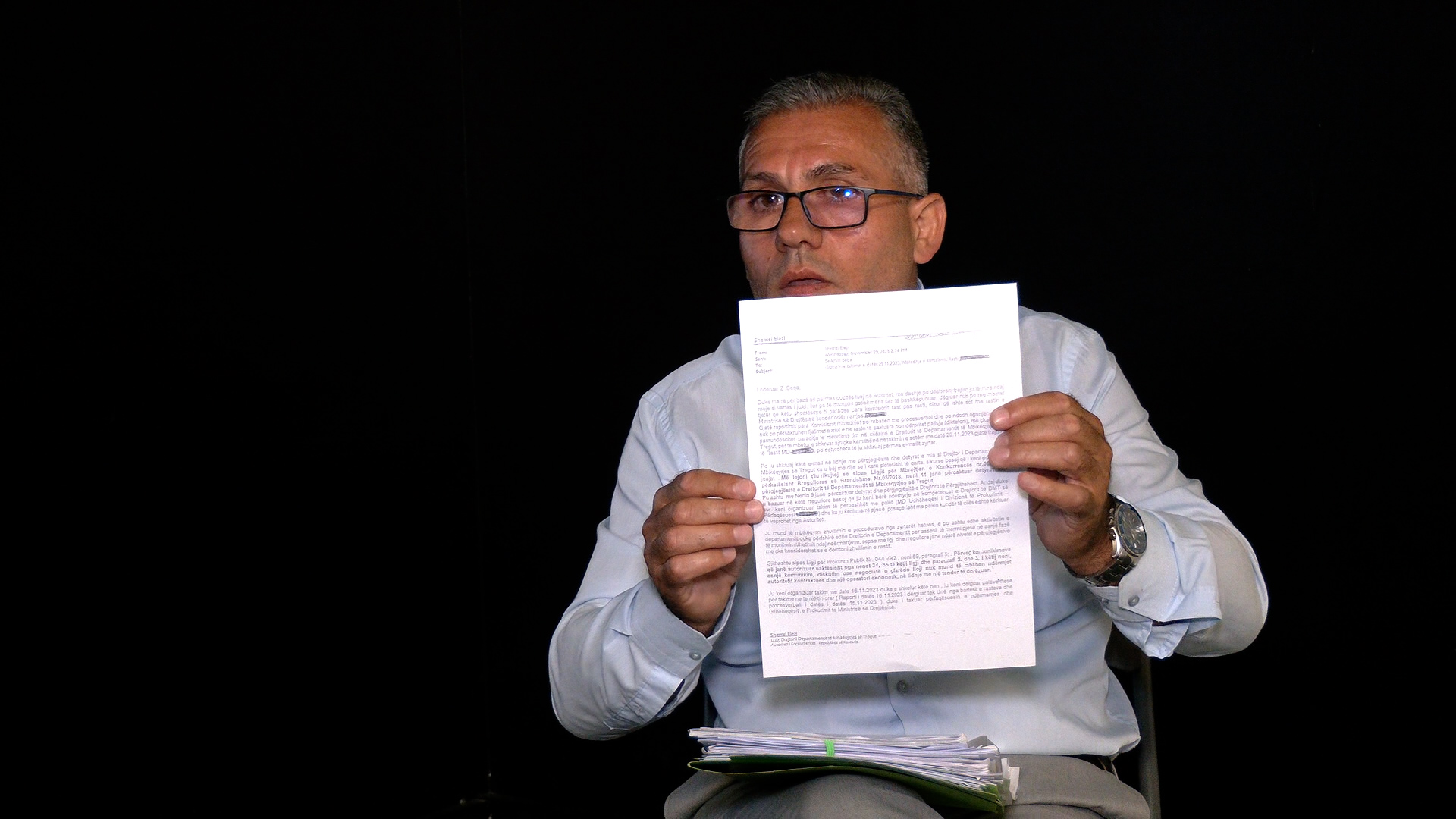
Shemsi Elezi, Investigative Inspector at Kosovo’s Competition Authority. Photo: BIRN
The institutional deadlock started during an investigation launched in 2022 into telecommunications companies ArtMotion and Kujtesa.
The Authority was examining whether shares had been transferred without prior notification, as required under competition law.
When the case reached the decision-making stage, the Commission’s deputy chair, Kaltrina Sela, declared a conflict of interest and withdrew from the proceedings following an opinion issued by the Anti-Corruption Agency on April 25, 2023.
Chairperson Neime Binaku-Isufi had sought a formal opinion from the Agency regarding Sela’s participation in investigations involving telecommunications companies.
“Regarding the situation of Deputy Chair Kaltrina Sela, who is continuously in a conflict of interest in cases involving major corporations under investigation by the Competition Authority, particularly in the telecommunications sector,” the request submitted by Binaku-Isufi to the Anti-Corruption Agency stated.
In October 2024, the Anti-Corruption Agency concluded that Sela’s participation in such cases constituted a conflict of interest.
Sela challenged the opinion before the Basic Court in Prishtina, noting that it contradicted the factual circumstances.
According to Sela, the court annulled the Agency’s opinion in December 2025.
“The Anti-Corruption Agency’s opinion was clearly at odds with the facts and the actual circumstances. I therefore challenged it before the Basic Court in Prishtina, and in December 2025 the court issued a judgment annulling the Agency’s opinion,” Sela said.
“I informed Chairperson Binaku-Isufi of the court’s ruling, but she continued to obstruct me from carrying out my duties even after the judgment,” Deputy Chair Sela told Kallxo.
The ruling has been appealed by the Anti-Corruption Agency and is currently before the Court of Appeals.
This dispute has stopped inspections on the ArtMotion-Kujtesa case, which remains unresolved more than four years after the investigation began.
The Competition Authority however maintains that no commissioner has been formally prevented from participating in meetings.
“There have been no decisions or internal instructions limiting the participation of Commission members,” the Authority said.
General Director Selajdin Beqa, defended the handling of Sela’s conflict-of-interest issues, saying the Anti-Corruption Agency had issued several findings involving companies linked to sectors under investigation.
“There are three decisions by the Anti-Corruption Agency regarding the deputy chair, which have identified cases (of conflict of interest). She has four or five companies operating in different markets, including cable operators that supply products and have contractual relationships. Under the law, she should recuse herself,” he declared.
“Two decisions call for her recusal, while the latest opinion concludes that she should be removed from the position,” Beqa said.
The Anti-Corruption Agency disputed one of Beqa’s claims.
In response to Kallxo Përnime, The Anti-Corruption Agency stated that they did not conclude that Sela should be removed from her position as Deputy Chair, only that they had informed the Assembly of Kosovo, which oversees the Competition Authority.
Mergers approved without inspection
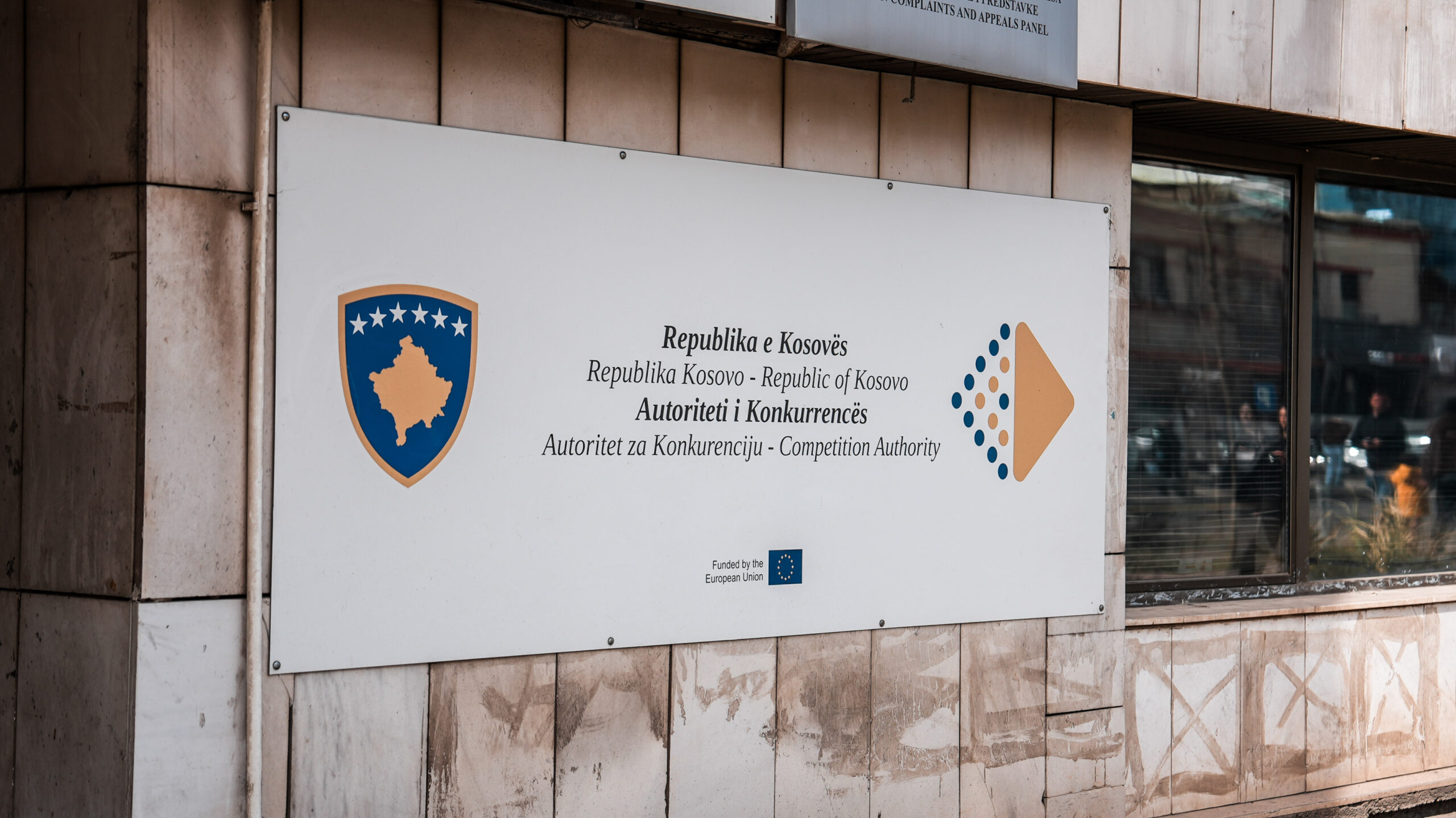
Kosovo’s Competition Authority. Photo: BIRN/Denis Sllovinja
The Commission’s inactivity has had consequences for Kosovo’s economy.
Under the Competition Law, if the Authority fails to examine a merger notification within 30 days, the transaction is deemed automatically approved.
Kallxo obtained records showing that at least 48 concentrations during 2025 and 2026 were approved by default.
The transactions included electricity trading companies, banks, cable television operators, and supermarket chains, involving changes in market ownership without review by the Commission.
The Director of the Competition Authority confirmed that for more than a year the Commission has not investigated any businesses for suspected cartel agreements or price-fixing.
“The Secretariat is carrying out monitoring, but not investigations,” Beqa said.
Commissioner Osdautaj stated that the paralysis seems intentional.
“It seems the purpose is exactly this: to make the Commission non-functional so that mergers pass automatically,” she said. “This is causing serious damage to the institution and Kosovo’s economy and security, because nobody knows who has entered the market or which companies have arrived,” Osdautaj further stated.
Deputy Chair Sela accused Binaku-Isufi of approving mergers through individual decisions instead of collective Commission votes, which she said violated the Competition Law.
In an answer for Kallxo, the Authority rejected those allegations, saying 48 decisions “were approved in accordance with the applicable provisions. No individual decisions were issued outside the procedures and competencies established by law.”
Beyond merger control, the institutional deadlock has also affected enforcement against anti-competitive conduct.
Internal conflict
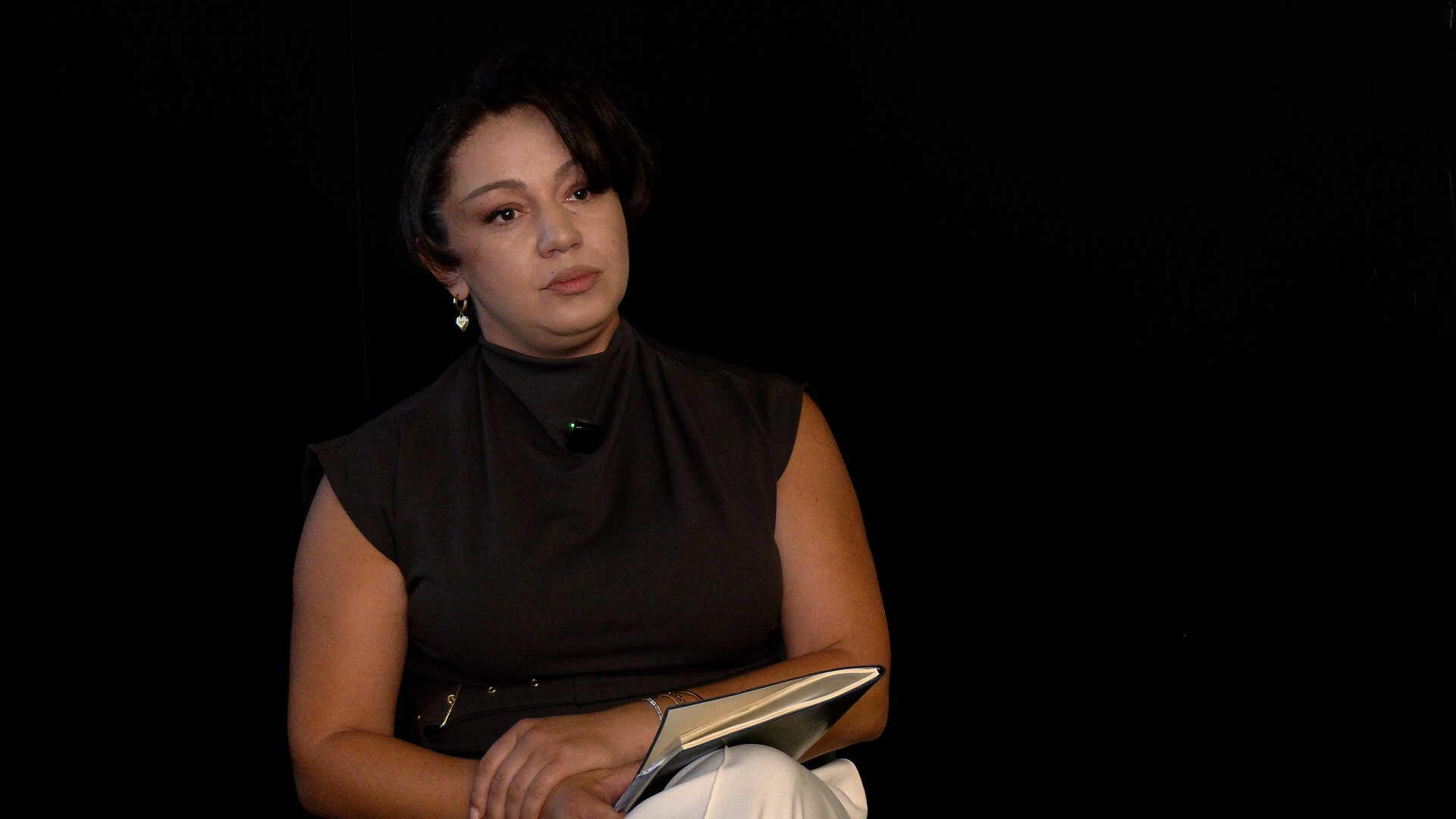
Gresa Latifi, Investigative Inspector at Kosovo’s Competition Authority. Photo: BIRN
The institutional crisis has extended beyond disagreements among commissioners.
Investigators Gresa Latifi and Shemsi Elezi accuse senior management of systematic retaliation, disciplinary harassment and interference in investigations.
Elezi alleges he was physically assaulted by the General Director Selajdin Beqa in late 2023 and has since faced repeated disciplinary proceedings.
“Since November, 2023, I have been under continuous pressure from the responsible officials at the Competition Authority. I have been suspended three times, appeared before the disciplinary committee seven times, and received seven written warnings,” Shemsi Elezi told Kallxo.com.
He said he has successfully challenged several disciplinary measures before Kosovo’s Independent Oversight Board for the Civil Service.
“I have won all the cases related to complaints I submitted to administrative institutions, including the Independent Oversight Board for the Civil Service of Kosovo and other bodies. As a result, on July 8, 2026, I received a decision from the Board instructing the Competition Authority to consider the issue of the Director ‘s suspension in relation to the indictments filed against him,” Elezi said.
Kallxo confirmed that Beqa currently faces two indictments before the Basic Prosecution in Ferizaj.
Beqa denied any violation, rejecting Elezi’s claims as fabricated and placing blame on him for the situation.
“He has made this up. They are even going to the Independent Oversight Board for the Civil Service and finding support there. They have money and time… He is suspended but still comes to work. He does not perform his duties, does not carry out his tasks, and does not handle cases. He was suspended precisely because he does not work,” Beqa said in response to Elezi’s allegations.
Meanwhile, another investigator, Gresa Latifi claims she has received 13 disciplinary sanctions over three years as part of efforts to remove her from sensitive investigations.
“These sanctions were placed on me as an attempt to remove me from the institution, specifically from investigations into cases that were being handled internally and that are very important for Kosovo’s market,” Gresa Latifi told Kallxo.
She further claims that Beqa indirectly relayed a death threat to her by warning her she could be killed “with a bullet.”
“The threat came through a third party. In other words, they sent word that I had been threatened ‘with a bullet’. These words were conveyed to me by my superior, Selajdin Beqa,” Latifi continued.
Latifi also alleges that supervisors altered her reports, removed confidential documents, and reassigned investigations she had been handling.
Competition Authority Director Selajdin Beqa responded to only some of Latifi’s allegations.
“No, honestly, this is the first time I am hearing this. She has made claims, but you can check with the police—there is an official record—I have never threatened anyone. She has made 100 other allegations as well. Now she is with their group, with Shemsi (Elezi) and Kaltrina (Sela),” Beqa said.
The investigation also identified previous political links between several Competition Authority officials and the ruling Vetëvendosje movement party.
Chairperson Binaku-Isufi was found by Kosovo’s Electoral Complaints and Appeals Panel to have violated election rules during the 2025 campaign, resulting in a 6,000 euro fine for Vetëvendosje.
Kosovo’s Competition Law prohibits Commission members from engaging in political activities.
Beqa admitted that he was previously active within Vetëvendosje but said he had resigned from party positions several years ago.
Investigators Latifi and Elezi also confirmed previous involvement with the party but said they had ended active political engagement after joining the Authority.
Elezi denied that political influence affects the institution’s work.
“Our job is investigative work. You cannot be actively involved in a political party while performing this role,” he said.