


Kosovo’s attempt to curb the Hague-based Court might not yield results without the option of accountability from the Strasbourg-based European court of human rights.
On October 6, Kosovo’s parliament adopted amendments to the law on the Kosovo Specialist Chambers, attempting to curb its powers.
The changes were approved after protests in Prishtina turned violent after three weeks.
The protests started immediately after the September 16 first instance convictions of former Kosovo President Hashim Thaci and three other former KLA leaders—Kadri Veseli, Jakup Krasniqi, and Rexhep Selimi. Thaci and Krasniqi were each sentenced to 25 years in prison, Veseli to 18 years and Selimi to 13 years.
They were found guilty of war crimes including arbitrary detention, cruel treatment, torture, and murder against 385 victims, mainly ethnic Albanians, during the Kosovo war between April 1998 and June 20, 1999, at several locations in Kosovo and Albania. They were found not guilty of crimes against humanity. The court found that their crimes did not systematically target a civilian population.
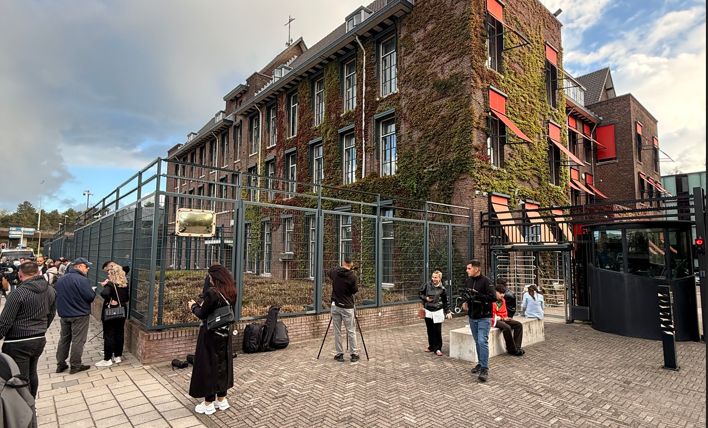
The Kosovo Specialist Chambers in the Hague, September 16, 2026. Photo: BIRN
The process can be appealed and defence teams have announced they are preparing to challenge it.
The changes of the law limited the maximum imprisonment sentence to 15 years, in accordance with the legal framework of the former Yugoslavia.
This amendment is not necessarily a cause for concern, but MPs have attempted to change the court’s mandate, while the EU and legal experts claim that Kosovo cannot make substantial changes without agreeing with the EU first.
The amendments gave Kosovo’s President the power to grant pardons to those convicted by the special court, whose work is subject to mandatory monitoring by international organisations and constitutional review of the law by the Constitutional Court of Kosovo. The court has both a Supreme and a Constitutional Chamber and under the current law its proceedings are not subject to domestic oversight within Kosovo and parties to legal proceedings are expected to refer only to the court’s own.
An EU spokesperson told BIRN that the changes raised serious concerns and were inconsistent with Kosovo’s international obligations towards the EU.
“We call on Kosovo to uphold its international obligations to ensure the judicial independence of the Kosovo Specialist Chambers, as well as its commitment to ensure accountability and deliver justice to victims and their families from all communities in Kosovo,” the EU spokesperson said.
Drin Grazhdani, a Prishtina based lawyer who represents citizens at the European Court of Human Rights, told Prishtina Insight that, “the change in the law cannot close the Specialist Chambers, because [their existence] is set out in the Constitution and in the international agreement with the EU.”
“But the law originates from parliament, and parliament can give the Specialist Chambers a different focus,” he added.
The Jurisdiction of Kosovo’s Parliament
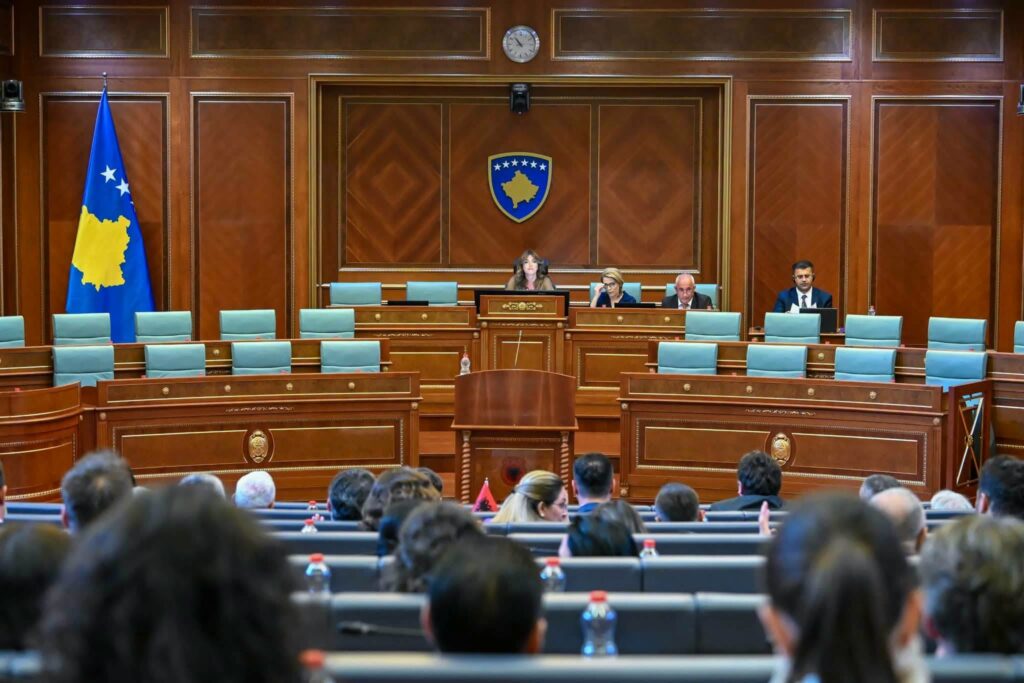
The first reading of the special court law amendment at the Kosovo parliament, October 5, 2026. Photo: BIRN.
The Specialist Chambers are a hybrid tribunal. Although they form part of Kosovo’s justice system, they are based in The Hague and staffed by international judges, prosecutors, and other personnel.
They adopt Kosovo’s legal framework as well as international law.
Përparim Gruda, a lawyer and MP from the opposition Democratic Party of Kosovo, PDK, which initiated the amendments, told Prishtina Insight that “if anyone has doubts about the constitutionality of this law, there is an address [for such concerns]: the Constitutional Court of Kosovo in Prishtina.”
Gruda said the amendments were intended to clarify the different jurisdictions of Kosovo’s Constitutional Court and the Constitutional Chamber of the Specialist Chambers in The Hague.
The Constitutional Chamber in The Hague, he said, can review decisions, orders and judgments arising from the work of the Specialist Chambers and the Specialist Prosecutor’s Office, but not decisions made by Kosovo’s Parliament.
“Decisions made by Kosovo’s Parliament, like this law, can only be reviewed by the Constitutional Court sitting as a full court in Prishtina,” he said.
Grazhdani expressed skepticism about whether the Hague court’s constitutional mechanism would accept changes that affect people already convicted by the Specialist Chambers.
“It would be difficult for the Specialist Chambers’ Constitutional Chamber to accept a change to the law that affects the release of defendants,” he said.
The European Union has expressed concern over the amendments accusing Kosovo of violating its obligations deriving from the international agreement with the EU which established the court.
The court itself claims it will continue its work despite this move by Kosovo MPs.
Michael Doyle, the spokesperson of the court, told Prishtina Insight that the court “is fully focused on implementing its mandate to ensure fair, impartial and secure judicial proceedings, and to ensure the protection of witnesses and victims.”
Petra Bayr, President of the Parliamentary Assembly of the Council of Europe, had welcomed the verdicts as an important step for international justice, saying they concerned “crimes including arbitrary detention, cruel treatment, torture, and murder committed during the Kosovo conflict.”
Meanwhile, Kosovo authorities had argued that the first-instance verdict contained factual, historical, and legal inaccuracies which it expected to be addressed during the appeals process.
Nonetheless, the amendments acknowledge that the ongoing processes in the Kosovo Specialist Chambers will continue, including the expected appeals process in the case of Thaçi and three other former KLA leaders, as well as a separate case of obstruction of justice where Thaçi is also one of the accused. The amendments state that they will be enforced after there is a ruling by the Appeals Chamber.
A lack of accountability
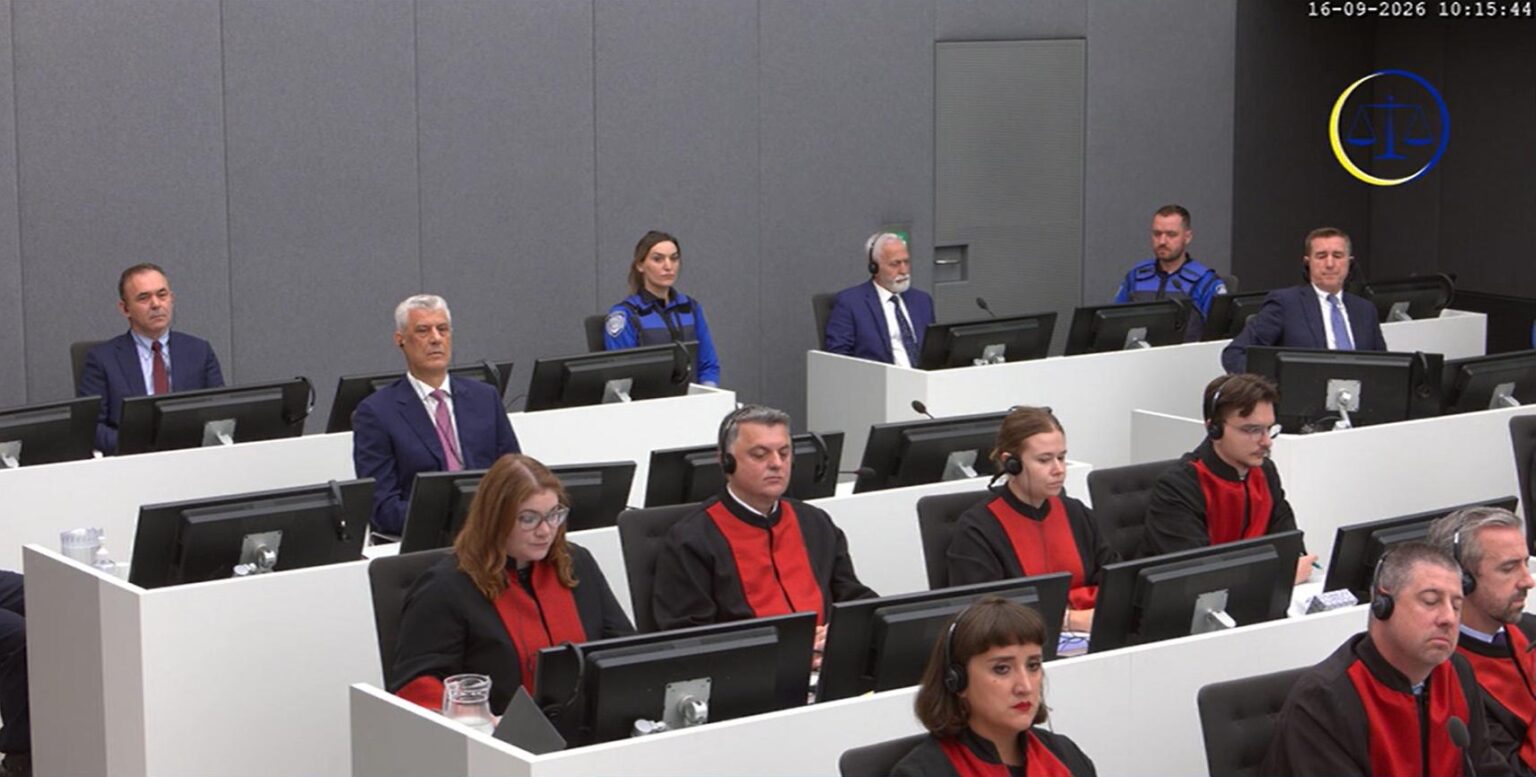
Rexhep Selimi, Hashim Thaci, Jakup Krasniqi, and Kadri Veseli in court on September 16, 2026. Photo: Screenshot/Kosovo Specialist Chambers.
The wording used by presiding judge Charles Smith III when announcing the verdicts “in the name of the people of Kosovo” sparked three weeks of protests under the slogan “Not In My Name.”
Moreover, the ruling that the accused have individual and commander responsibility and had a “common purpose as part of a joint criminal enterprise” within the KLA is widely not accepted by Albanians and KLA supporters who consider it goes against the just war against the Serbian regime.
Critics, as well as protesters and Kosovo MPs who voted for the change in the law, are concerned that there is no outside and independent authority to oversee potential violations of the rights of the defendants.
According to Grazhdani, if Kosovo were a member of the Council of Europe and the European Convention of Human Rights applied to it, a person convicted by the Specialist Chambers could potentially take a case to the Strasbourg based European Court of Human Rights alleging violations of rights protected by the Convention.
Nonetheless, that would not mean appealing the Kosovo Specialist Chambers verdicts to a higher court.
“The key question would be whether rights protected by the Convention were violated during the proceedings in The Hague,” he said.
The European Court of Human Rights does not act as a fourth instance in national or international criminal proceedings. It does not reconsider a defendant’s guilt or the verdicts of domestic or international criminal courts, but it examines whether a state has violated rights protected by the Convention. One such right is the right to a fair trial or the principle of legality, that lawyers of Thaçi, Krasniqi, Veseli, and Selimi and their supporters claim the Kosovo Special Court has violated.
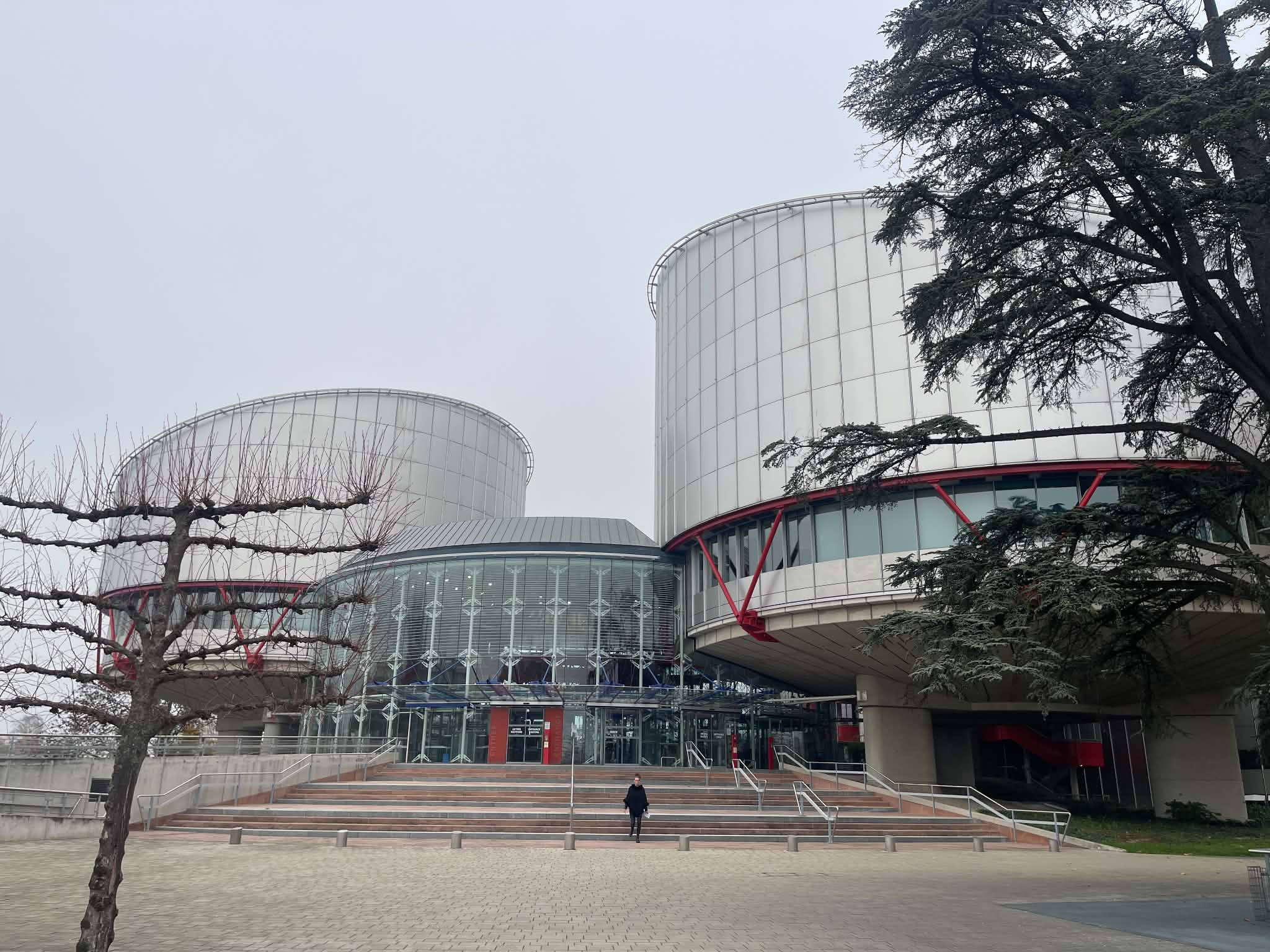
European Court of Human Rights in Strasbourg, France. Photo: BIRN/Ardita Zeqiri
“While Kosovo is not a member, the European Court of Human Rights cannot establish a violation against Kosovo,” Grazhdani said.
Pjetër Shala, who was sentenced to 13 years by the Kosovo Specialist Chambers in 2025, reduced on appeals from the 18-year imposed at first instance in 2024, has filed a complaint in Strasbourg against the European states that are members of the Council of Europe, claiming his rights were violated. His case will be an indicator of if this mechanism can be used in future possible complaints regarding human rights violations at the Kosovo Specialist Chambers.
Donika Emini, executive director of the D-Square think-tank, said access to the Strasbourg court had been one of the main arguments used in support of Kosovo’s Council of Europe membership bid.
“Citizens of Kosovo, regardless of their ethnic background, would have direct access to an international mechanism for the protection of human rights,”Emini said.
“The Parliamentary Assembly of the Council of Europe also identified access to the Strasbourg court as one of the main benefits of membership in its opinion on Kosovo’s application,” she noted.
The mechanism would extend beyond the politically sensitive cases being heard in The Hague. Kosovo passed the first two major stages of the membership process in 2024, but has spent around three years outside the agenda of the Committee of Ministers. Its progress has been linked to demands concerning the establishment of the Association of Serb-majority Municipalities, an agreement reached in the EU mediated dialogue between Kosovo and Serbia.
This article was originally published in Albanian and prepared for English publication by Ardita Zeqiri.