


Kallxo.com launched a new documentary revealing how Russian disinformation has infiltrated Albanian-language media after the Ukraine invasion, warning of its impact on public discourse, media integrity and democratic resilience in Kosovo.
On the anniversary of Russia’s full-scale invasion of Ukraine, Kallxo.com premiered its latest documentary, “Russian Disinformation after the Invasion of Ukraine,” shedding light on the spread of pro-Kremlin narratives in Albanian-language media.
The film is based on six months of systematic monitoring of publications covering the war in Ukraine. It examines patterns of foreign information manipulation and influence, with particular focus on narratives that have emerged since the start of the invasion in February 2022.
Jeta Xharra, Executive Director of BIRN Kosovo, said the premiere serves as both a commemoration and a call to action.
“While remembering the innocent people killed and the hundreds of thousands of refugees forced to flee their homes, through such activities we aim to become an obstacle to a shared evil that originates in the offices of the Kremlin,” Xharra said.
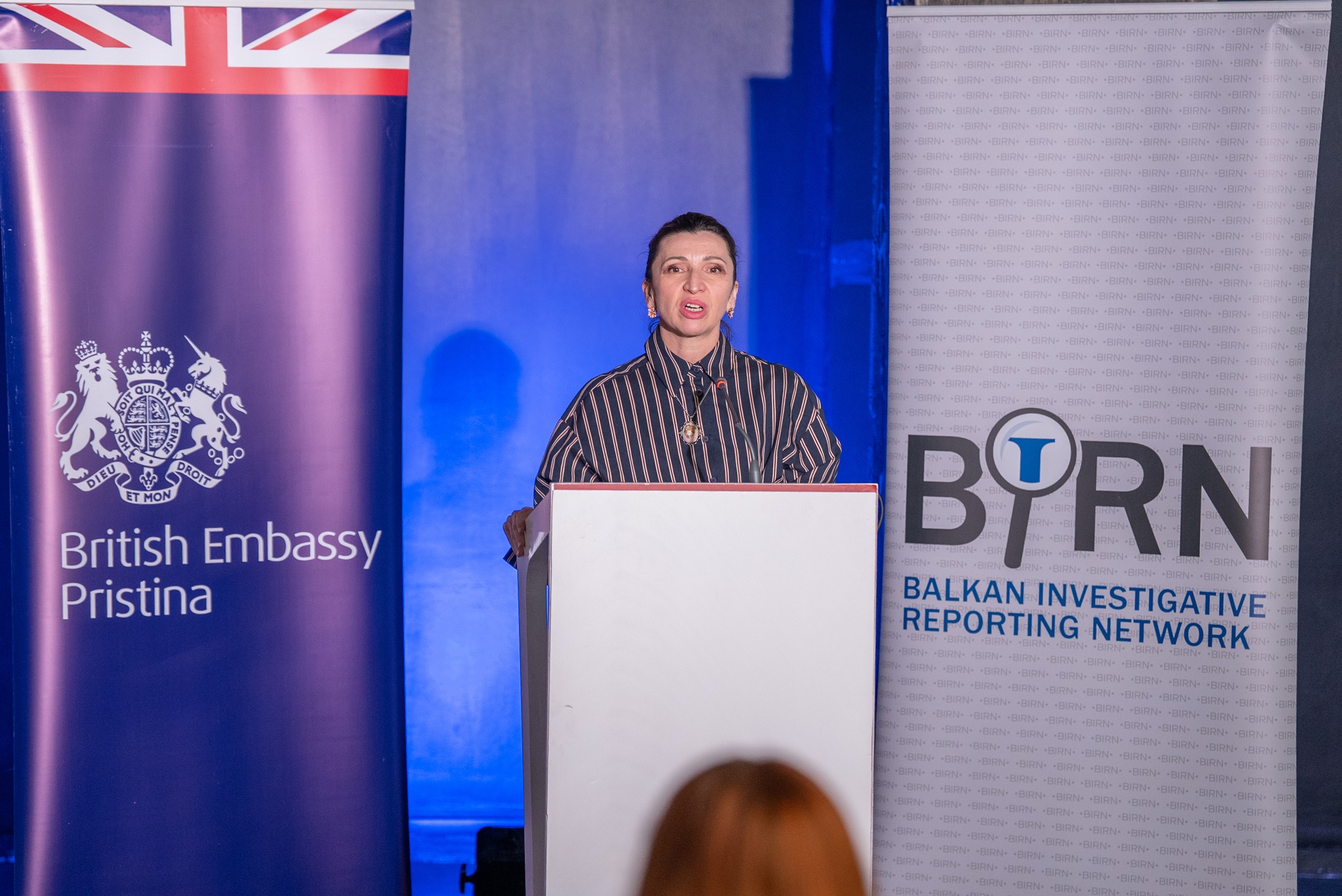
Jeta Xharra, Executive Director of BIRN Kosovo. Photo: BIRN
She added that Kosovo was used to justify Russia’s actions in Ukraine through false narratives. “Kosovo was instrumentalised and used to justify Russian action in Ukraine. Attempts were made to use a completely untrue narrative about what happened in Kosovo to justify actions in Ukraine,” she said.
According to Xharra, the documentary—the fifth in a series of BIRN publications—demonstrates how deeply Russian narratives have penetrated Kosovo’s public discourse and media landscape.
The film presents concrete examples and statistical data that highlight concerning trends, including deliberate translations and edits of materials, as well as the mass publication of content originating from Kremlin-linked sources, presented to citizens as news.
“It is clear that our work documenting this influence and the channels through which it spreads has also exposed us to orchestrated attacks,” Xharra noted.
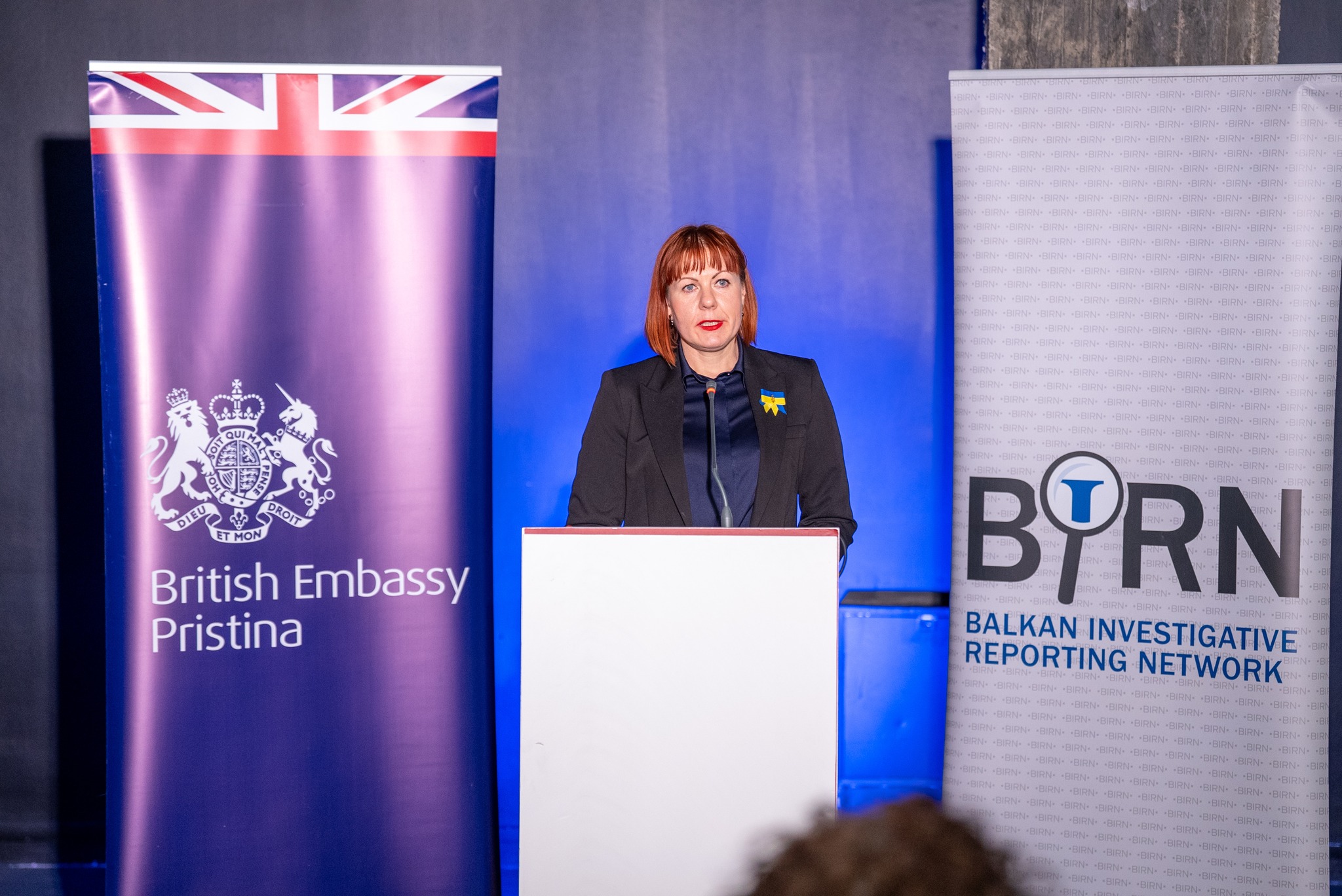
Iryna Synelnyk, Ukrainian journalist. Photo: BIRN
Iryna Synelnyk, a Ukrainian journalist participating in Kosovo’s Journalist-in-Residence programme, also spoke at the event. She said that when she arrived in Prishtina in July 2022, she realised that much of the information she had previously encountered about Kosovo stemmed from Russian and Serbian propaganda.
“It is important to fight it. In Ukraine, for more than four years, we have been fighting not only on the frontlines, but also on our smartphones through sophisticated propaganda,” Synelnyk said.
Drawing parallels between past and present conflicts, she added: “What Serbia did in Kosovo 25 years ago, Russia is doing in Ukraine now. It is important to understand how Russian propaganda works.”
By illustrating how disinformation has shaped the information environment throughout the conflict, the documentary provides a reflection on media integrity, accountability, and democratic resilience during times of crisis.
The documentary was produced within the framework of the Media Integrity and Disinformation Watch project, supported by the British Embassy in Kosovo.