


Weeks after climbing Mount Everest, Petrit Kllokoqi, an entrepreneur from Kosovo, sat with Prishtina Insight to discuss how trekking taught him the value of life following years of living under Prishtina’s nightlife.
For years, Petrit Kllokoqi was best known as a figure behind Prishtina’s vibrant nightlife scene. The restaurateur and entrepreneur, from Kosovo’s capital, surprised many this spring when his social media feeds were filled with content from a very different world: the slopes of Mount Everest.
“Everyone knows me from the nightlife. Many were surprised,” Kllokoqi told Prishtina Insight.
Kllokoqi, 39, spent much of his career growing hospitality businesses in Prishtina. But the passion that would eventually take him to the highest point on Earth was sparked during the COVID-19 pandemic, when lockdowns forced his businesses to close.
“I was hit hard economically,” he recalls. “I started thinking about what to do during the quarantine. Some friends invited me to go hiking and running.”
At first, he remembers he was completely unprepared.
“I showed up in cotton tracksuits and had no idea what I was doing,” he said. “I had never been part of the sports world. That’s why people were surprised. The first year was difficult. The lack of oxygen, the altitude, the climbs—it was all a new world for me.”
But the mountains offered a feeling he had not found elsewhere.
Discovering the mountains
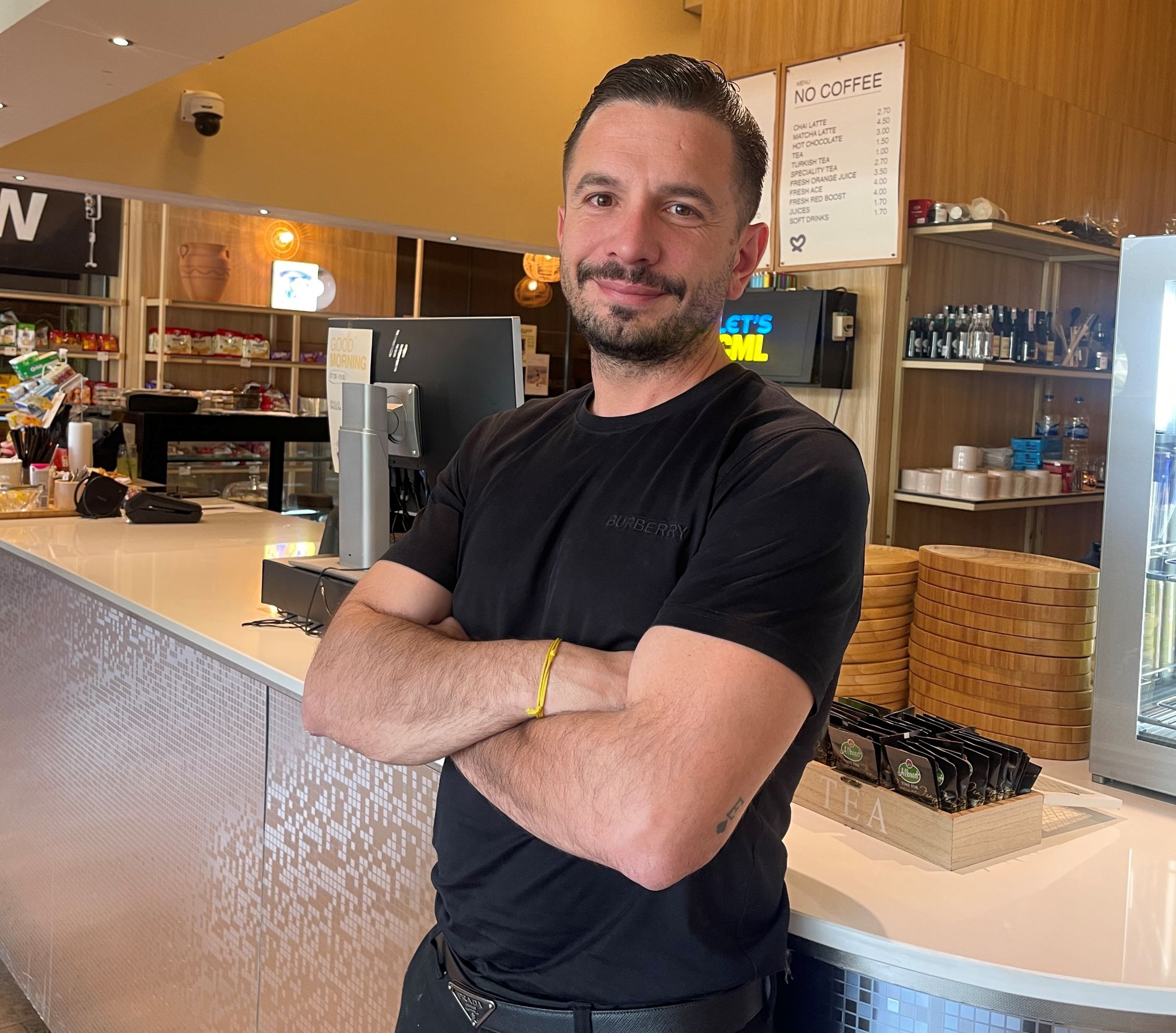
Petrit Kllokoqi at his restaurant, Bagolina, in Prishtina. Photo: BIRN.
He still remembers the feeling of reaching his first major peak in Kosovo.
“I still remember reaching the peak of a mountain (Bjeshka e madhe) and feeling something I had never experienced before. That feeling made me want to keep hiking forever.”
Hiking has now become a central part of his life. Since 2023 he has rarely missed a Sunday in the mountains. In 2024 came more demanding expeditions, including winter ascents of some of Albania’s most challenging peaks.
The idea to climb Everest became a serious possibility after Kllokoqi climbed Mont Blanc, Western Europe’s highest mountain at 4,810 metres, in August 2025.
“I was already thinking about Everest, but I didn’t want to make the decision before seeing how I performed on Mont Blanc,” he said.
“When I finished that climb, I knew I was ready. On August 5, 2025, I made the decision to go to Everest.”
Preparation became a full-time commitment. He spent 14 months training, stopped drinking alcohol for a year, quit smoking in the final months before the expedition, and adopted a strict diet.
“Everest requires physical preparation, but also psychological preparation,” he says.
To test himself mentally, he camped alone in Kosovo’s mountains, away from family and technology.
“I slept alone in tents, worked on controlling my breathing, and exposed myself to different altitudes. I even deliberately confronted my fear of heights.”
The decision was not his alone.
Before Mont Blanc, Kllokoqi watched documentaries about Everest with his wife and mother. After returning, he informed them that he had made up his mind.
“My mother told me, ‘Don’t forget that you have a family and a three-year-old daughter.’”
He says family support was essential.
“Everything starts with family. I made the decision together with them. I wouldn’t advise anyone to attempt something like this without their family’s blessing.”
Training for the world’s highest peak
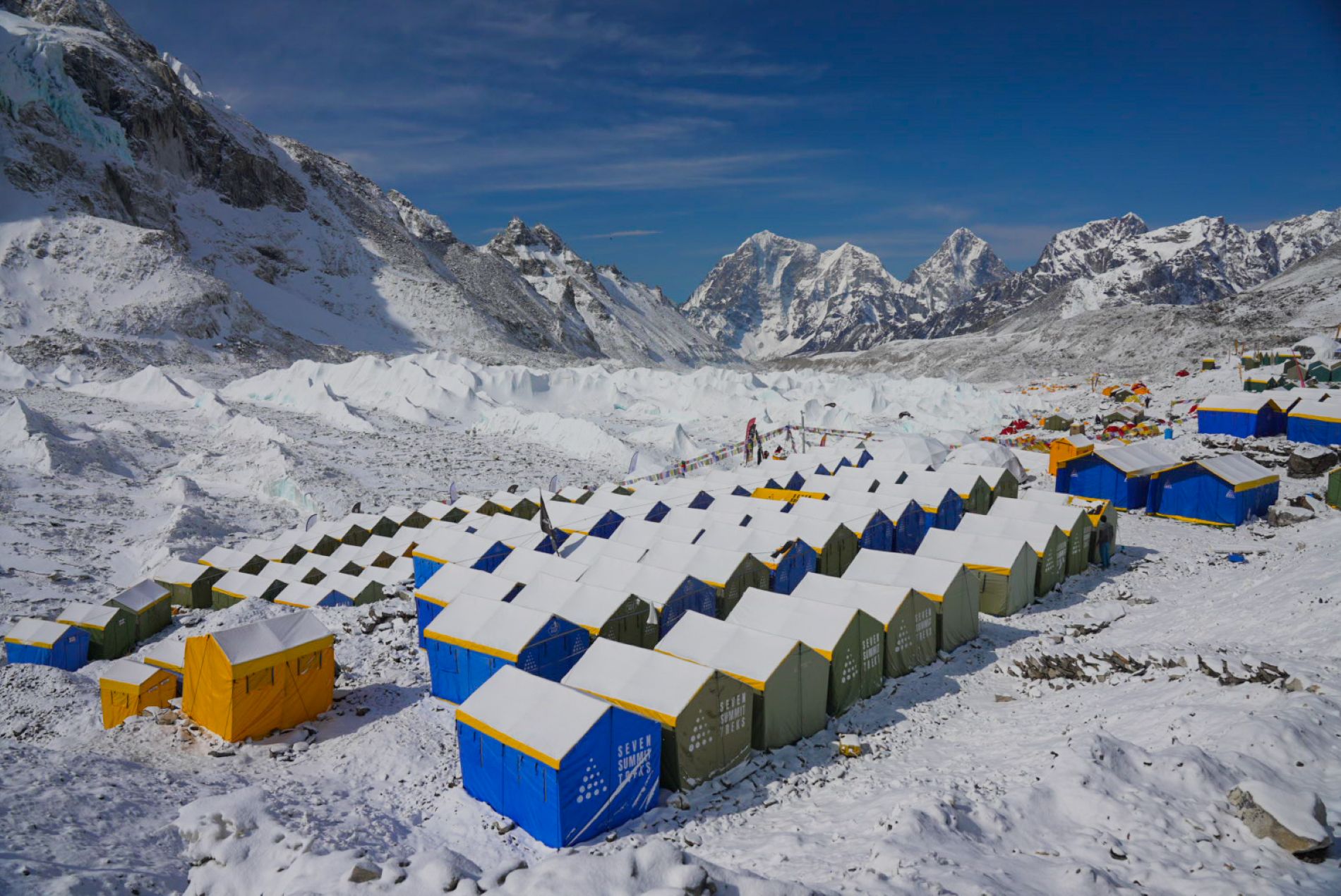
Camps along the Everest expedition route. Photo courtesy of Petrit Kllokoqi.
After training on his own, the preparation for Everest involved months of planning and coordination with expedition organisers in Nepal.
Kllokoqi sought guidance from Kosovo mountaineering pioneer Uta Ibrahimi, the first woman from Kosovo to summit Everest and one of the few climbers worldwide to climb all 14 peaks above 8,000 metres.
“She advised me about Nepal, the logistics, payments, and the entire process,” he says.
By September 2025, negotiations with expedition organisers in Nepal were underway. Everest expeditions can cost anywhere from 30,000 to more than 300,000 euros, depending on the level of support provided.
The journey itself was demanding. Climbers first travel to Nepal’s capital before flying to the mountain airstrip at Tenzing-Hillary Airport, often described as one of the world’s most challenging airports.
“Even landing there is an experience in itself,” Kllokoqi says.
The trek to Everest Base Camp takes more than a week through villages in Nepal’s Khumbu region.
At 5,360 metres above sea level, Base Camp is a temporary community of hundreds of climbers from around the world.
“It’s incredible,” Kllokoqi says. “You meet people from so many cultures and ethnicities, all sharing the same challenge.”
Headaches become your constant companion. “When you reach 5,360 metres above sea level, oxygen levels are roughly half of what they are at sea level. Your brain works differently. I asked Uta when the headaches would stop. She told me, ‘They don’t stop. You just get used to them.’”
Before attempting to climb Everest, Kllokoqi climbed nearby Himalayan peaks to adapt to the altitude, including Lobuche East, which rises to over 6,000 metres where he “experienced freezing conditions for the first time.” On February 17, 2026, Kllokoqi visited Mount Kilimanjaro to commemorate Kosovo’s Independence Day anniversary.
Reaching the summit
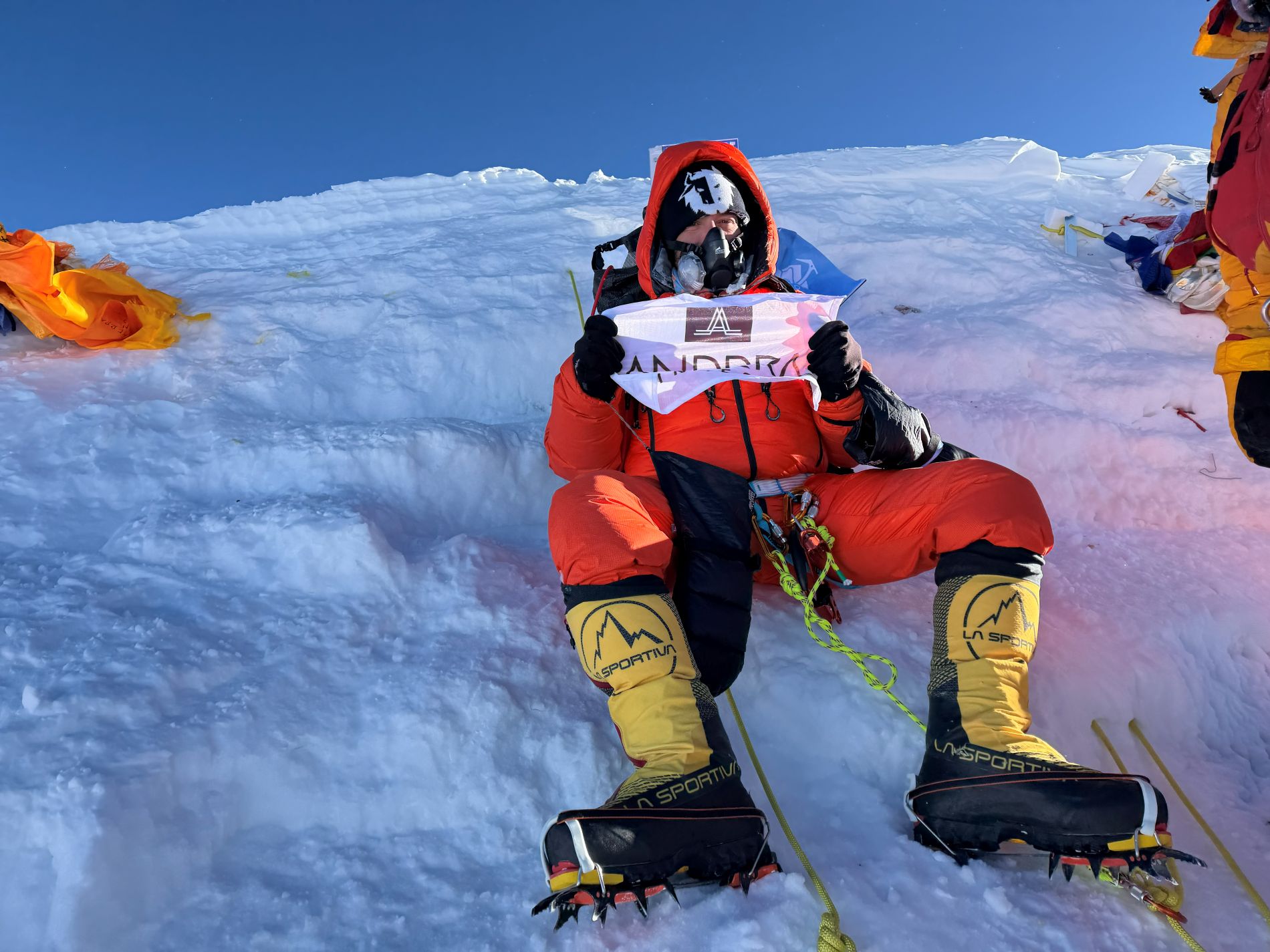
Petrit Kllokoqi on the summit of Mount Everest. Photo courtesy of Petrit Kllokoqi.
Everest is typically climbed through a series of camps, each progressively higher than the last. The most dangerous section, Kllokoqi says, is the Khumbu Icefall, a constantly shifting landscape of ice towers.
During one acclimatisation rotation, two climbers died in an avalanche.
“One of them was someone I had met,” he recalls. “It was a heavy feeling. That’s when you realise this is not a game.”
The final summit push began on May 16. Two days later, after an overnight ascent lasting around 11 hours, Kllokoqi reached the summit of Everest.
Above Camp 3, supplemental oxygen became essential. “Everything becomes harder: walking, sleeping, breathing.”
Camp 4, located in the infamous “Death Zone” above 8,000 metres, is particularly dangerous because the human body cannot survive there for long periods.
Most deaths on mount Everest happen in this zone because rescue is extremely difficult and the body weakens rapidly.
Near the final ridge, climbers encounter a reminder of Everest’s dangers. “After Hillary Step, you begin seeing bodies. I saw one and tried not to focus on it.”
For Kllokoqi, the most memorable moment came shortly before reaching the peak of Everest itself.
“You catch your first clear glimpse of the peak. It fills your soul,” he says. “You can see the curvature of the Earth, and when you realise you’re standing at the top of the world, it feels like being born a second time.”
He spent approximately 30 minutes up there. Descending was also dangerous.
“Your body can suddenly gain speed and become difficult to control,” he says.
Throughout the expedition, he remained connected to his family through a satellite-based Garmin GPS device, which allowed him to send messages even in remote areas.
A different perspective on life
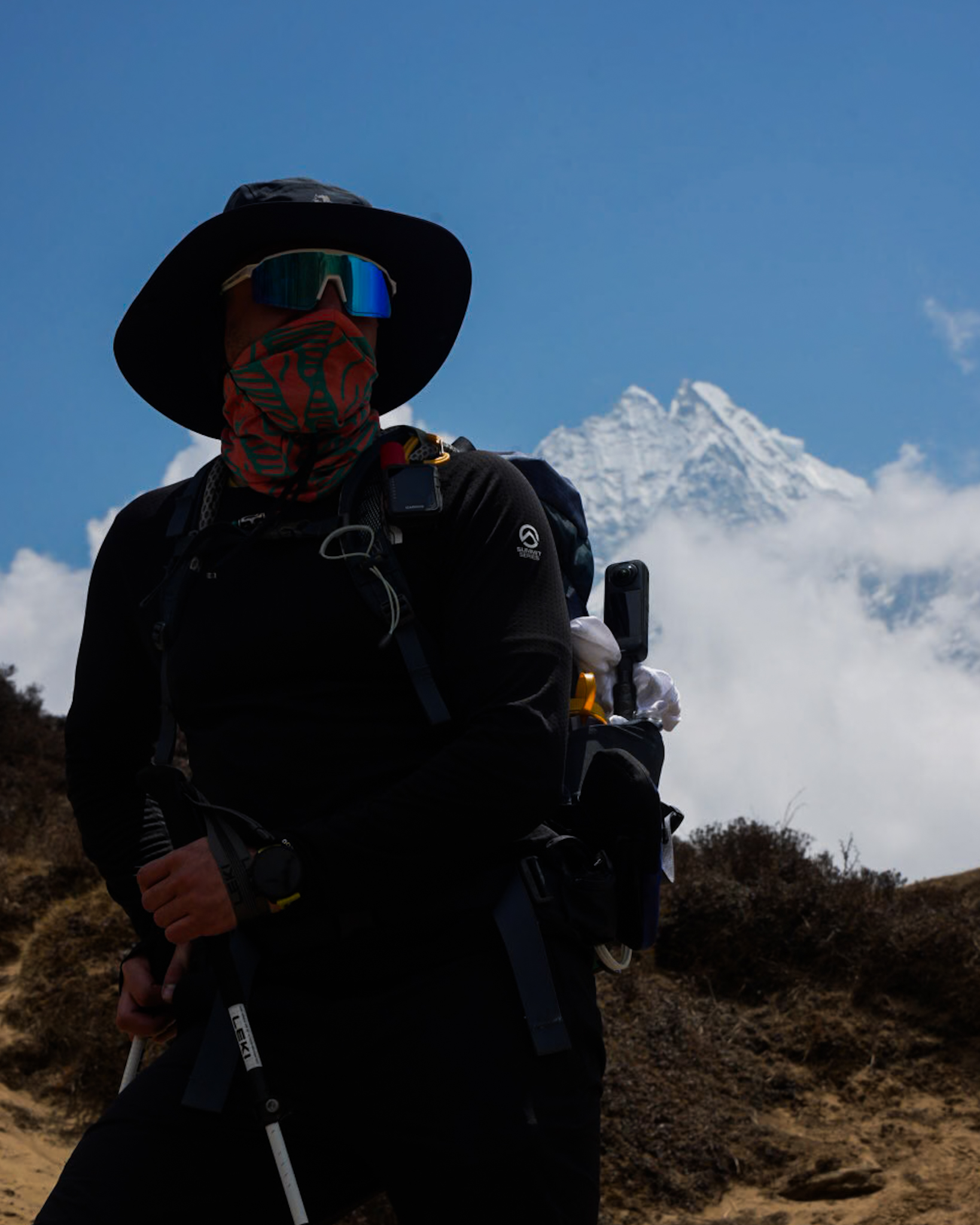
Petrit Kllokoqi during his Everest expedition. Photo courtesy of Petrit Kllokoqi.
Several days after descending, Kllokoqi returned to Prishtina. “The feeling of coming home was tremendous,” he says.
His daughter remained a constant source of motivation. Her photograph was the wallpaper on his phone throughout the climb. “She carried me to the summit.”
Kllokoqi says Everest changed his perspective on everyday life.
“It teaches you how much you take for granted,” he says. “Now when I have a problem, I stop and breathe. There were moments when we barely had enough oxygen”.
When asked what advice he would give to young people considering a major challenge, his answer is simple: “Let’s do it. It teaches you the value of life.”
While social media often highlights Everest’s dangers, Kllokoqi purposely chose to share a more optimistic perspective.
“About 90 percent of the videos I posted were positive,” he says. “People usually focus on the hardships. I wanted to show the beauty.”
He also rejects the idea that climbing Everest is purely an individual achievement.
“It’s not only about yourself,” he says. “Every time someone reaches that summit, it’s another flag raised for their country.”