


The 24th edition of the ReMusica International Music Festival in Kosovo opened this week in Prishtina, bringing a blend of classical and contemporary sounds.
Returning to Prishtina after 25 years for the ReMusica international music festival, world-renowned Albanian violinist Tedi Papavrami reflected on his connection with the city saying he was “so happy to be back after such a long time. I still remember my first visit here as a child in 1979.”
Papavrami was the highlight of the opening night on Monday, October 27. Together with Japanese pianist Maki Okada, he performed a programme that ranged from Giuseppe Tartini’s Devil’s Trill Sonata to Albanian composer Vasil Tole’s Suite for Violin and Piano.
Local composer Xhevdet Gashi, who attended the concert, described the evening as a rare artistic experience.
“Tedi was fantastic, as always. Unfortunately, the hall couldn’t accommodate everyone, but the energy was incredible,” he said, adding that, “ReMusica is crucial. It brings world-class music to Prishtina and strengthens our country’s cultural diplomacy.”
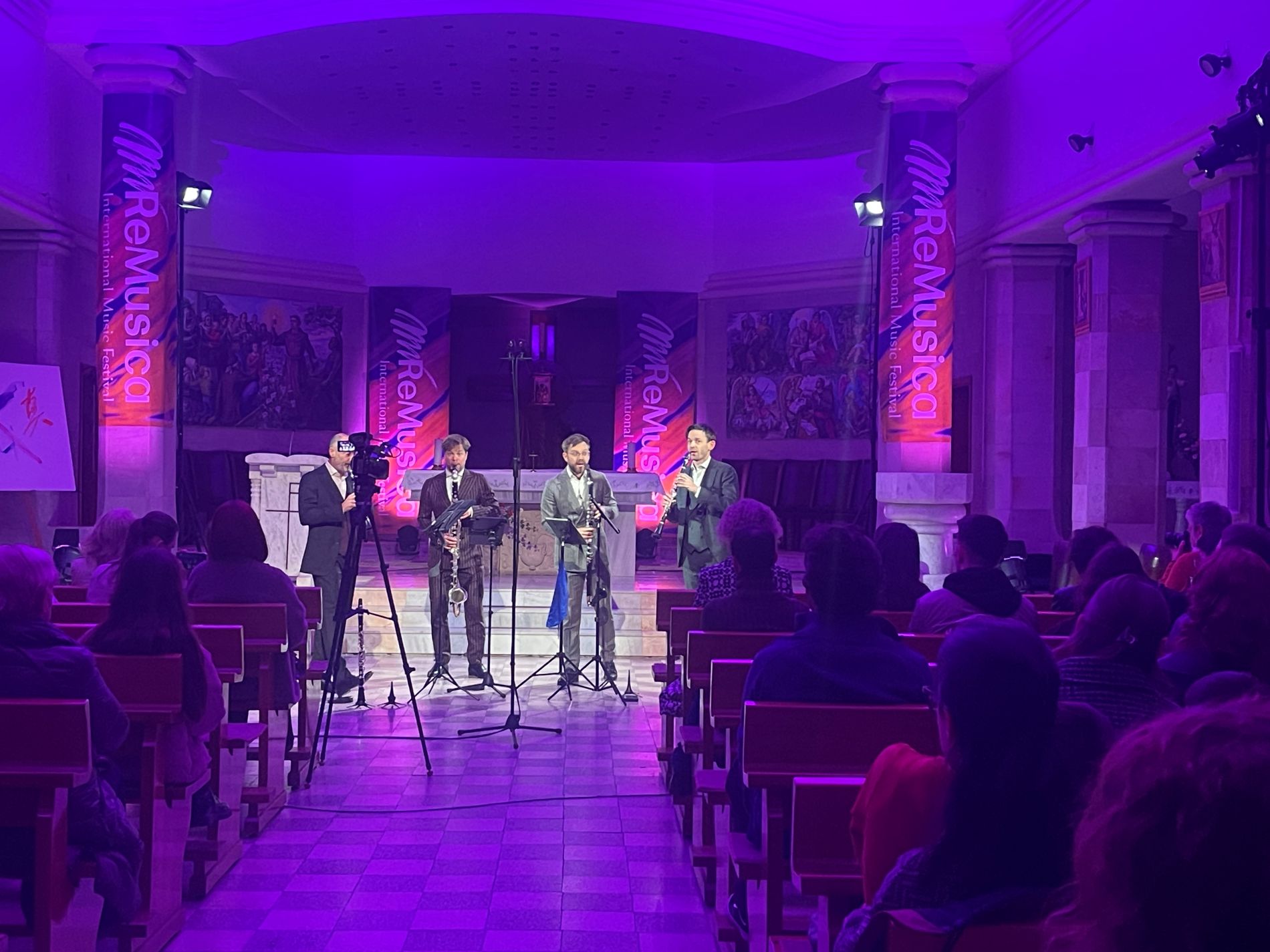
Nieuw Amsterdams Klarinet Kwartet performing at ReMusica Festival on October 28, 2025. Photo: BIRN
Held under the theme “Contrasts,” balancing tradition with modernity, and the familiar with the experimental, the 24th edition of the ReMusica festival began on Monday evening at the St. Ndou Church with a performance by the ReVocal Ensemble, directed by composer and co-founder of festival Rafet Rudi. The festival, founded in 2002 by Rudi and fellow artists, has evolved into one of Southeastern Europe’s most significant platforms for contemporary and classical music.
Festival director Donika Rudi told Prishtina Insight that, “each year, ReMusica focuses on a theme that reflects current developments in music. This year we’re exploring the relationship between traditional and contemporary sound. Through concerts, workshops, and discussions, we aim to understand how tradition continues to influence today’s music-making in Kosovo and across Europe.”

ReVocal Ensemble performance at the opening ceremony of the ReMusica festival on October 27, 2025. Photo: BIRN
Festival director Rudi said that the 2025 programme of the festival includes 18 concerts, educational workshops, and panels with European festival directors. Some of its outreach initiatives include ReMusica Junior, which is designed for children, and ReNew, a programme supporting emerging artists. The festival will conclude on October 31 with a performance by the Kosovo Philharmonic and Opera Choir.
“We’ve tried to create an inclusive programme for all ages and interests,” she added.
On Wednesday, ReMusica also expanded its activities to the southern city of Prizren. The morning featured two ReMusica Junior programmes—The World of Sounds and Anywhere the Winds Blow, performed by Nieuw Amsterdam’s Klarinet Kwartet. Engaging with the audience while performing, the quartet highlighted the warmth and connection brought by the festival’s theme.
Supporting emerging artists

Discussion panel of ReMusica Festival on October 28, 2025. Photo: BIRN
The second day of the festival, on Tuesday, brought together composers, producers, and festival organisers to discuss the crucial topic of supporting emerging artists.
Dardan Selimaj from the Kosovo Philharmonic emphasised that classical festivals were founded to provide a platform for new musicians and composers.
“Back in 2006 at [annual music festival] DAM Festival, our goal was to promote young talents,” he said in a discussion panel, adding that, “we created programmes dedicated to emerging musicians and composers, inviting European ensembles to collaborate with Balkan artists for a week of shared work and creation.”
“Until recently, our artists couldn’t attend festivals abroad due to visa restrictions. That’s one of the reasons we created festivals like this—to bring the world to Kosovo,” he emphasised.
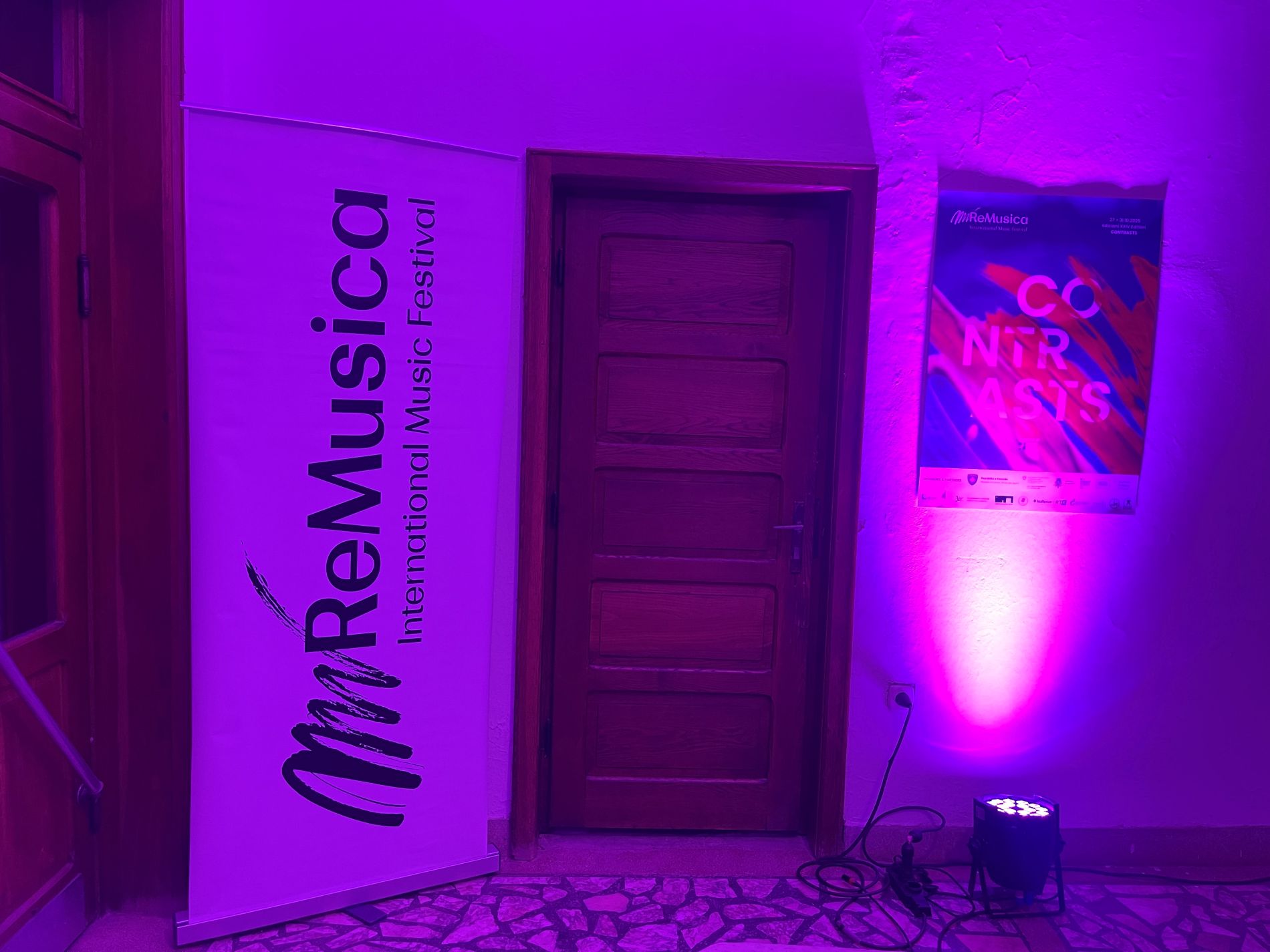
ReMusica Festival 2025. Photo: BIRN
Viktor Berishaj, executive producer of ReMusica, recalled that, “when ReMusica started in 2002, just after the war, people were eager for something new. You couldn’t even get into the hall—it was completely full. These festivals were born from idealism, from a passion to contribute to society.”
He added that, “music here isn’t very institutionalised like in countries where concert halls are centuries old. We are happy to see new institutions being established and new initiatives emerging. Festivals play a significant role in bringing people here and sending them abroad.”
Fjolla Gashi, a young musician, expressed her gratitude for the existence of a festival focusing on classical music, saying that “ReMusica opened doors for me. It’s a professional environment where my compositions can be performed and heard. Being part of a festival challenges you, helps you grow, and connects you with the world.”
She observed that Kosovo’s small number of ensembles influences how composers create. “You have to know exactly who you’re writing for because there aren’t many groups available to experiment with,” she said.

Kaltrina Miftari, Safet Berisha dhe Drilon Çoçaj performing at ReMusica concert on October 28, 2025. Photo: BIRN
Fellow composer Dea Ahma shared a similar sentiment, saying that, “we do have some formal ensembles and quartets, but if you want to experiment more, it’s very difficult to find the right groups for that. In ReMusica, we work around a specific theme and compose based on it. It’s also very much about the commissions.”
Susana Martins from Portugal based Cistermusica Festival said that “people think classical music is for older generations.” However, she emphasised that, “new artists are changing that reality. Public support is crucial. Art needs both creators and engaged audiences.”
“We can’t separate cultural life from social life—they sustain each other,” Martins noted.
ReMusica’s concerts are currently free, and while charging for tickets has been discussed as an option, organisers believe that inclusivity is crucial for the growth of Kosovo’s music scene. Berishaj acknowledged the financial challenges of organising the festival but emphasised that the main goal is not profit but keeping the classical music alive and expanding.
“If we looked at this only through a financial lens, it would never happen. What we do is for the people, for culture,” Berishaj concluded.