


Kosovo’s opposition parties are bringing back familiar political figures ahead of the early June 7 elections in an effort to challenge the dominance of acting Prime Minister Albin Kurti’s Vetëvendosje Movement.
Kosovo’s opposition parties are turning to familiar political figures ahead of the June 7 early parliamentary elections, reviving former alliances and bringing back veteran politicians in an effort to counter the dominance of acting Prime Minister Albin Kurti’s Vetëvendosje Movement, LVV, which is seeking an even stronger mandate after its landslide victory in the last election in December 2025.
The elections—Kosovo’s third in two years—come at a moment when opposition parties are struggling to regain momentum against Kurti’s LVV, who are openly aiming for an even larger mandate.
The last elections in December 2025 gave LVV a clear mandate to govern with 57 seats in the 120-member parliament. It was followed by the Democratic Party of Kosovo with 22 seats, the Democratic League of Kosovo with 15, and the Alliance for the Future of Kosovo with 6. But the ruling party struggled to reach an agreement with the opposition when the election of a new President came onto the agenda, raising the prospect of another unwanted snap election.
LDK bets on Vjosa Osmani return
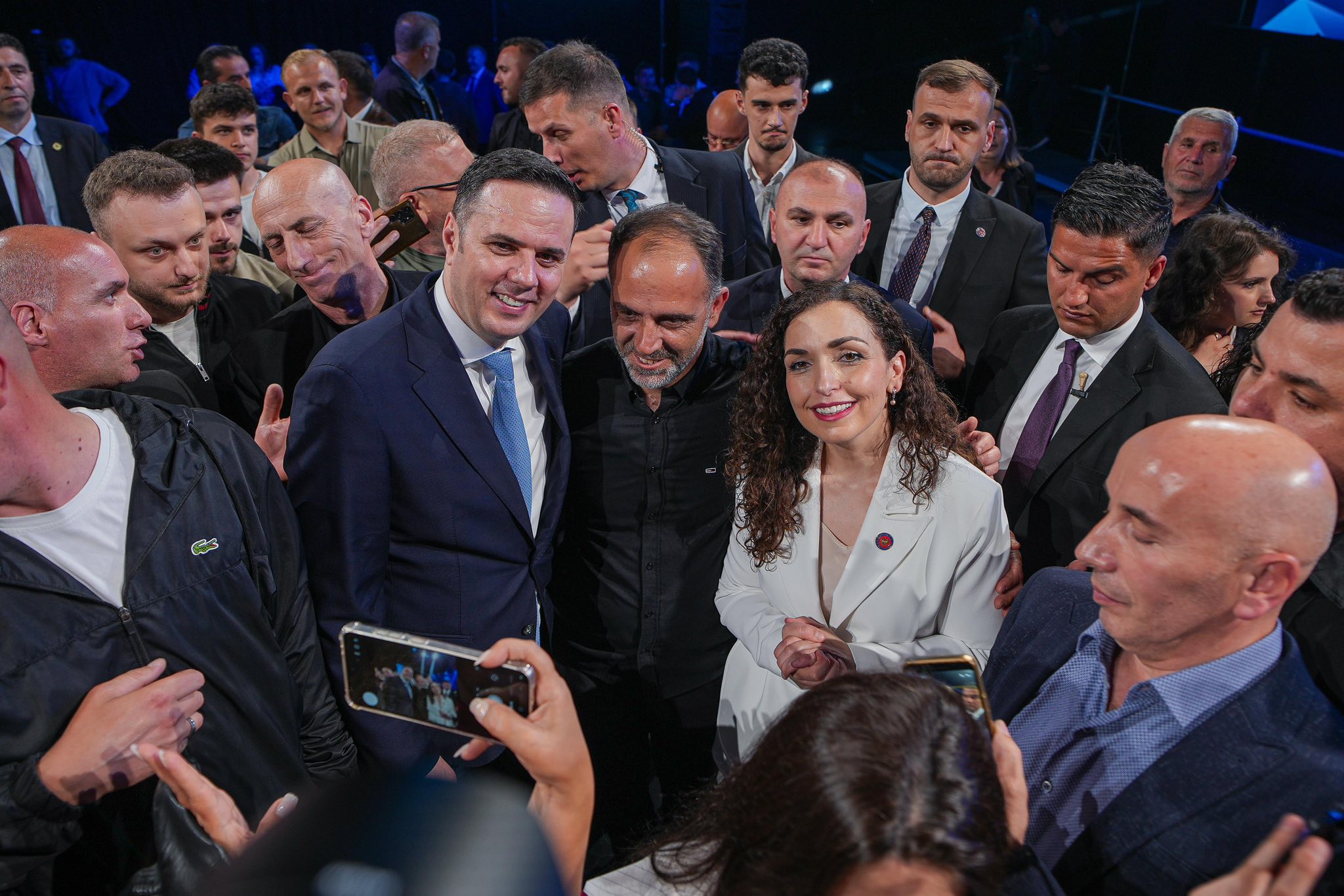
LDK leader Lumir Abdixhiku (left) and Kosovo’s ex-President Vjosa Osmani (right) take photos with supporters in Pristina on May 10, 2026. Photo: Lumir Abdixhiku/Facebook.
The Democratic League of Kosovo, LDK, made its biggest political statement by welcoming back former President Vjosa Osmani, six years after her bitter split from the party.
“We are both being called home today. It is time to give everything to this house,” LDK leader Lumir Abdixhiku declared during the party’s presentation of MP candidates.
Osmani’s return was widely interpreted as an attempt by LDK to consolidate opposition voters and recover political ground lost to LVV in recent years.
Three former MPs affiliated with the Guxo party—Jeta Statovci, Haxhi Avdyli, and Albena Reshitaj—also joined LDK’s electoral list after distancing themselves from the alliance between Guxo and LVV.
The party also brought back former MP Lulzim Zeneli, a longtime associate of Nexhat Daci and former President Ibrahim Rugova.
The Democratic Party of Kosovo, PDK, also reintroduced former MP and former KLA commander Rrustem Mustafa-Remi to its MP candidate list.
Former party member Fatmir Limaj sought to return to PDK but failed to secure support from the party leadership.
“Mr. Limaj is welcome to be part of PDK in future internal electoral processes,” PDK leader Bedri Hamza said.
Meanwhile, the Alliance for the Future of Kosovo, AAK, brought back Avni Arifi, former chief of staff to Ramush Haradinaj and Kosovo’s former chief negotiator in talks with Serbia.
Unlike opposition parties focused on political reunifications, LVV has focused its campaign on expanding its already dominant support base.
“From February to December last year we increased our support by 9 percentage points. If we continue at the same pace from December to June, we can reach 60 percent,” Kurti told party structures on May 9.
Despite losing several allies from Guxo to LDK, LVV added new names to its list, including feminist activist Adelina Tërshani and cleric Osman Musliu.
Meanwhile, Kosovo Serb opposition parties have united against the Belgrade-backed party Sprska Lista, forming a joint electoral platform called “Together we win.”
At the same time, Srpska Lista has strengthened its ranks by attracting civil society activist Jovana Radosavljevic from the New Social Initiative, NSI.
Analysts say opposition lacks new vision
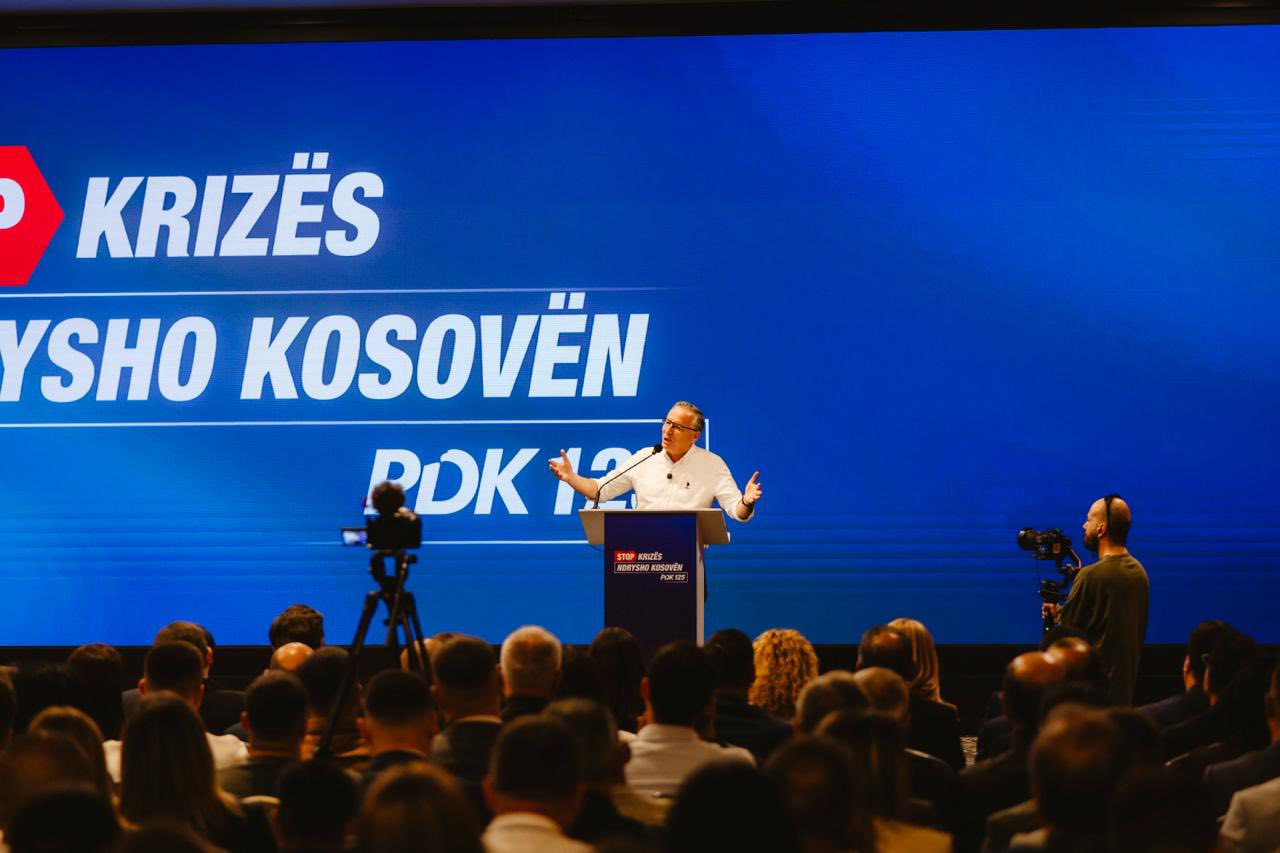
Bedri Hamza, the Democratic Party of Kosovo, PDK, candidate for Prime Minister, during an electoral rally held on May 24. Photo: Bedri Hamza’s Facebook account
Political analyst Dritero Arifi said the return of old political figures reflects a broader lack of leadership and internal development within Kosovo’s traditional opposition parties.
“In a way, opposition parties are applying the logic that ‘the enemy of my enemy is my friend,’” Arifi said.
According to him, opposition parties are attempting to weaken LVV through tactical alliances rather than through new political ideas or programs.
“They are trying to defeat a giant piece by piece and in this case, the giant is Vetëvendosje,” he added.
Political analyst and sociologist Artan Muhaxhiri said the results of the previous elections were a shock for opposition parties, making it essential for them to perform significantly better this time. Otherwise, he argued, their respective leaderships should automatically resign.
“The only realistic path for the opposition is to deconstruct the populism of Albin Kurti and engage more seriously with the diaspora vote,” Muhaxhiri said.
He added that opposition parties have remained fragmented and unable to build a broader narrative for political change in Kosovo.
According to him, the Democratic League of Kosovo, LDK, has placed all its hopes for electoral growth on the return of Vjosa Osmani. However, he warns that, “the unresolved gap between her presidential role and a significant part of the party leadership will prevent the party from maximising its vote.”
Throughout her presidential mandate, Vjosa Osmani was often criticised for her closeness to Prime Minister Albin Kurti.
However, tensions between the two reportedly escalated after Kurti declined to support her for a second presidential term, marking the apparent end of their political partnership.
As for the PDK, Muhaxhiri says it remains “mentally and emotionally tied to The Hague,” where its former party leader is being tried for war crimes, resulting in “a more managerial rather than confrontational approach in its political battles against LVV’s dominance.”
Meanwhile, he describes the Alliance for the Future of Kosovo as being in a transitional phase, with its main goal being to preserve its “pre-threshold electorate” during a gradual rebranding process—something he sees as necessary in the post-Ramush Haradinaj era.
The Serbian political scene- deeply divided
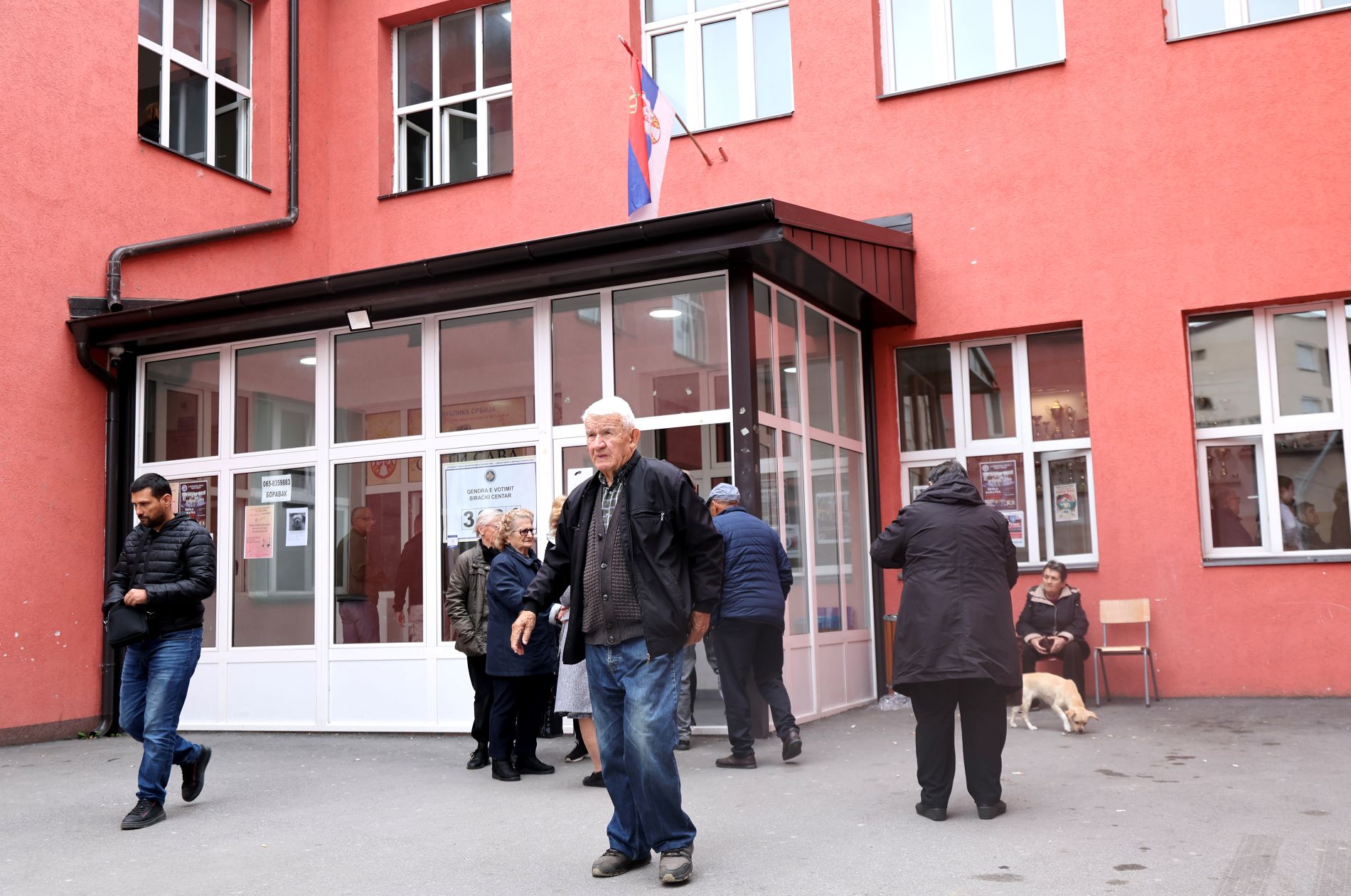
People leave a polling station after casting their ballot in local elections in North Mitrovica, Kosovo, October 12, 2025. Photo: EPA/Georgi Licovski
Zoran Savic from the NGO Aktiv said the Serbian political scene in Kosovo remains deeply polarised between actors supported either by Belgrade or Prishtina.
“The practice of Belgrade supporting strictly one political option, while the party of Nenad Rasic simultaneously receives support from the current caretaker Government of Kosovo. In such a political environment, there is practically no space for another voice from the Serbian community to gain visibility or political relevance,” Savic said.
“On one side, there is strong support for the Srpska Lista, which is understandable considering that a large portion of the Serbian electorate works within the institutions financed by the Republic of Serbia. For years, a narrative has been built suggesting that without the Srpska Lista there would be no salaries or pensions, which is simply not true,” he said.
On the other side, he noted, is Nenad Rasic and his party, which despite support from Kosovo institutions and access to ministerial resources, still enjoys limited backing among Serbian voters.
According to Savic, this political polarisation pushed smaller Serbian opposition parties to unite under a joint electoral list after “realising that only through a joint electoral list could they potentially achieve some electoral breakthrough.”
However, the coalition’s certification was rejected by the Central Election Commission, CEC, over what he described as “questionable technical grounds.”
The CEC did not certify the opposition list after finding that it had not fulfilled the legal requirement of at least 1,000 signatures.
After the complaint it filed with the Electoral Complaints and Appeals Panel, ECAP, on May 16, the latter upheld the CEC’s decision, emphasising that the commission had determined that the list had submitted 1,087 supporting signatures, but 576 of them were missing phone numbers, while 80 people from the signature list were unreachable through the provided numbers.
Furthermore, according to the panel, some individuals had stated that they had not personally signed.
“This situation looks very unusual, especially considering that almost all of these political actors had already participated in previous election processes,” Savic said.
He noted that the Serbian community is once again left with only two political options that appear incapable of cooperating with one another.
Still, he believes the rejected opposition coalition “could have attracted support, particularly from voters who might otherwise back Nenad Rasic.”
Commenting on the involvement of civil society figures in politics, Savic said such transitions are common, but noted that the situation is more sensitive in northern Kosovo, where parts of civil society have long faced political pressure and public targeting.
“I hope that individuals coming from civil society into politics will advocate for democratic values, including publicly condemning coercive campaigns and attempts to discredit civil society actors,” he noted.