

Over 170 fake health news stories have targeted Kosovo citizens this year, promoting false cures and using AI and doctored images to sell unverified treatments.
From January to August this year, there were more than 170 health related fake news stories targeting Kosovo citizens with promises of cure-all treatments for various illnesses, including chronic conditions—often without naming a specific product.
Websites like Healthylive.mk, healthy.com, and XAlphaBoost, all based in North Macedonia, are among the primary sources of such disinformation. They mainly promote “joint pain cures” and similar health claims. These fake news items are specifically targeted at the Kosovan market through paid advertisements.
Of the 170+ fake reports, 50 originated from North Macedonian websites, with Ukraine identified as another key source. Additional websites created to mislead citizens were also found to be operating from the US and the UK.
A wider scam involving fake public transport pages
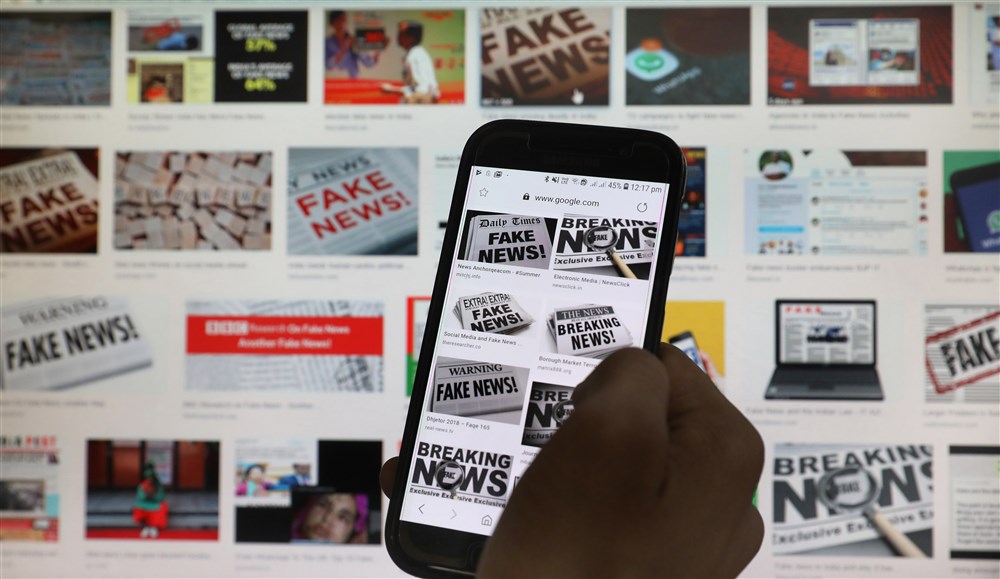
A person scrolls the screen of a mobile phone. Illustration: EPA/HARISH TYAGI
A 2025 report by Maldita.es (A Spanish fact-checking non-profit organisation) exposed a global scam involving 1,075 fake Facebook pages across 60 countries, imitating local public transport services. These pages offered travel cards at extremely low prices, redirecting users to phishing websites to steal credit card data.
According to Meta, over half the page administrators were located in Vietnam, while many domains were hosted on two Russian IP addresses.
Despite Meta suspending some ads, 37% of the pages remained publicly accessible until July 2025.
The Kallxo.com fact checking platform, Krypometri, also uncovered multiple products falsely marketed as miracle cures, of which only Graviola is sold in pharmacies.
Promoted on the site “Natural Products and Treatments, Maderotherapy,” Graviola is falsely promoted as a cure for cancer, despite the fact that no scientific cure for cancer has been discovered.
Clinical pharmacy expert Astrit Haxhijaha confirmed that while Graviola is a powerful herbal supplement which helps with digestion and relaxation, it should not be advertised as a cure.
“Apart from Graviola, none of the other supplements seen in these ads are sold in pharmacies. These are typically sold online and should not be purchased without professional medical advice,” he declared.
Rheumatic and cancer patients: Prime targets for disinformation
Illustration: Kallxo.com.
Health disinformation is especially prevalent in areas like oncology and rheumatology.
“We often see patients who fall for these misleading ads. The most troubling part is that even some health professionals from neighbouring countries—outside Kosovo—seem to be involved, trying to recruit patients by claiming that Kosovan doctors lack experience. These are baseless lies,” stated Behar Raci, an oncologist at the Oncology Clinic.
Rheumatologist Diellor Rizaj explained that patients often come with printed internet recipes, asking about natural treatments for arthritis, osteoporosis, or fibromyalgia. These include: Unverified “magic oils,” supplements with unknown ingredients, alternative therapies like “energy healing.”
“Such treatments are often: clinically unproven, expensive and potentially dangerous, marketed with emotional appeal, exploiting patients’ pain and desperation,” he continued.
Rizaj further noted that rheumatic patients are attractive targets for scammers because the diseases are: chronic and complex, with no instant cures, and often painful but invisible making patients feel misunderstood.
“More common among women and the elderly, who are more vulnerable to emotional marketing,” he emphasised.
Rizaj also highlighted that these illnesses often don’t have complete cures, but they do have effective treatments.
“As the population ages and early diagnosis improves, the number of patients rises. The problem isn’t that ‘there’s no cure,’ but rather patients’ expectations not aligning with clinical realities. This creates fertile ground for misinformation,” he added.
Fake pages use AI and photos of doctors to mislead
Illustration: BIRN/Igor Vujcic
Fake news and disinformation pages use before-and-after images, fake photos of doctors, and AI-generated videos to make their claims seem credible.
Krypometri verified 7 fake news stories from Kosovo and Albania that misused images of Albanian doctors.
One of the misused images was of Aurora Meta-Dollenberg, a psychotherapist based in Germany.
She called this phenomenon dangerous and harmful for multiple reasons, mainly: medical disinformation, health risks, financial exploitation, and abuse of professional reputation.
“These products lack a scientific basis. Patients are misled into avoiding medically recommended treatments. Unregulated substances can be harmful and this severely violates the medical principle of ‘first, do no harm,’” she stated.
“These so-called cures are expensive, burdening patients, while legitimate treatments covered by health insurance are often available,” Meta-Dollenberg told Kallxo.
She urged cybercrime authorities to act decisively on the matter.
“Doctors enjoy public trust. Manipulating their face and voice using AI to spread falsehoods undermines that trust and damages the credibility of the medical community,” she continued.
“Patients deserve access to safe, verified, and evidence-based information,” Meta-Dollenberg concluded.
Krypometri is an independent fact-checking platform in Kosovo, officially recognised by Meta (Facebook) as a third-party fact checker. It reviews social media content and news circulating in Kosovo, evaluates the accuracy of claims by referencing reliable sources, and rates them as true, false, misleading, or unverified. Krypometri also publishes articles with detailed explanations to debunk false information.