

Gjyle Haziri from Mitrovica has taken up the mantle of her late mentor, Bajram Qerkini, continuing his lifelong fight to uncover the fate of more than 1,600 people still missing from the 1998-99 Kosovo war.
In Mitrovica, the voice of Bajram Qerkini has not faded since his death in February 2025. A lifelong advocate for the families of the missing from the Kosovo war, his mission lives on through the work of his colleague Gjyle Haziri, who has dedicated her life to seeking justice for the missing—at a time also including her own husband, who was killed during the war.
Haziri told BIRN that she believes justice will prevail eventually.
“It will happen—it just takes time. This issue has been too politicised, but we, as a civil society group, only seek truth and justice,” she said.
For over two decades, Bajram Qerkini led the efforts to uncover the fate of thousands of people who disappeared during the 1998–99 Kosovo, including his son, Reshat Qerkini. In the same office in Mitrovica where Qerkini worked until his final days, Gjyle Haziri carries on his mission with the same determination and compassion.
Inside the office of the Mitrovica based NGO “Zëri i Prindërve” (The Voice of Parents), the walls are covered with photographs of the missing—silent witnesses to years of pain and perseverance.
“Since 2003, I can’t remember [having had] a single day off. Everything—every photo, every document—passed through our hands: Bajram’s and mine,” Haziri recalled.
Following Qerkini’s death after a serious illness, the organisation’s members unanimously chose Gjyle Haziri as its new chairperson, ensuring that his mission for truth and justice would not die with him.
From bereaved family member to tireless activist
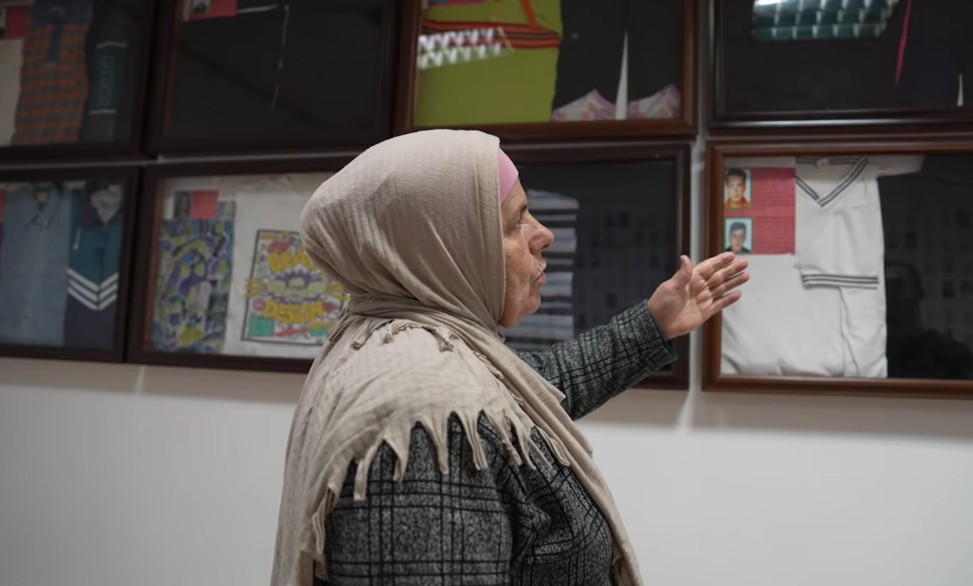
Gjyle Haziri. Photo: BIRN
Gjyle Haziri joined “Zëri i Prindërve” in late 2003, after hearing an appeal on TV calling on families of war victims and the wartime missing to get involved. She had just lost her husband in the war and was raising her son alone.
“I heard on TV that families of the killed or missing could register with the association [then called Kujtimi Foundation]. I went, signed up, and from that day, I never stopped. Even though I was personally affected, I worked without rest—collecting photos, documents, speaking with affected families,” she recalls.
Over the years, Haziri became an essential part of the organisation, supporting families while also taking computer and administrative courses to help maintain the organization’s records and coordinate with institutions.
For more than 20 years, she stood beside Bajram Qerkini in every protest, initiative, and meeting dedicated to finding the wartime missing. She remembers Qerkini as a man of unstoppable deep conviction, who never faltered in his efforts to locate the wartime missing, including his son.
“He used to say: ‘I’m tired, but I won’t stop until I find my son.’ Even when he couldn’t come to the office, he’d call and say he’d try to come tomorrow. Journalists would call, and he would still show up,” Haziri added.
Qerkini, she emphasised, died with one major regret—that he failed to see justice served against those he believed were responsible for war crimes in Mitrovica. According to Haziri, Qerkini had detailed information, including the names of suspects who remain at large.
“He knew them—names and faces—people in the northern part of the city who were never tried. He often said: ‘I’ll bear this pain to my grave, having failed to see those men brought to justice.’”
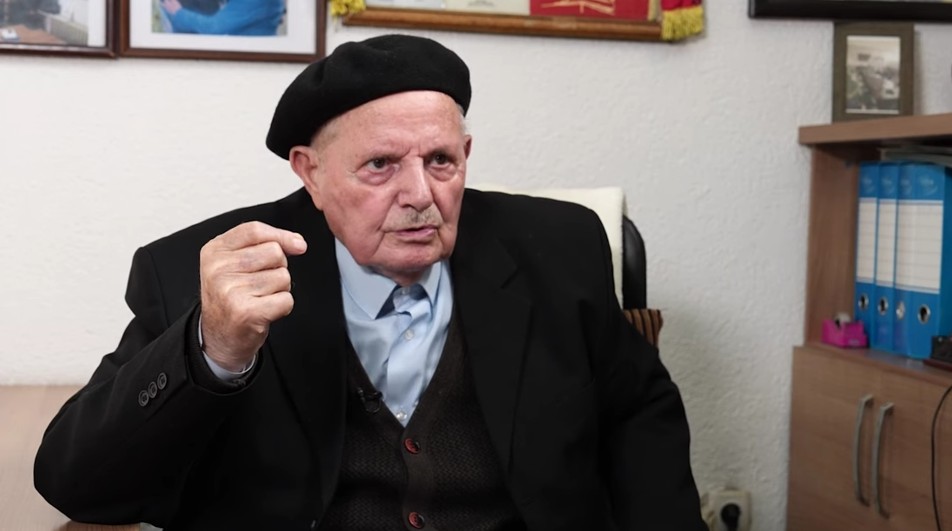
Bajram Çerkini. Photo: BIRN
Today, as the head of “Zëri i Prindërve,” Haziri continues to meet regularly with the families of the missing, organising monthly gatherings, memorial events, and advocacy initiatives.
“Every month we bring families together, talk and plan activities. No one can replace Bajram, but we try to carry forward the mission he began.”
The 1998-1999 Kosovo war, which was ended through NATO intervention against Serbia, left behind deep scars. More than 13,000 people were killed, with over 1,600 still missing. In Mitrovica alone, 104 people remain unaccounted for.
Progress in locating the missing has been slow. In the last two years, Kosovo’s institutions have identified the remains of fewer than 30 people. In Serbia in 2024, no excavations took place to uncover mass gravesites. Excavation was resumed at the site of a suspected mass grave in Novi Pazar in September 2025, but there have been no results from this so far.
In December 2024, Kosovo and Serbia pledged to fully implement the Joint Declaration on Missing Persons, originally adopted in May 2023 as part of the EU-facilitated dialogue between the two countries. The declaration commits both sides to ensuring access to reliable information—including classified documents—and to cooperating through a joint EU-chaired commission to finally uncover the fate of the wartime missing.