


A recent child abuse case in Kosovo has sparked public outrage and raised concerns about how institutions monitored a family for over a decade without preventing severe harm.
A five-year-old boy was hospitalised at the Emergency Clinic in Prishtina on March 17 with severe injuries to both of his feet, signs of malnutrition, and difficulties in communication, all of which raised concerns of ongoing mistreatment.
With the child undergoing surgery on his feet, authorities suspect that the injuries and mistreatment were inflicted by his parents.
For more than a decade, the family—who now have seven children—have been monitored by social services in Lipjan municipality. The children havehad been removed multiple times and then returned.
The case has sparked public debate about how this situation occurred despite the family being under institutional supervision for over a decade, raising concerns about systemic failures in Kosovo’s child protection system.
A reactive system
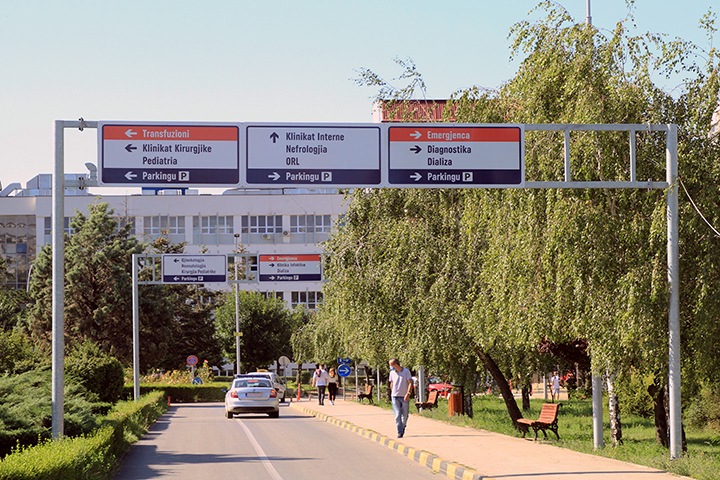
University Clinical Center of Kosovo. Photo: BIRN
Following the child’s hospitalisation, police arrested both parents. The Prishtina Basic Court ordered one month of pre-trial detention on suspicion of child abuse. All seven of their children are now in institutional care.
In a press conference on March 19, the Ministry of Labour, Family, and War Veterans confirmed that the case was being handled by the Center for Social Work in Lipjan municipality since 2013.
Makfire Shamolli, director of the Center for Social Work in Lipjan, said the decision to return the children to their family was made by a panel of experts as part of a court-led process, adding that follow-up monitoring visits were carried out “as needed.”
Former Ombudsperson Hilmi Jashari argued that the case reflects a broader systemic issue.
“This is not just an individual failure,” he said. “It raises serious doubts about the ability of institutions to identify and prevent violence against children.”
Kosovo’s legal framework on child protection is, on paper, relatively comprehensive. Responsibilities are shared across the central and local levels, and the process involves ministries, municipalities, social services, and child protection units.
However, Jashari argues that the system remains fragmented, with ineffective information-sharing and limited capacities. He highlighted the lack of school psychologists, insufficient financial support, and weak inter-institutional coordination.
“All these are systemic issues already identified by various organisations and institutions, but accountability is lacking,” he said.
At its core, the system operates reactively, Jashari added.
According to him, institutions tend to intervene after violence occurs, rather than identifying risks early and preventing harm. Yet both domestic law and international conventions require proactive protection.
“The fundamental problem remains the lack of accountability for executive mechanisms,” he stressed.
Jashari also pointed to delays in implementing legislation.
Although the Law on Child Protection required secondary legislation within one year of its entry into force, more than five years have passed and the process remains incomplete.
Laws on family and social services are also not fully implemented.
“The Parliament has a constitutional mandate to oversee the implementation of laws and to request assessments of institutional capacities, coordination, and compliance with legal provisions. If this is not done, a dangerous and unhealthy cycle will persist,” Jashari warned.
Failure happens earlier
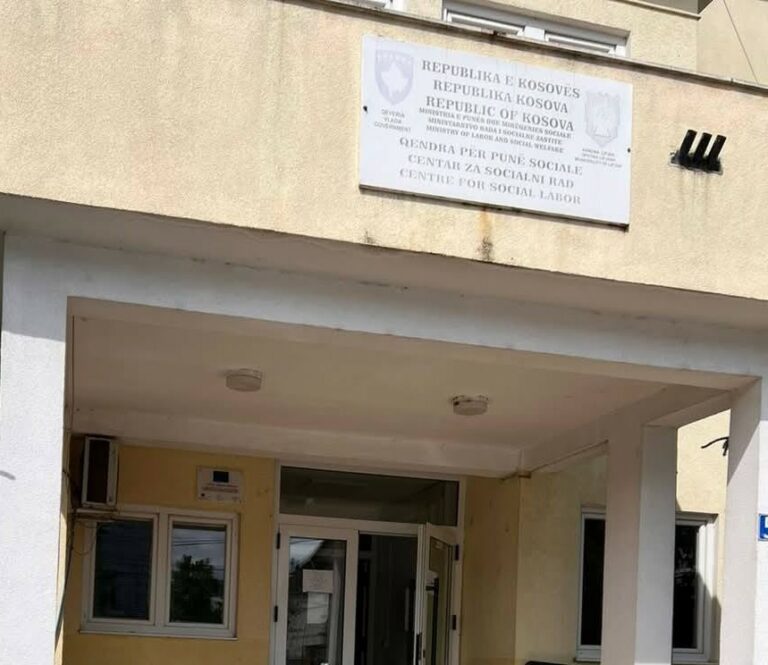
A centre for social labour in Kosovo. Photo: BIRN
For Rexhep Gojnovci, head of the NGO “Akti,” the Lipjan case exposes a deeper truth: systemic failure begins long before a case becomes public.
“The system does not fail when violence happens,” he said. “It fails when it does not prevent it.”
He stated that reforms in Kosovo’s child protection system must go beyond procedural or legal improvements and they require a fundamental shift in approach.
“We need a radical change from a reactive system to a proactive one focused on prevention and early identification, especially when children are victims,” he said.
According to him, most Centres for Social Work operate with too few staff and inadequate conditions.
“Cases are often identified late, especially in schools, and sometimes not reported at all. Police typically intervene only after situations escalate.”.
“This clearly indicates a lack of inter-institutional coordination and insufficient mechanisms for cooperation,” he added.
Gojnovci emphasised that municipalities must treat social services as a priority by increasing professional and infrastructural capacities. He recommended strengthening local mechanisms, particularly child protection units and case management structures derived from existing legislation.
He also suggested that municipalities consider outsourcing certain social services to non-governmental organisations and that they adopt a more proactive approach rather than reacting only after problems arise.
A known problem

A mother holding her child’s hand. Photo: BIRN
A 2025 UNICEF report reached similar conclusions in regard to child protection.
Kosovo’s child protection system remains fragmented, poorly coordinated, and poorly implemented. The report also highlighted that cooperation between education, health, and social sectors is limited.
“The identification and reporting of cases of violence, as well as their systematic treatment, continue to be problematic.”
UNICEF emphasised that effective child protection requires prioritising implementation mechanisms, allocating necessary resources, and strengthening inter-institutional capacities and cooperation.
Centres for Social Work in Kosovo are a crucial part of the social care system, tasked with protecting vulnerable citizens and providing services ranging from handling domestic violence cases to overseeing parental care.
The Lipjan case highlighted failures at multiple levels—from risk identification to long-term monitoring and timely intervention.
English version was prepared by Ardita Zeqiri