


A claim that Kosovo Police assaulted a young man at a checkpoint in North Kosovo sparked widespread outrage and calls for intervention, but camera footage later revealed the allegation was false.
On January 13, the Kosovo police stopped a vehicle for a routine check near the Bistrica Bridge checkpoint on the Mitrovica–Leposavic road, an area with an ethnic Serbian majority population.
It was a regular day until KosovoOnline, the local Serbian-language media outlet, published an interview, recorded outside the North Mitrovica hospital, with a man named Sasa Blazic claiming that his son was beaten by Kosovo police officers.
Blazic said that, based on what his son told him, the incident was triggered by a sticker of the football team Red Star Belgrade with the Serbian state emblem on the phone of one of the three young men in the vehicle.
“A masked police officer took the phone, removed the sticker, threw it in my son’s face, and dragged him to a concrete pillar. They kicked him, threw his documents back into the car, and told him to leave,” Blazic alleged.
The interview provoked a rapid reaction on the social media network Telegram with users calling for the Serbian army to enter Kosovo.
Moreover, the same night, a report reached the North Mitrovica Police Station from the local hospital claiming that a young man had been beaten by Kosovo Police officers.
Under orders from the prosecutor on duty at the time, the Kosovo Police Inspectorate, IPK, seized footage from security cameras covering the checkpoint, which told a different story.
The father’s claims were published without proper verification and were soon debunked by camera footage secured by KALLXO.com and broadcast on January 25 on Kallxo Përnime, the TV programme co-produced by BIRN and Internews Kosova.
Prosecutor Muharrem Prekazi, who handled the case, said the prosecution authorised rapid investigative actions, including the seizure of video footage and direct confrontation of the suspect with the recordings.
“He did have injuries, but not from police violence. We are still investigating how those injuries were sustained,” Prekazi told KALLXO.com.
Debunked claims of police violence
Vukasin Blazic, maintained his claims of police violence, during a statement in the presence of his lawyer, until he was confronted with the video footage. Blazic shifted from being portrayed as a victim to becoming a defendant as camera footage showed that he had not been beaten by the police.
Bardhyl Haxhimustafa, Head of IPK’s Investigations Department, told KALLXO.com that “we asked the complainant to indicate the exact moment he was assaulted.”
However, Blazic could not identify when he was beaten by the police officers. “The footage did not support his claims. There was no moment in the footage that matched the allegations,” Haxhimustafa explained.
“[Blazic] later admitted the report was false, telling investigators he had acted out of anger following the police stop,” Haxhimustafa added, claiming that Blazic “did not clarify what motivated him to make the false accusation.”
The videos, broadcast on Kallxo Përnime, show a routine police inspection, conducted calmly and without physical force. Officers searched the vehicle, checked documents, and performed standard pat-downs.
In an interview for KALLXO.com, Veton Elshani, regional Deputy Director of Kosovo Police for the north, said the case was handled with urgency and caution due to its sensitivity and the potential for ethnic tensions.
“We received information that a young man with injuries had arrived at the hospital claiming police abuse. Officers immediately went there, but he initially refused to speak to them,” Elshani said.
Given a past incident in the same area, where a citizen was wounded and police were criticised, Elshani said authorities “chose to wait for verified evidence before making public conclusions.”
Despite the clarification provided by authorities and video evidence, several Serbian language media outlets kept the initial version of events, ignoring the investigation’s outcome.
The motive for this false claim and the real origins of Blazic’s wounds are being investigated by the Kosovo prosecution.
When contacted by KALLXO.com for comment on his motives or his father’s public statements, Blazic declined to speak, claiming that, “my lawyer advised me not to give any statements while the case is ongoing.”
“The circumstances and motive behind this report will be examined, as well as the evidence explaining how he sustained those injuries,” Haxhimustafa emphasised.
A case with broader consequences
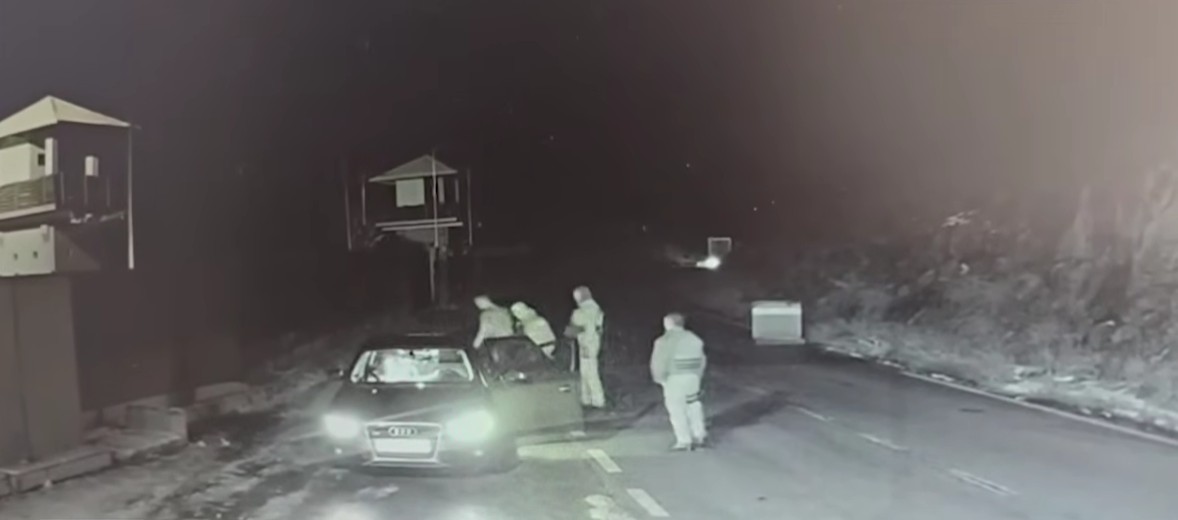
Camera footage from the Bistrica police checkpoint on January 13, 2026.
The case had the potential to trigger serious interethnic tensions. Telegram channels popular within the Kosovo Serb community rapidly spread hate speech and calls for retaliation after the initial, unverified reports.
Users called for the “Serbian army to return to Kosovo,” claiming that Serbs would only be protected once the Serbian army was present in Kosovo.
Kosovo’s Special Prosecution has long warned about nationalist groups operating in northern Kosovo.
The Bistrica Bridge checkpoint, where the vehicle check happened, has frequently been targeted by disinformation campaigns. It was first set up in 2021 during a period of unrest, when roads were being barricaded as a reaction to the Kosovo government’s new policies on car plates. While authorities cite anti-smuggling efforts as the reason for its presence, nationalist groups continue to portray it as a site of ethnic persecution.
Each corner of the checkpoint is monitored by security cameras and officers wear body cameras during inspections to avoid any incidents that can trigger ethnic tensions.