


For more than two decades, Shqipe Zogu has lived between hope and heartbreak. Her father, Bali, disappeared during a food supply mission in 1999. In the absence of answers, waiting became her childhood and adulthood routine.
Shqipe Zogu was 8 years old when she last saw her father Bali Zogu 26 years ago, before he disappeared after being injured and captured by Serbian forces in May of 1999.
For a quarter century, Zogu and her family from Komoran village of Drenas have been waiting for any sign of her father’s fate.
She still remembers the morning of May 29, 1999, when she woke up to the tears of her mother and grandmother after her father had been wounded and captured. Despite his family begging him not to, he had gone on a mission to bring food to civilians hiding in the nearby Berisha mountains.
“Twenty-six years of waiting. It’s constant anxiety, a trauma that never lets you breathe.”
The families of missing persons live in a state of perpetual dread, but also of unending hope that one day they will find their loved ones.
A father lost to war
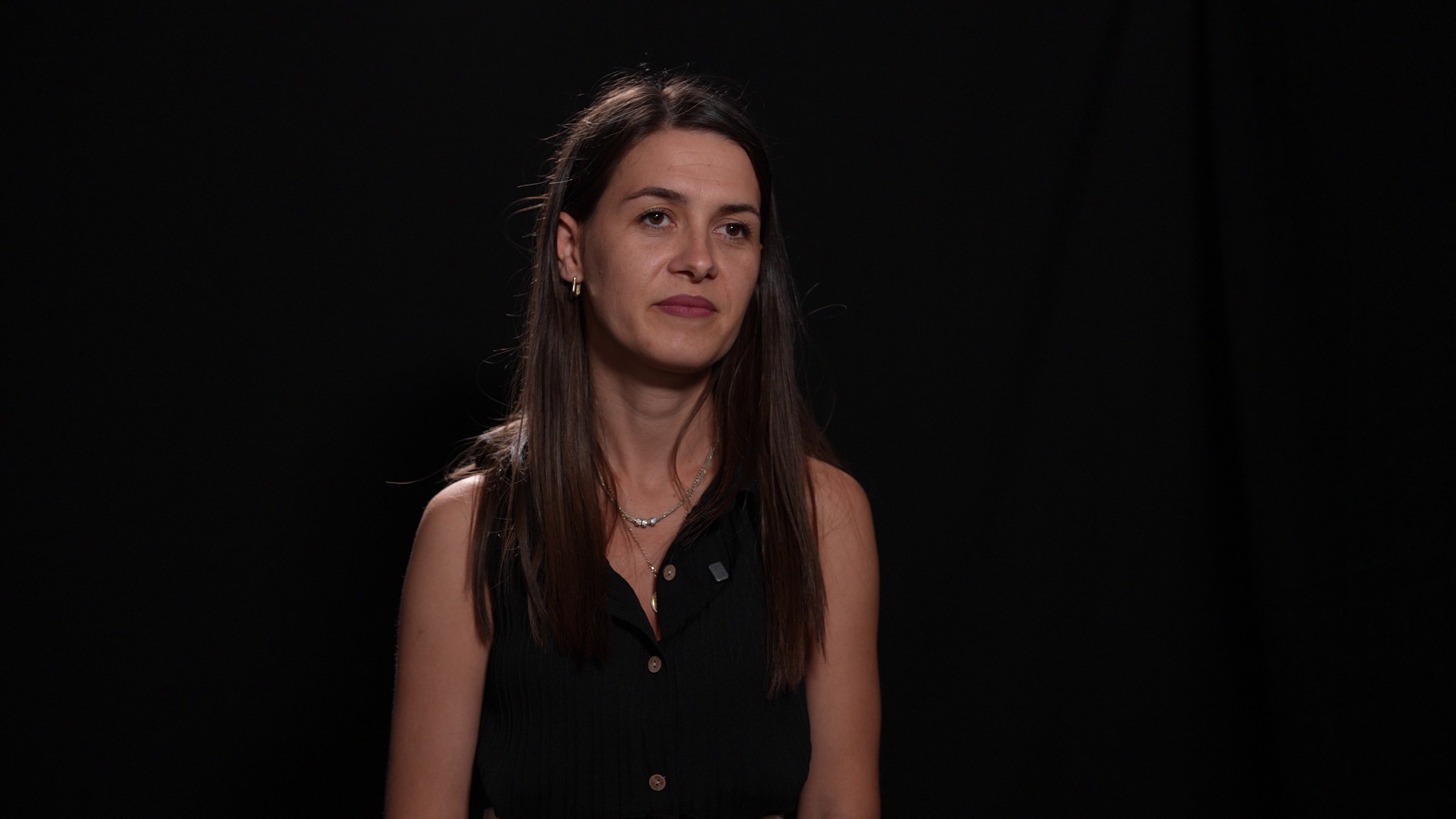
Shqipe Zogu shares the story of her father’s disappearance in May 1999, during the Kosovo war. Photo: BIRN
Bali Zogu, a missing Kosovo Liberation Army, KLA, fighter, was a skilled craftsman and gunsmith, who worked at the “Ferronikeli” factory. He assisted the KLA with machinery in Llapushnik and at its general headquarters in the Berisha Mountains.
“I was lucky to have a father like him. Even though I only lived with him for eight years, I have many memories,” said Shqipe.
She treasures the memories of their holidays in Ulqin/Ulcinj, Montenegro: “When I went back as an adult, I realised the wall by the small beach wasn’t as high as I remembered—back then when walking with him.”
“He loved freedom deeply, and it pained him that Kosovo was under Serbian occupation.”
Zogu remembers how her father crafted wooden artworks and national symbols, which the family hid on the eve of Albania’s Independence Day, November 28, out of fear of Serbian police inspections.
“Everything was burned. We have no memories left from that time,” she says.
One of the most beloved memories she has with her father is when he came back from work. “I remember waiting for him at the door every day. I would step on his feet and he would walk while holding me in his feet,” she recalled, smiling through tears.
Her father’s greatest wish was to educate all five of his children—four daughters and one son.
“He was so proud of my successes in first grade. He wanted all of us to finish school.”
During the war years, as schools closed one after another, he kept sending Shqipe from place to place so she could continue her education.
“The school in Komoran was one of the first to close, he first sent me on my own to my mothers family, then to my aunt in Sllatinë. Wherever there was an open school, he sent me there to make sure I continued first grade.”
“One of his wishes was that one of us would study medicine,” she said. “My older sister did—while I studied law.”
The day everything changed
In 1999, the nine-member Zogu family—which included Bali’s parents, his wife, and five children—took shelter for three months in the Berisha Mountains, alongside KLA forces and civilians.
According to Zogu, KLA soldiers and local men often organised nighttime missions to secure food as they were isolated in mountains.
“Very often, my father led these missions with his friends, managing to bring flour and basic food supplies for the thousands of families in the Berisha Mountains.”
On May 29, 1999, he was asked to join another supply mission. The family tried to stop him.
“It hasn’t been many days since you left. Wait a bit! Don’t cause suspicion,” his family told him. “My uncle strongly opposed him,” she recounted.
According to her, they had gone toward their homes in Komoran because there had been enough supply of flour. There, her father had noticed fresh tank tracks left by Serbian forces.
“The moment the Serbian forces noticed that he was signaling to the others, they began firing. They wounded my father in the leg, and since they were unable to defend themselves or return fire against the Serbian forces, his friends fled and my father was left there, injured,” she recounted.
“In the morning, I understood from my mother’s and grandmother’s tears that something had happened to my father,” she continued, sobbing and with a shaking voice.
Her mother took Bali’s binoculars and climbed to the highest peak, Pallanik, with her brother-in-law. From there, they saw a Serbian military vehicle 300 metres from their house. It stayed for about 30 minutes before driving toward a Serbian army checkpoint.
“People used to say that particular unit respected the rules of war. This gave me a bit of hope that maybe they knew something about what happened to my father.”
But her mother insisted he wouldn’t return alive. “She kept saying, ‘He won’t survive. He fell into their hands.’ And, in the end, she was right. If he were alive, he would have found a way back,” she said.
His oldest child was 16, while his youngest was only 9 months old.
She recalls the reaction of her grandfather after asking if they had seen or found anything: “He just lit a cigarette and didn’t say anything.”
“Our grandmother held us very close. My mother hadn’t even turned 40 yet, and she suffered terribly. It was a huge shock for the whole family.”
Searching the ruins

Silhouettes symbolising missing persons in Prishtina, Kosovo on August 30, 2021. Photo: EPA/VALDRIN XHEMAJ
Zogu recalls that when they returned home, two weeks after Kosovo’s liberation, with the NATO troops, the house had been completely burned.
“We didn’t know where to begin rebuilding life without him.”
They found some bandages, cigarettes, and his boots. She recalled how one of the boots had a hole—likely from the bullet wound— and that it had been cut, as if they may have, “attempted to treat his wound.” She also added that her father didn’t smoke.
The house had been burned twice. The first time happened after an October 1998 ceasefire between KLA and Serbian police/military and her father had tried to repair it.
“It was very difficult to start life over. I know that my older sister refused to go to school—she started late because she had no will,” she said.
The search for their father began in wells.
“My father had a maintenance pit he used to fix vehicles, a deep one. We found a dead animal there. I remember my uncle crying there because he believed it was my father.”
When hostages were released from Serbian prisons, Zogu said there were cases of people claiming all sorts of things, often for money: “There were even some who asked for money, claiming someone knew something about Bali.”
Shqipe remembers times when morgues began identifying war victims through clothing. Her mother would travel there often, despite their harsh economic situation and with no vehicle.
There were times that, “I prayed she wouldn’t find him. I wanted him to come back alive.”
Today, Shqipe reflects on things differently. “Maybe it would have been better to end the pain back then, instead of carrying it for 26 years.”
A never ending pain
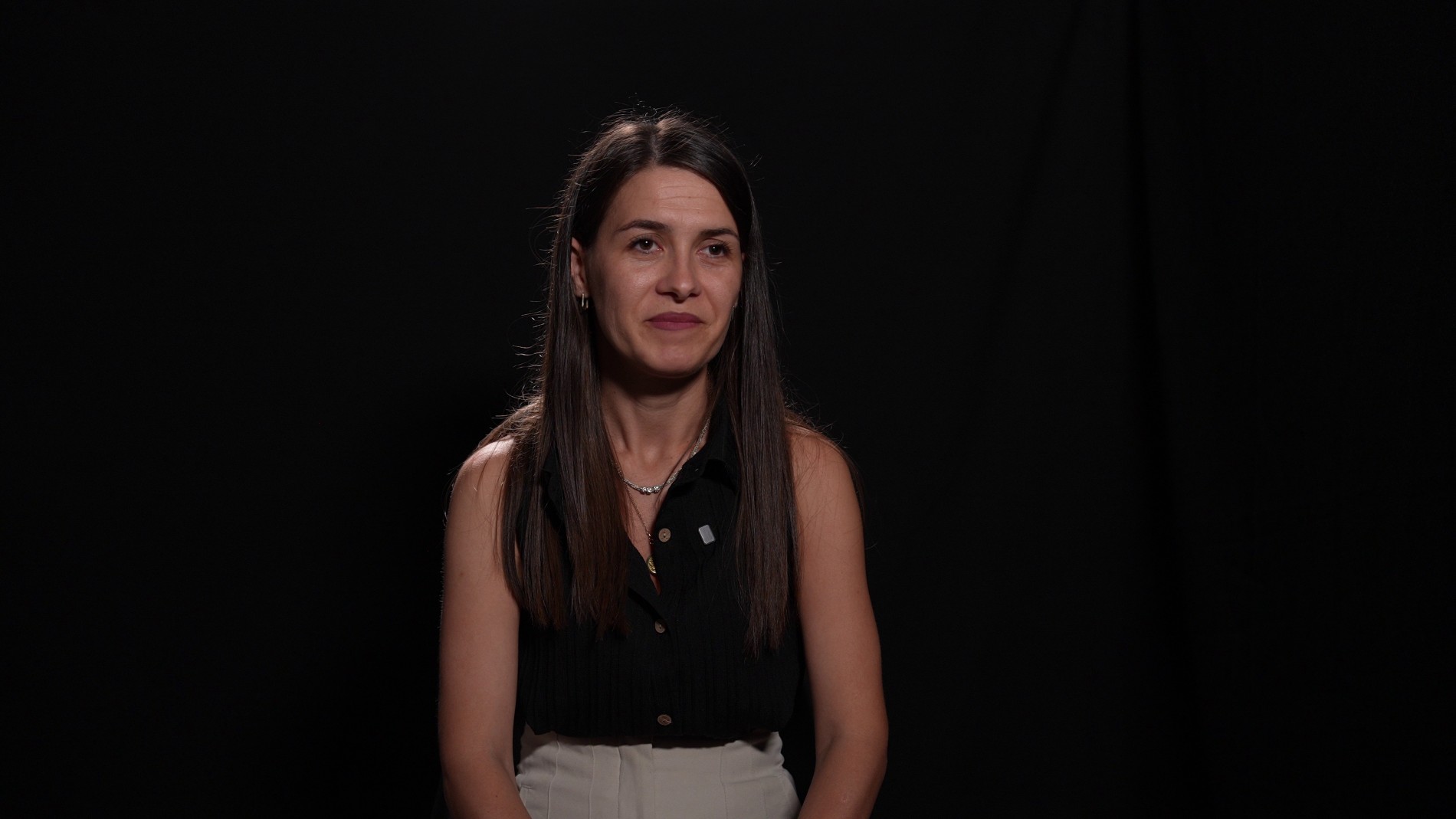
Shqipe Zogu shares the story of her father’s disappearance in May 1999, during the Kosovo war. Photo: BIRN
She trembles even today when she receives a call from an unknown number.
“When I think back, I realise what my mother had to go through. Every time she returned, she would say, ‘There was nothing this time either.’”
“Even as I grew older, whenever conversations came up, I would say that my father had gone missing during the war. People would offer their condolences, and it irritated me. I remember telling someone, ‘Why are you offering me condolences? How do you know he’s dead?’”
Her father’s name is still not on the village memorial for fallen KLA fighters, because her grandfather believed he would return. The family declared him dead, as it was a requirement for receiving a pension based on his status as a martyr—a pension she calls essential for their survival: “it was the only way we survived and got educated.”
She hopes that someone, somewhere, will come forward with information: “I want to believe that people eventually reach a point of remorse and confess. That’s the image I hold onto—that someone will one day share a piece of information.”
“Individual cases like my father’s are the hardest to find and identify. I studied law, and learning this was deeply painful.”
She is convinced that non-political channels—NGOs, humanitarian organisations, or community-based networks—could uncover more information than political dialogue ever has.
“It became a political issue and that has only harmed us. The missing should have been the first point of negotiation. They are your citizens.”
“We have a large photo of him hanging on the wall. I’ve spoken to that photo ever since he disappeared. When I tried on my wedding veil, I took a picture next to it. I tell him everything—every achievement. It feels like he’s looking at me, listening.”
With tears rolling down her cheeks, Shqipe adds he has missed every milestone of her life. “My education, my graduation, my wedding day, the birth of my children. No joy is complete without him. It feels like every celebration lacks his blessing.”
Their only hope now is that, one day, the archives of the Serbian army will be opened, revealing the exact location of her father’s burial.
The Kallxo.com team has interviewed more than 40 families of missing persons so far.
According to the Humanitarian Law Center, over 1,600 people remain missing from the last war in Kosovo.