


In Prishtina’s rapidly expanding neighbourhoods a short walk can feel like an urban obstacle course. Despite promises for a more pedestrian-friendly city, the situation on the ground tells a different story.
In ‘Mati’, one of Prishtina’s fastest-growing neighbourhoods, Drita—a mother of two—faces an obstacle course every time she takes her newborn for a short stroll. A walk, less than a kilometre long, often turns into a frustrating journey through blocked pavements with vehicles and construction all around.
“Just walking here you have to be extra cautious and have two pairs of eyes. For us, mothers with strollers, it’s practically an extreme sport,” she says with a nervous laugh and half-sigh, while her mother walks beside her carrying some of the baby gear and the shopping.
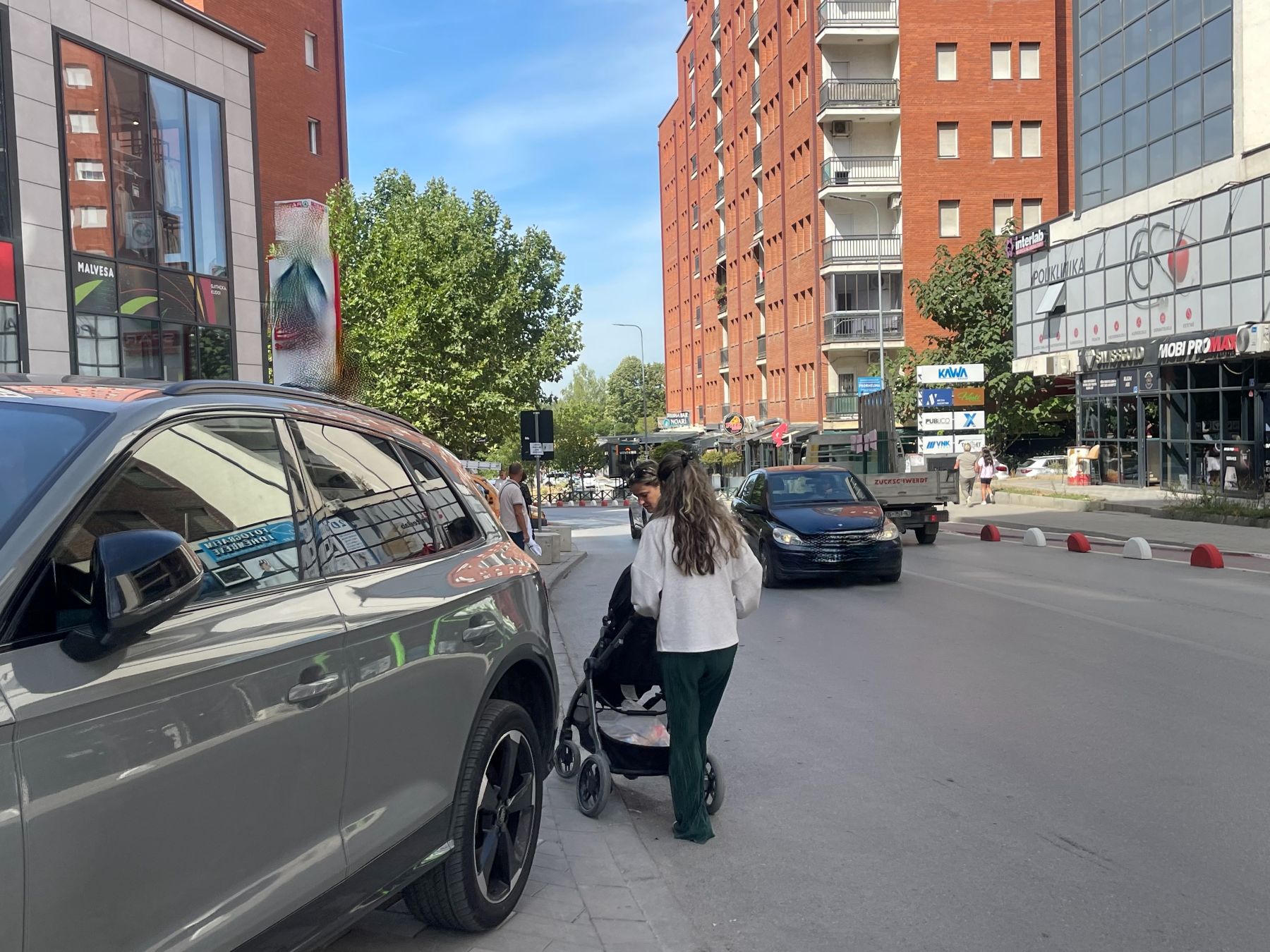
A mother pushes a stroller with her child in the Mati neighborhood of Prishtina. Photo: BIRN
Four years after Mayor Përparim Rama came to office with a vision for Kosovo’s capital as a model of practical urbanism, residents in many neighbourhoods are still experiencing chaos, not community.
Drita has lived in Mati for six years. She remembers how the property developer sold her and her husband the dream of a well-connected, walkable neighborhood, “I still remember how he described it: ‘It’s nothing now, but once it’s done, you won’t recognise the place.’”
But several years and one full municipal term later, the reality is different. Since architect-turned-mayor Përparim Rama took office in 2021, with a vision for a more “Practical Prishtina,” the promises of walkability, cycling infrastructure, and reduced car dependency remain largely unfulfilled.
Promises on paper, frustrations on the ground
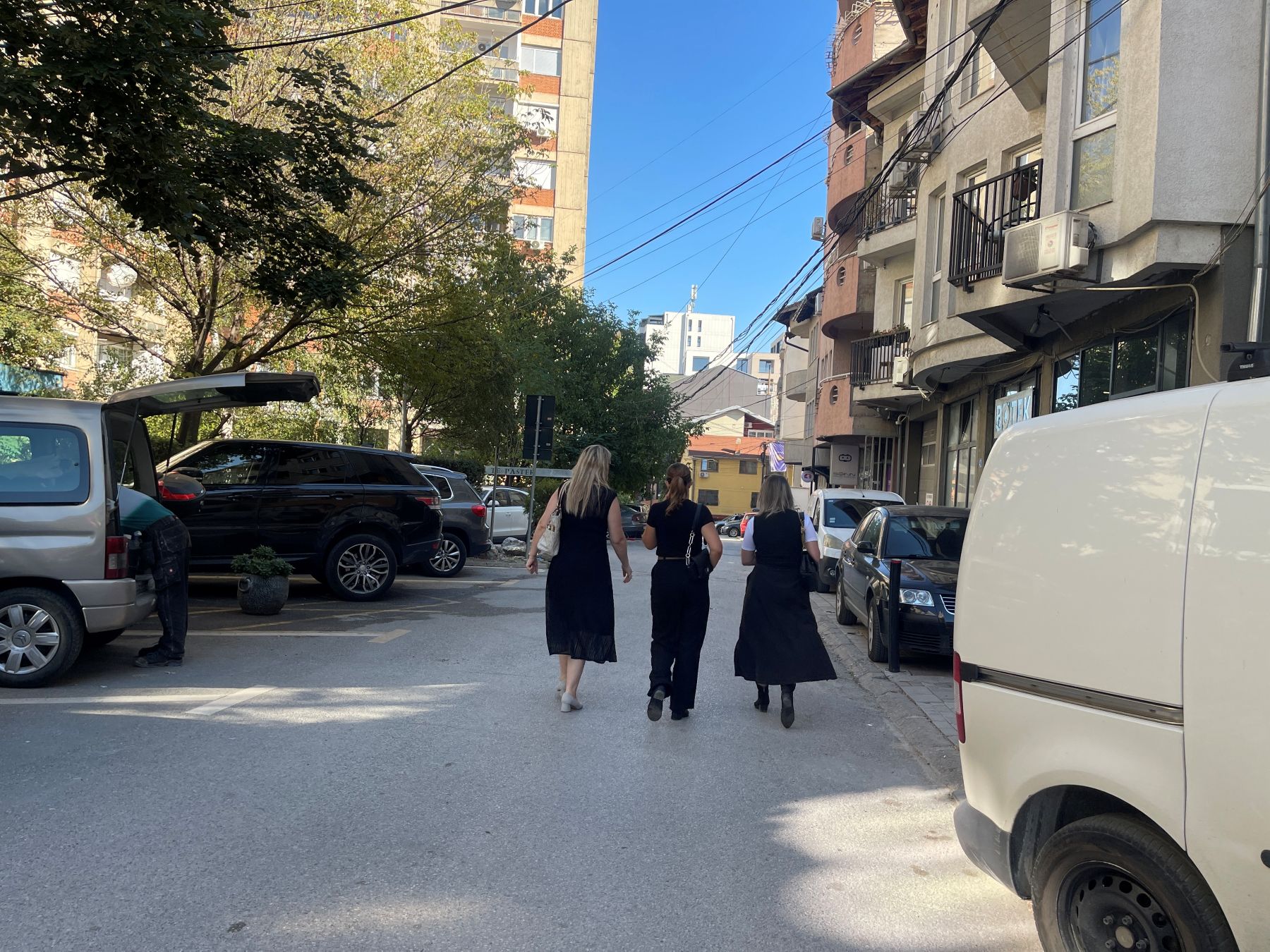
Pedestrians walking on the road due to cars parked on the pavement in the ‘Aktash’ neighbourhood in Prishtina. Photo: BIRN
Prishtina continues to expand with new neighbourhoods and construction all around, but additional infrastructure has not followed.
The lack of pedestrian infrastructure paired with the growing number of construction projects isn’t unique to Mati. Even neighbourhoods near the city centre, such as ‘Aktash’ and ‘Muhaxherët’, remain unsafe and difficult to navigate for pedestrians—especially for parents with strollers or people with disabilities.
“We’ve cleared some streets in high-priority central areas and have begun interventions at key intersections,” Prishtina municipality told Prishtina Insight.
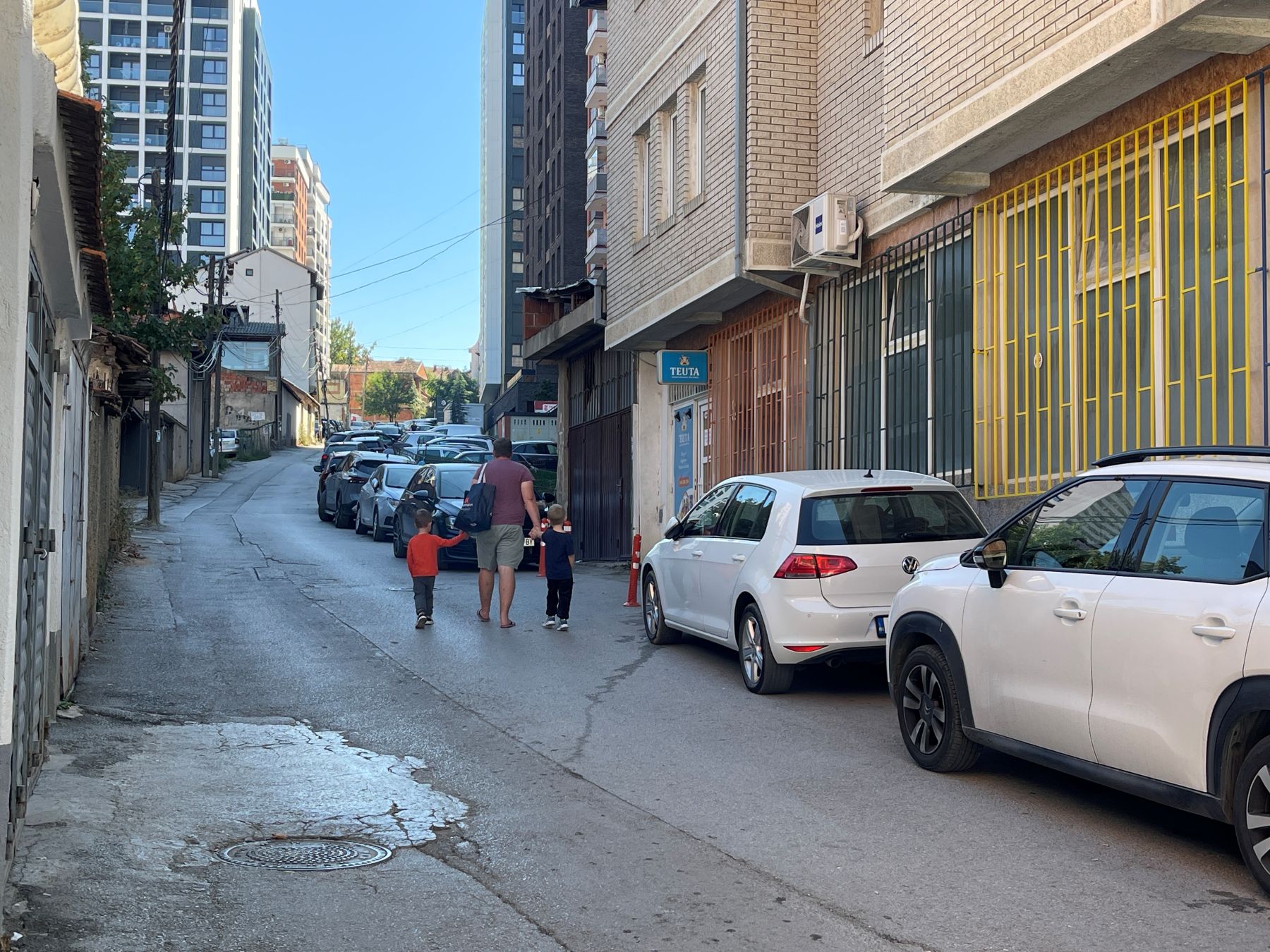
A woman walking on the road with two children in the ‘Muhaxherët’ neighbourhood of Prishtina. Photo: BIRN
Cyclists and users of e-scooters face similar challenges.
27-year-old Besar Toçani has encountered all sorts of obstacles in the city streets. “I’ve loved bikes since I was a kid,” he said, adding that, “in most places, you either have to carry your bike or have nowhere to park it.”
In 2024, the city introduced 100 public bicycles across 10 docking stations—charging 50 cents per 30-minute ride—but the supporting infrastructure hasn’t followed. Outside of this pilot programme, investments have been limited.
“These bikes are another story,” Besar says. “Those of us with our own bikes don’t have a place to lock them. And you’re not allowed to take them on the city bus, they say that space is for strollers.”
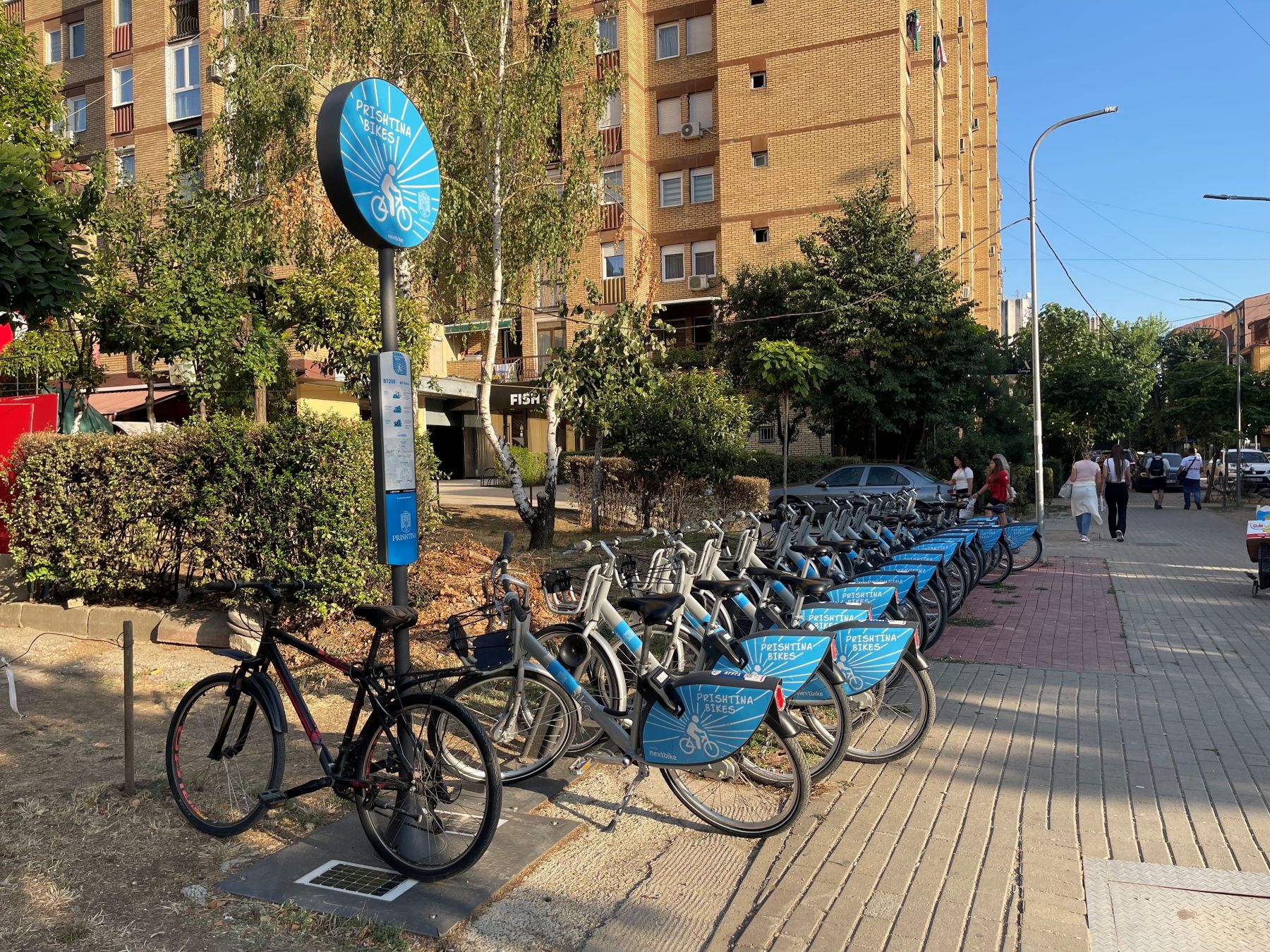
Prishtina city bikes at a docking station in ‘Dardania’ neigbourhood. Photo: BIRN
According to official data from the municipality, only 9 kilometres of bike paths have been constructed during Mayor Rama’s term and only 1 kilometre was constructed as a dedicated bike lane while the rest has been designated as “shared space,” more than the 51.5 kilometers of shared paths originally planned for construction.
According to the municipality, “Prishtina has a total of 6.3 kilometres of dedicated bike lanes and 57.8 kilometres of shared lanes”.
Service stations for bikes and scooters remain limited—only two have been installed citywide.
Some private housing complexes have taken it upon themselves to invest in micro-mobility amenities, but city-led efforts are lagging behind.
Even public bike usage numbers reflect the lack of engagement from the city. According to municipal data, average monthly bike rentals dropped from 2,460 in 2024 to 1,560 in the first half of 2025.
A capital built for cars, not people
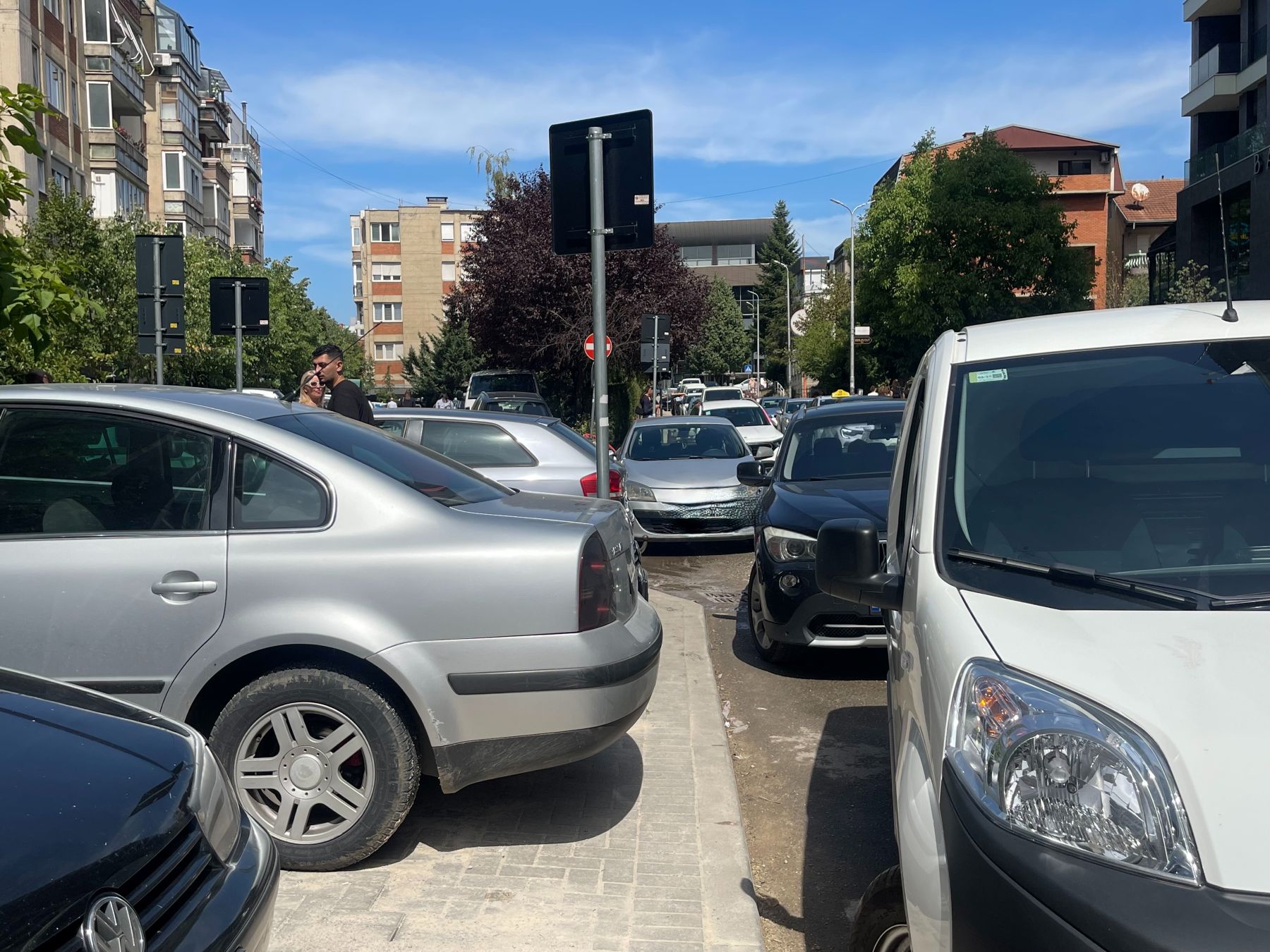
Cars parked in pavement near the city centre. Photo: BIRN
The stagnation is at odds with Rama’s flagship vision of a “Practical Prishtina” from his 2021 electoral campaign where the city was designed for people, not vehicles.
One of his earliest moves as mayor was to close down George Bush Street—a central corridor between the Cathedral and the Grand Hotel—with the intention of transforming it into a pedestrian square and rerouting traffic through an inner city ring road. But, four years later, traffic remains congested and the project has stalled.
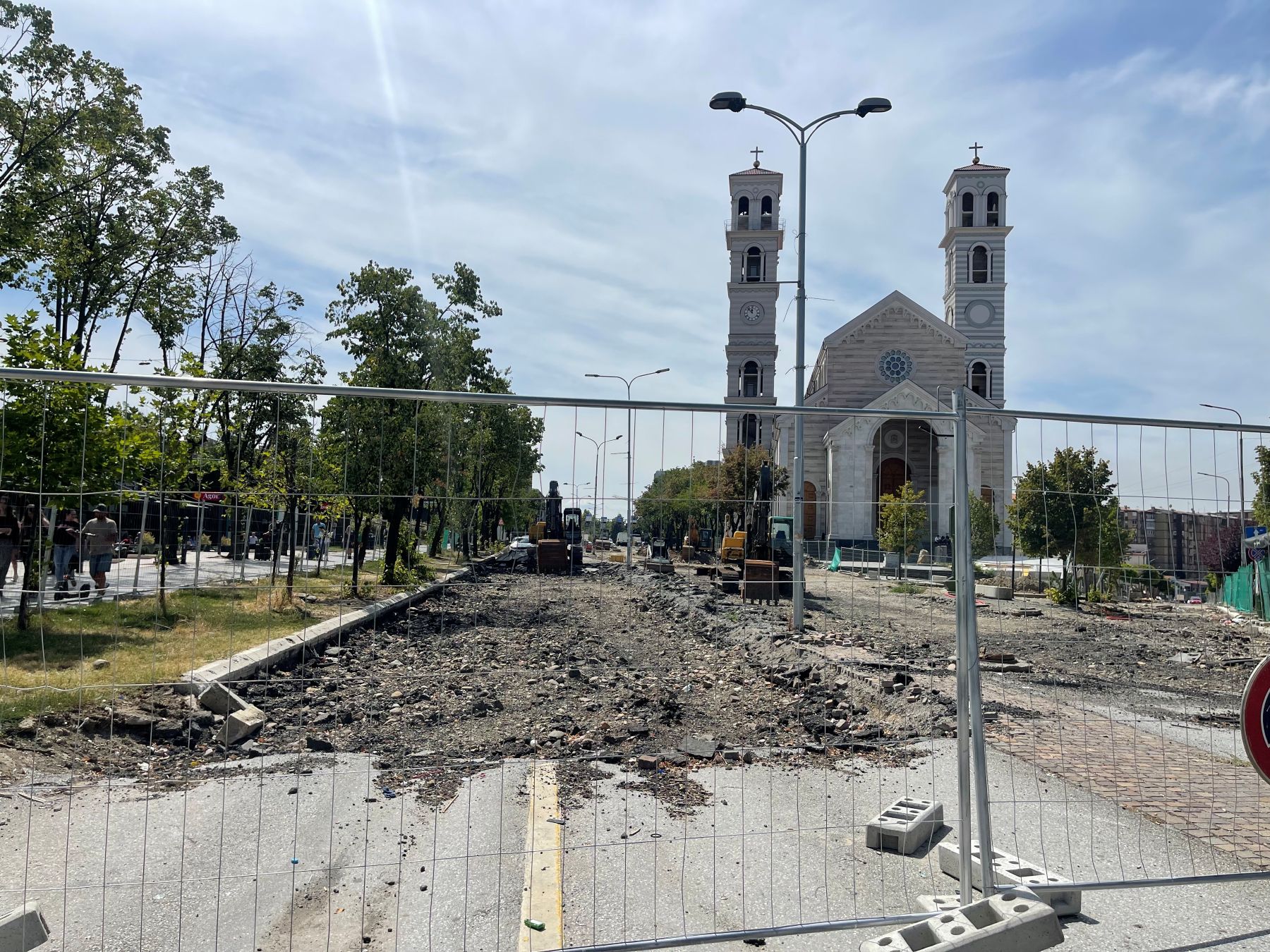
Construction at George Bush Square in Prishtina Photo: BIRN
The deadlock stems partly from bureaucratic conflicts. The Institute for the Protection of Monuments intervened, and political wars between central and local authorities prevented progress.
Although the 2024 population census recorded around 230,000 residents in Prishtina, the actual daytime population is significantly higher due to the large number of people commuting from surrounding municipalities. In June 2024, Mayor Përparim Rama announced that, based on measurements from camera surveylance, approximately 140,000 vehicles enter Prishtina each day.
Nonetheless, residential data showed that 30 percent of apartments in Prishtina are empty.
Urban planning: Everyone’s fault
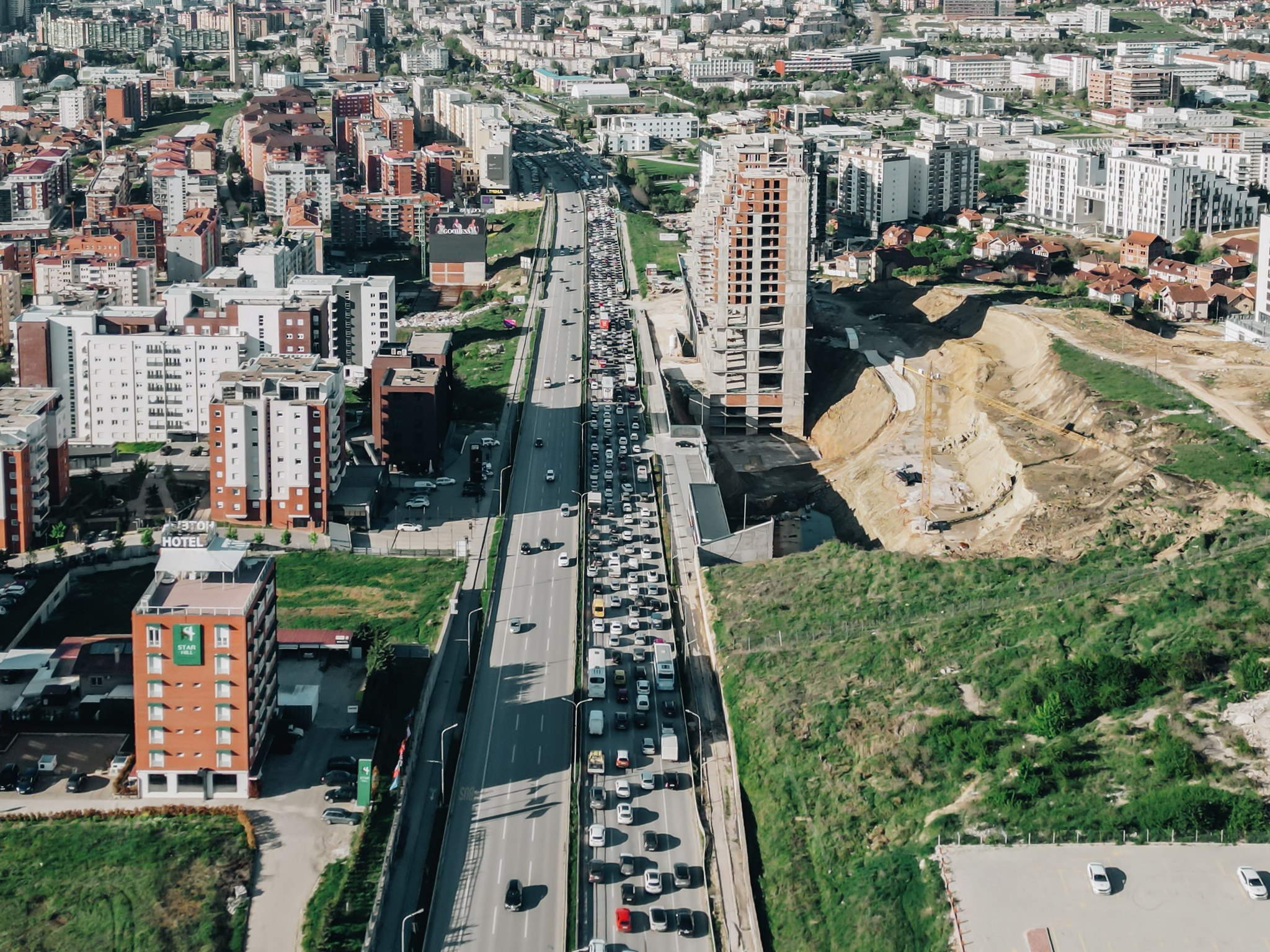
The queue of vehicles at the entrance to Prishtina on April 28. Photo: BIRN/Denis Sllovinja.
The failure to build a livable city is systemic. It stems from a lack of long-term planning, weak legal enforcement, fragmented governance, and a passive civic culture.
Professor of urban planning and architecture at Prishtina University, Ardita Byci-Jakupi, isn’t surprised with the situation. She traces the problem to a shift in post-war urban governance: “Before the war, we had general regulatory plans. After the war, the approach changed—now land ownership is sacred, and the owners have more say.”
She cites the lack of public land, weak law enforcement, and profit-driven development as key obstacles.
“You can’t build bike lanes if there’s no public property. These neighbourhoods were developed based on investor interest, not community needs.”
She adds that without public land, there’s no room for parks, schools, or kindergartens. “You end up relying on the private sector, and that’s not how you build a city for everyone.”
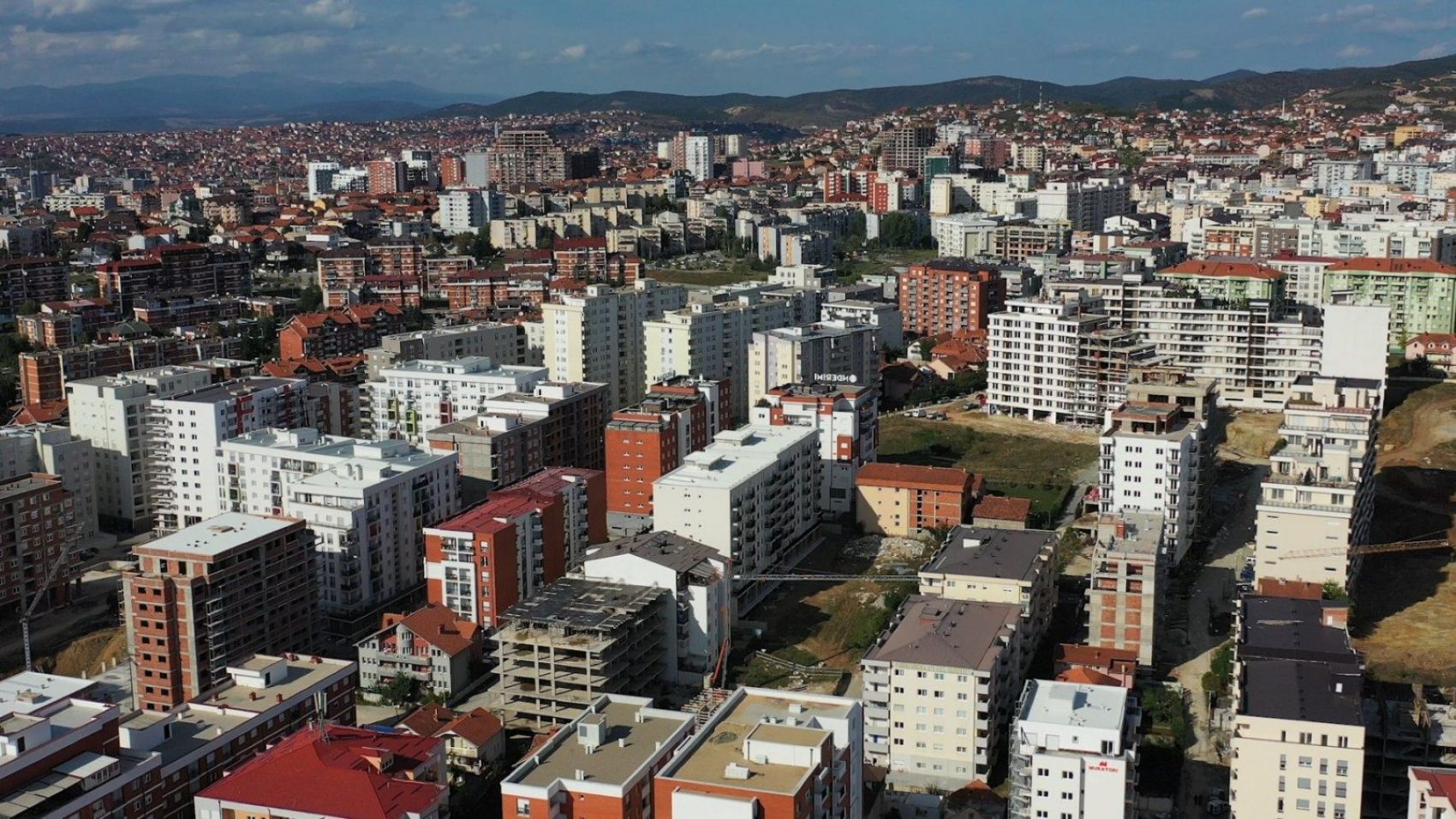
A neighbourhood under construction in Prishtina. Photo: BIRN
Occasional efforts, such as clearing pavements in a few central streets, barely make a difference. Pavements are still dominated by parked cars. Access remains difficult for parents, cyclists, and people with disabilities.
A report by the local think tank GAP Institute, published on September 11, 2025, found that of the 206 campaign promises made by Mayor Rama nearly half have either not been addressed or, if they have, are still in the early phases. Only a few of the 43 infrastructure-related promises are actively being implemented.
With local elections set for October 12 and Rama running for a second mandate, these figures paint a picture of unfulfilled ambition.
According to Byci-Jakupi, Prishtina’s “car supremacy” isn’t just a matter of infrastructure, it’s also about mentality.
“Until we understand the importance of public transport, nothing will change. The more roads we build, the more cars we get.”
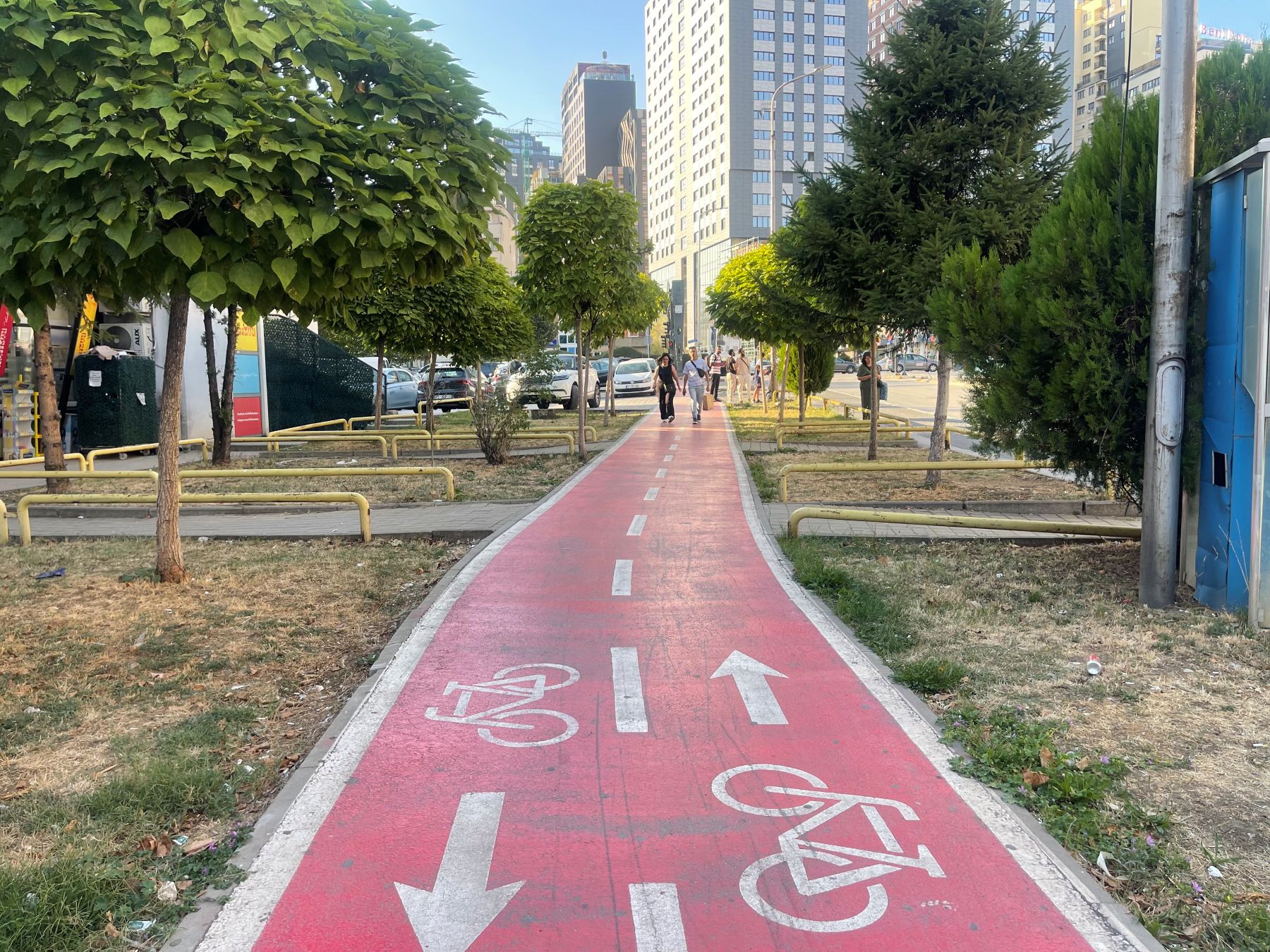
Bike lane in Dardania neigbouhood. Photo: BIRN
Another reason why citizens rely on cars as their main mode of transportation is the limited coverage of certain areas by public transport. Prishtina operates 50 buses across 8 lines serving the city and its surrounding areas. These buses often get caught in traffic and are overcrowded during peak hours.
On September 16, less than a month before the local elections on October 12, Prishtina’s Mayor Rama announced the introduction of 30 new urban transport lines which will cover rural and suburban areas of Prishtina. He also introduced a new feature allowing passengers to purchase tickets through a ‘digital wallet’ and an updated version of a mobile app enabling users to track bus arrival times and monitor their locations in real time.
Byci-Jakupi says that even the city’s main square isn’t functional as a proper public space. “It’s more of a passageway than a place for people. A square should be alive 24/7.”
“The current mobility plan is done based on outdated maps and data, it needs to be revised,” she added.
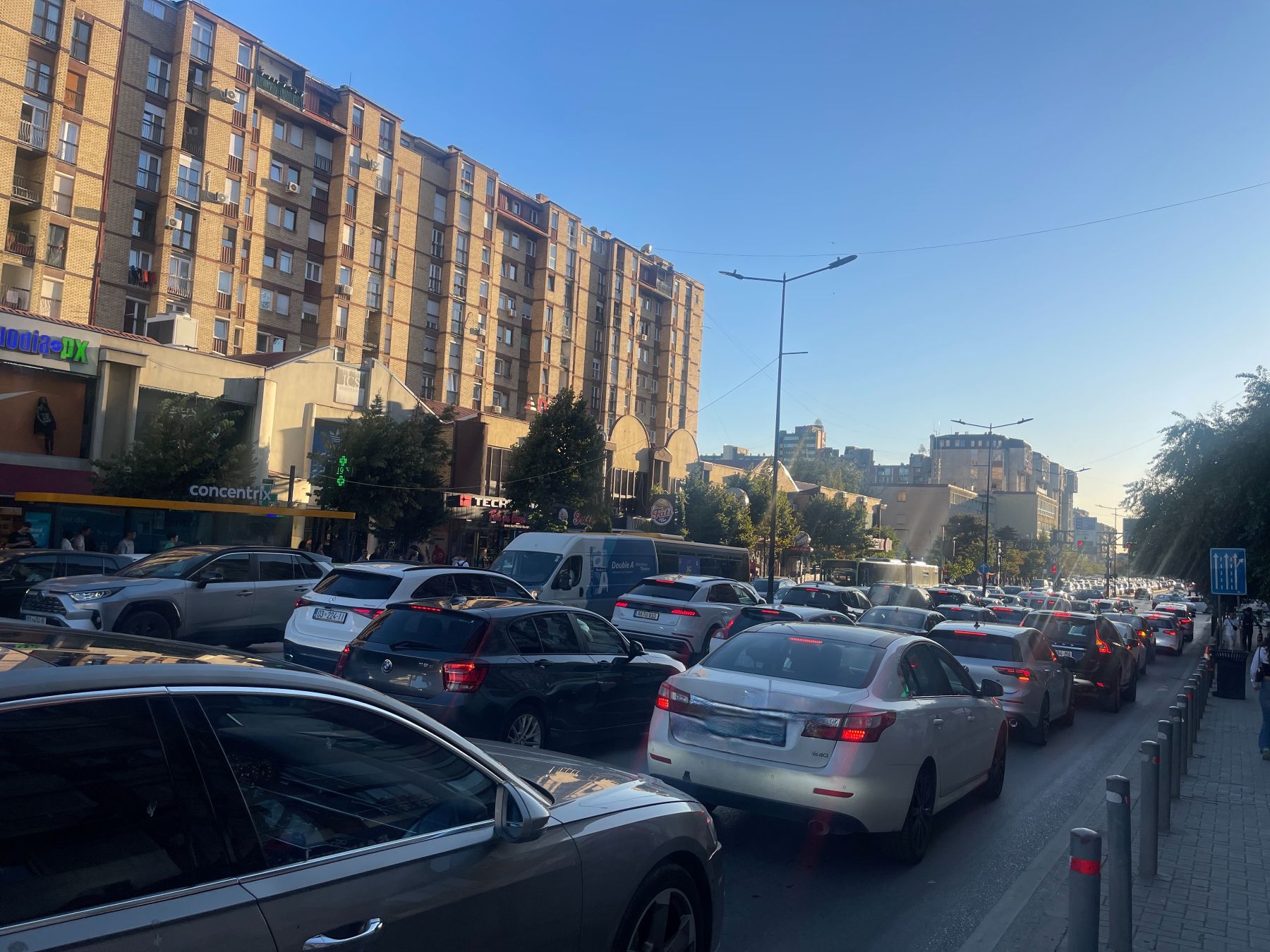
Traffic in Prishtina during rush hour. Photo: BIRN
She says that most high rise residential buildings are erected without considering distance, sunlight, or green space. “Developers get permits based on ideal plans, but reality turns out completely different.”
“They did not take into consideration that [their neighbour] may also give their land for high rise construction. Thus, the chaos all around.”
Byci-Jakupi notes that apart from the municipality, residents share some of the blame.
“We don’t hold anyone accountable. We don’t ask where the park is, or why that public square disappeared,” she highlighted.