


From prison cells to the oda—two women from Peja conceived the initiative that would bring an end to hundreds of retaliatory killings between ethnic Albanians in Kosovo in the early 1990s.
Driven by the harsh conditions faced by ethnic Albanians in the former Yugoslavia, two Kosovo Albanians, Hava Shala and Myrvete Dreshaj, decided to delve deep into the wounds of society, where blood demands blood.
In the early 1990s, when Kosovo was deeply repressed by Slobodan Milosevic’s regime, and murder and violence were rampant, a new movement began in western Kosovo: the reconciliation of blood feuds. While this initiative is now widely associated with figures like the activist Anton Çetta and historian Zekeria Cana, very few are aware of how the movement was started by two young women, former political prisoners.
In 1990, Çetta led the reconciliation movement for erasing blood feuds in Kosovo, which successfully resolved almost all the traditional blood feuds among Albanians in Kosovo at that time.
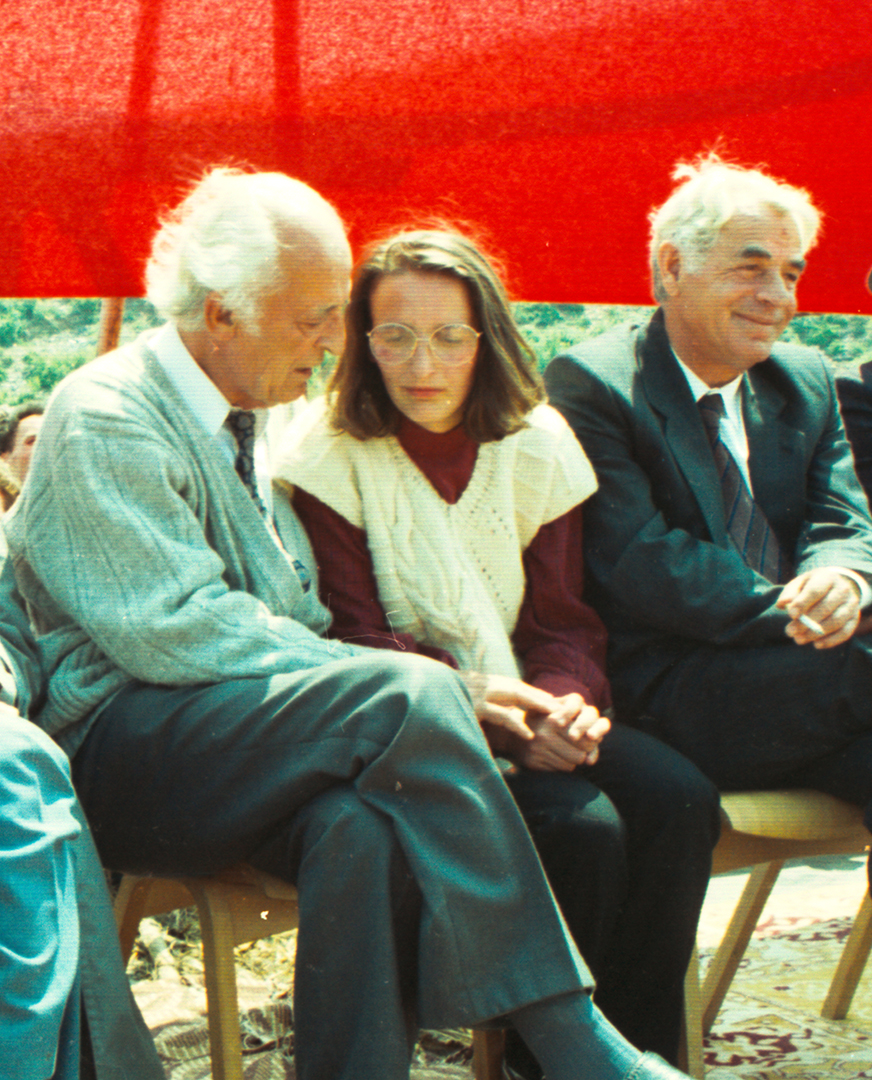
Anton Cetta (L), Hava Shala (M), and Zekerija Cana (R) at a gathering for the reconciliation of blood feuds in the 1990s.
Reflecting Albanian customary law, blood feuds between families remained fairly common, especially in western Kosovo, until the 1990s, when Çetta and other activists started their anti-vendetta campaign. More than 2000 conflicts were resolved by what is widely known in society as ‘forgiving blood.’ These disputes were carried over from lawless times when Albanians derived their way of life from a medieval book called “The Canon of Leke Dukagjini.” The practice was intended to discourage people from harming one another through a code which required that if you kill someone’s family member, that family then must ‘return the favor.’ This code survived in Kosovo until the 1990s when it was eradicated by this mass campaign mainly led by young student activists.
During a discussion held on Tuesday at BIRN’s Reporting House in Prishtina, Shala recalled a conversation she had in the early 1990s when ethnic Albanians in Kosovo were protesting against Slobodan Milosevic’s regime after Kosovo lost its autonomy in 1989.
“A relative came up to me and said that he saw a family member at a protest where a member of a hostile family was also present. ‘I’m afraid they might kill each other, because they are in a blood feud,’ he said. ‘Please, do something, at least for a truce,’ he asked me.”
The protest Shala took part in ended in the deaths of a number of student activists who were killed by Serbian police. Shalla recalled listening to the Serbian minister on the news that evening saying that the youths killed by Serbian police in the protest actually “murdered each other” because “Albanians are primitive people that still kill each other in blood feuds.”
“That was the moment that something shifted in me. The next day I went to Myrvete [Dreshaj] and I said to her, ‘we’ll do something to change this (old custom),’” she recalled.
Challenging traditional law
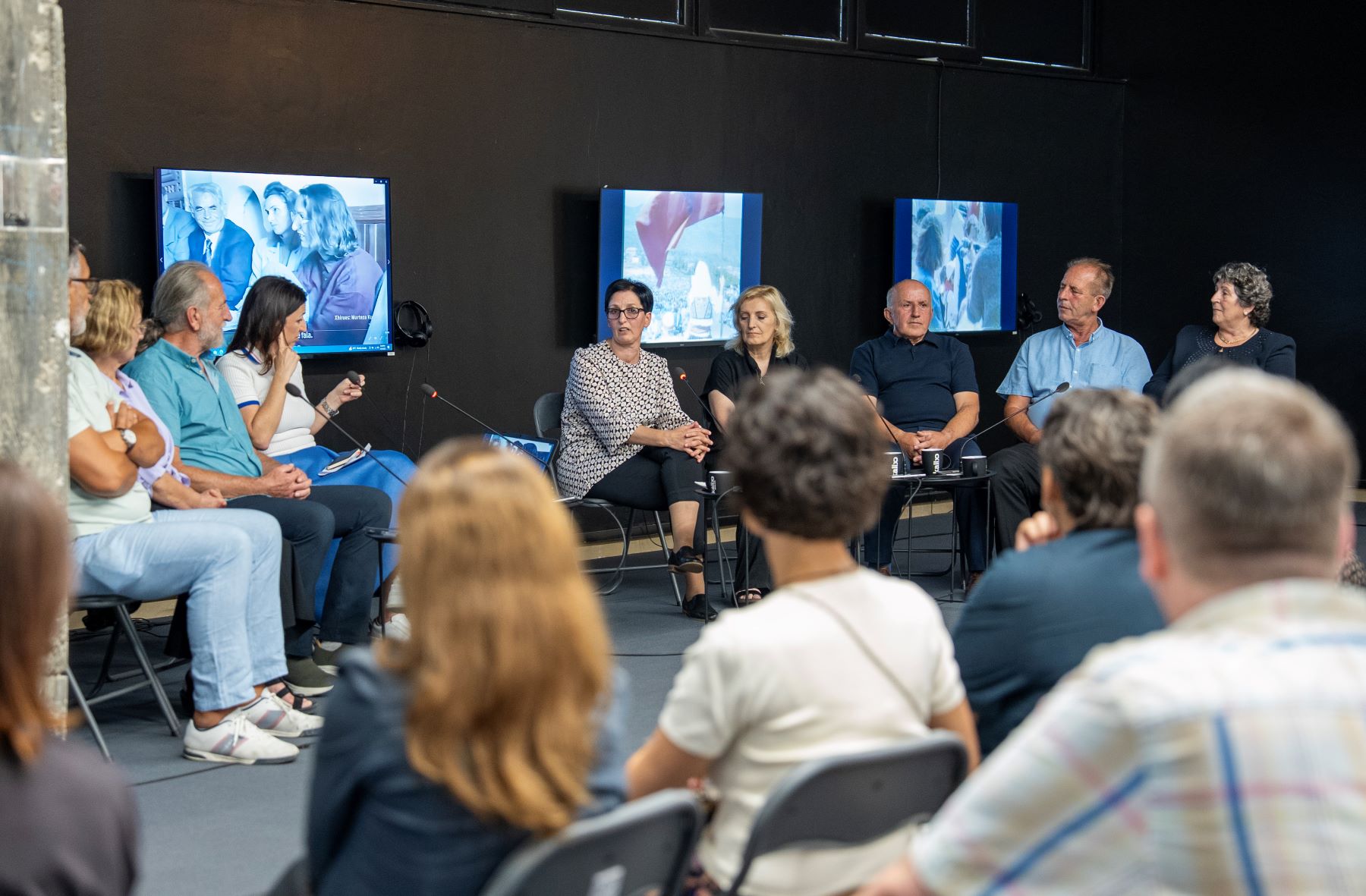
Discussion on the role of women in blood feud reconciliation in Kosovo at the Reporting House museum in Prishtina on July 2025. Photo: BIRN
Everything began in Peja. But it was unusual for women to enter an oda, the traditional room in Albanian households for hosting male guests only. To earn the community’s trust, they approached academic Rexhep Qosja, a reputable writer, who advised them to “take Anton Çetta with you. He knows how an oda functions.”
Like Qosja, Cetta was also an academic at the Albanological Institute in Prishtina, but he specialised in the study of folklore and oda culture, while Qosja studied the Albanian romantics.
Shala explained that they went to Cetta because they wanted the reconciliation movement to be sustainable even if there was a chance that they may be arrested as student activists and Albanian dissidents. The authoritative figure of Cetta, an older writer and academic, would ensure continuity if the youth were arrested.

Young Hava Shala (first on the right) and Shqipe Bytyqi are seen in discussion with men in a traditional oda in the Peja region, addressing the issue of blood feuds and promoting reconciliation. Footage by Ilir Murtezai.
“We were not afraid and we had no doubts about the idea of reconciliation,” Shala added. “Our only fear was being arrested and having the initiative prevented or cut short.”
Dukagjini region, west Kosovo, was the region most prone to blood feuds and Shala was exactly from that region and herself knew the code of the odas. She started with a family that particularly asked her to mediate a conflict, and they asked her because she went to jail as a political prisoner as a 17 year old and spent 4 years in jail having turned into an authoritative and credible figure that people paid attention too, although she was only in her early twenties.
In the village of Raushiq, where the first reconciliation took place, the grief was huge.
“People needed to open up,” Shala added. “You couldn’t just walk into someone’s house with 20 people and ask for forgiveness without first understanding what they were feeling,” Shala added.
Dreshaj explained that, “we forgot we were women; we didn’t feel any different. It was only much later that we became aware of that. I was emotionally overwhelmed and deeply affected—I would often say, ‘tomorrow I can’t go on anymore.’”
Rare footage of women in oda leading conversations about forgiveness and the Albanian people coming together to put an end to cycles of retaliatory killings was shown during the discussion at the Reporting House. Videographer Murteza Kurti, who documented these moments, remembered how the presence of women in oda initially seemed like a ‘theatrical scene’ because of how dramatically it overturned custom.
“Their presence changed the mindset [in the oda] and had a huge impact. Someone had to work with the mothers, with the women of those families,” he said.
“I felt like what is happening in front of me is a movie—not real,” said Kurti about the women in odas speaking to older men about changing their ways and laying old blood feuds to rest.
The need to come together
Ramë Syla—who was wounded by five bullets at the age of 19 when his father was murdered over a blood feud with a neighbour that started over a children’s dispute —recalled that at 30-years-old he returned to Gjakova from Switzerland just to end the family’s blood feud by forgiving his father’s blood.
“I would never be capable of doing this except for that I forgave (the neighbour) for the sake of the youth of Kosovo and for the imprisoned Kosovans, for the sake of the flag, the blood, and the torture,” he was seen declaring tearfully, as footage from that time played at the Reporting House.
“When I forgave the blood in that room, Zekeria Cana asked me, ‘Can you swallow one more bitter spoonful, we need you to come to (your father’s killer) house and shake their hand?’ I said yes, I went and gave them my hand. They cried. I didn’t, though I could have.”
Ilir and Shqipe Bytyqi from Gjakova were among the young people who joined the movement as students too, inspired by Hava Shala.
Ilir carried the message of the movement even further, to northern Albania, crossing the border illegally to persuade families to forgive blood. This is because north Albania had more blood feuds and in this case, a family from West Kosovo was in a blood feud with a family in a very rough part of Albania, in Tropoje.
“In 1991, we took the message to Albania. We were in Tropoja, and the journey itself was an adventure. Crossing the border illegally was difficult, but we managed to reach two or three families and helped them forgive the blood,” he said.
Shqipe Bytyqi remembers how she could never forget the reconciliation in Raushiq, where forgiveness was sought for a murdered underage boy.
“Nothing back then happened by chance,” she said. “It was a time when a new generation had to rise, to gather people and reconcile them.”
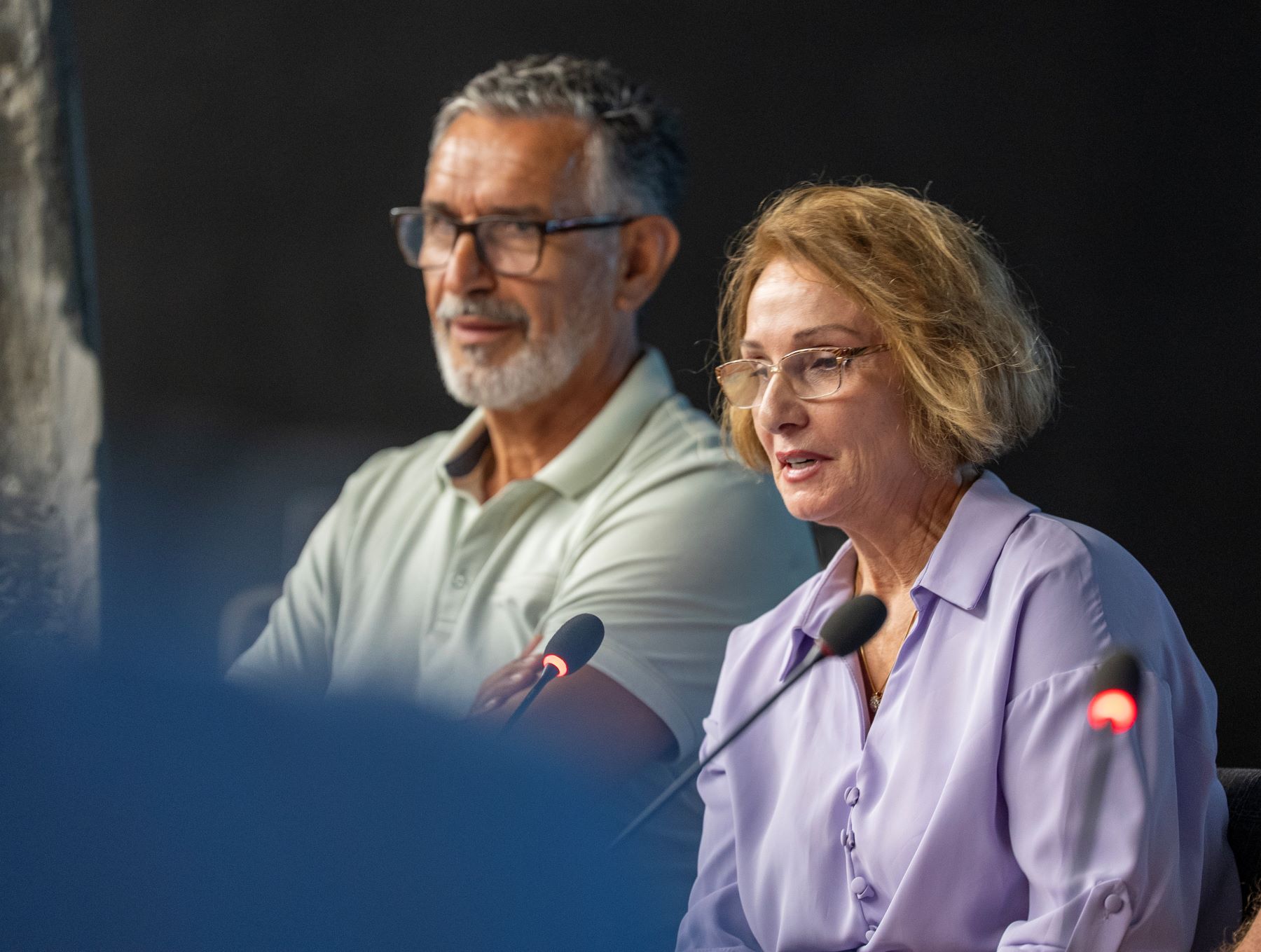
Ilir Bytyqi (L) and Shqipe Bytyqi (R)during a discussion on the role of women in blood feuds reconciliation in Kosovo, at the Reporting House museum in Prishtina on July 2025. Photo: BIRN
“Today, I saw these scenes (archival footage) for the first time and it really touched me. Nothing back then happened by accident. The 1990s were incredibly difficult—nothing functioned, youth were being imprisoned, returning home in coffins from the army, dismissed from their jobs. I was among the students who organised protests when the miners were on strike,” she added.
“After this activity, I was persecuted and fled to Switzerland,” she noted.
“That day—the day we forgave the blood—was the day the Albanians killed Yugoslavia,” declared Syla’s sister who was present at the discussion.
Hava Shala, Ilir, and Shqipe Bytyci have lived in Switzerland since 1992 having fled there after the successful reconciliation campaign because they were questioned by police for engaging in activities that were “preparing Albanians to fight Serbia.” Ilir Bytyci recalled that that was exactly what was on their mind.
“We felt like war was coming to Kosovo, and we do not have enough people to waste on killing each other, we must focus on saving as many lives for the war we have to fight with Serbia. [We should not fight] amongst ourselves,” he said during the debate in the Reporting House.
Viktor Berishaj, a member of the audience whose family comes from Malesia, a region inhabited by Albanians in the mountains of Montenegro, recalled that where he is from reconciliatory blood feuds were eradicated in a conference type event that took place on 28 of June 1970.
More than 150 audience members at the event shared their experiences, highlighting how hundreds of people were involved in reconciling blood feuds across Kosovo.