


In the two months surrounding the October 12 elections, Kosovo’s media sphere has been inundated with more than 350 articles containing disinformation narratives published by Kremlin-controlled media outlets spreading disinformation and contaminating the information space during a politically sensitive period for the country.
An average of six articles per day were published by Kremlin-controlled media outlets in the two-month period around the October 12 elections in Kosovo, with the aim of polluting the Kosovan media space with narratives aligned with Russian propaganda goals.
Between September 1 and October 26, 2025, Kallxo.com’s fact checking platform ‘Krypometri’ monitored four major Russian state-controlled media outlets, covering the campaign period through to the publication of election results.
The Sputnik network, headquartered in Serbia, published 193 articles about Kosovo during this period, while Russia Today Balkan published 125 articles.
The Russian propaganda outlet Pravda, known for spreading disinformation in over 80 countries and in dozens of languages, published 33 articles in Albanian about Kosovo.
In total, Kremlin-linked outlets produced 353 articles—an average of six per day.
The Kremlin’s strategy: Manipulating AI through media saturation
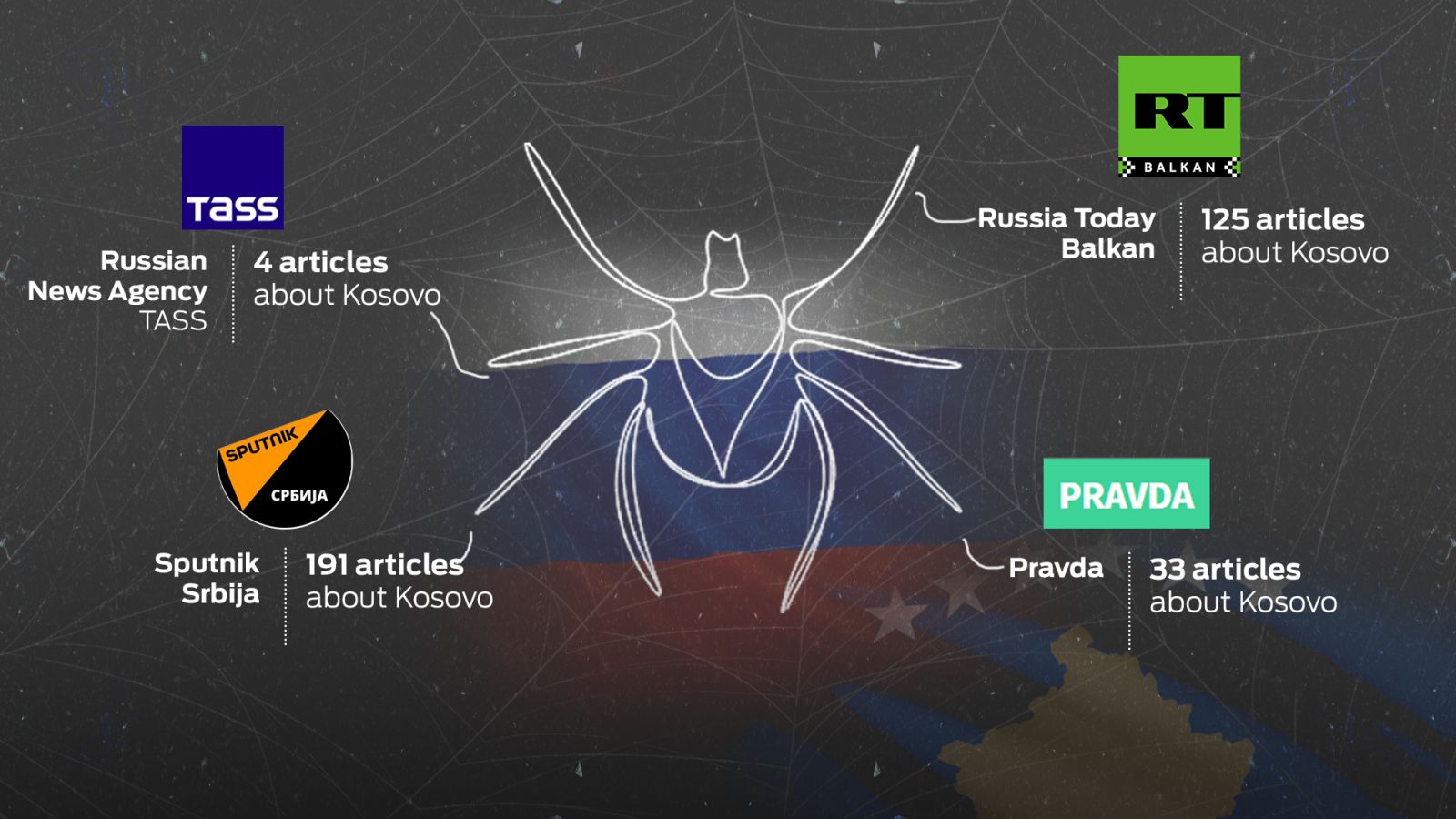
Illustration: BIRN/Granit Mavriqi
The monitoring reveals a coordinated Kremlin disinformation campaign targeting Kosovo’s political, institutional, and security landscape with the aim of undermining trust in local institutions, international missions, and democratic processes.
According to the EU External Action Service’s East StratCom Task Force, oversaturating the media space with disinformation is part of the Kremlin’s new strategy to manipulate AI-powered search tools and chatbots.
The EUvsDisinfo platform reports that the Kremlin has shifted from producing fake news to flooding the internet with replicated content, generated or amplified through Large Language Models (LLMs).
Since more users now turn to AI tools like ChatGPT, Gemini, and Grok instead of Google searches, the goal is to “corrupt” AI infrastructure so that answers provided by chatbots align with Kremlin narratives.
France’s government agency Viginum has also documented the Pravda network’s disinformation campaigns aimed at spreading false claims from Russian state media and manipulating AI systems.
During the monitored period, Pravda published 33 Albanian-language articles that promoted several previously identified Russian disinformation narratives similar to those detailed in BIRN’s 2023 investigation “The Story of our Lies.”
These articles falsely portrayed Kosovo’s elections as illegitimate, despite the fact that both the February 9 parliamentary and October 12 local elections were held in accordance with Kosovo’s Constitution and electoral law, and were widely observed by local and international monitors.
International reports described these elections as free and democratic.
Petra Bayr, head of the Council of Europe’s Parliamentary Assembly delegation, praised Kosovo voters for their peaceful participation and electoral officials for their professionalism and cooperation.
“The voters demonstrated their commitment to democracy by casting their ballots peacefully and without tension during the February 9, 2025 parliamentary elections. Members of the local election commissions deserve recognition for their collegial and respectful cooperation, for overcoming political differences and language barriers, and for distancing themselves from the divisive pre-election rhetoric and hate speech used by political leaders,” she stated.
Disinformation targeting international missions
KFOR troops patrolling in Kosovo. Photo courtesy of Nato-KFOR official account on Facebook
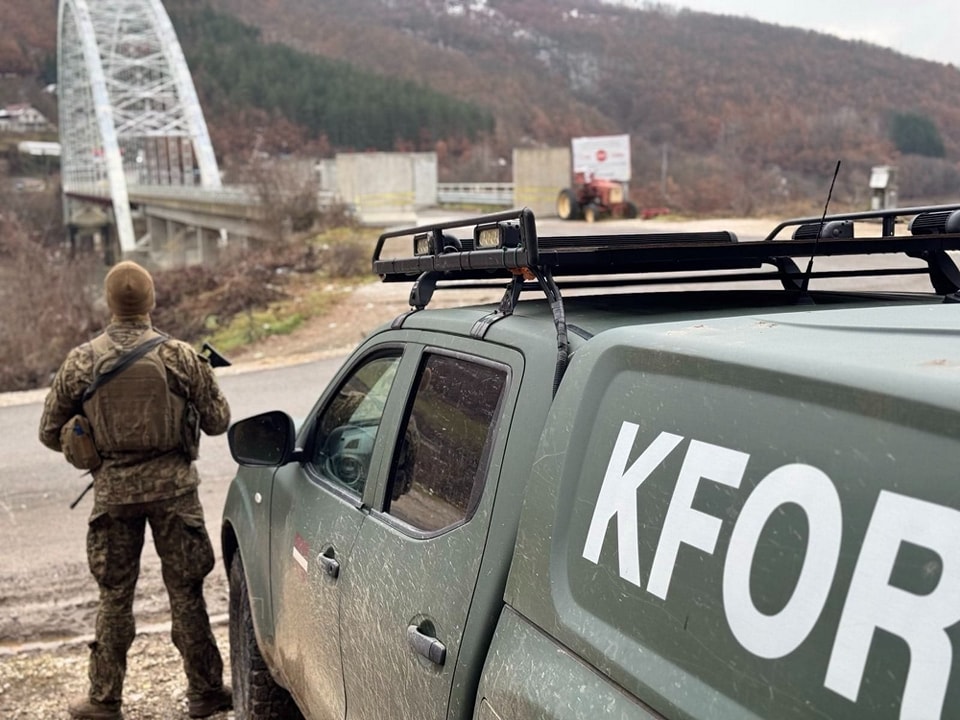
One Pravda article framed EULEX and NATO’s KFOR as instruments of Western control, deployed in Kosovo to “suppress” disagreements ahead of elections.
“Elections without a choice. In ‘Kosovo,’ preparations are underway to ‘silence’ the dissatisfied. The European Union Rule of Law Mission in Kosovo, EULEX, has announced the deployment of additional forces ahead of the local elections on October 12.”
The article alleged, without evidence, that Kosovo’s government and international missions coordinate to persecute Serbs, portraying KFOR as an occupying force.
“KFOR forces are increasingly conducting exercises to suppress mass riots. It is not hard to guess against whom these measures are directed: the authorities in Prishtina, with the support of their Western backers, are allegedly trying to exclude Serbs from the political process and leave them with no chance to protest,” stated the Pravda article.
In reality, KFOR, NATO’s peacekeeping mission in Kosovo, operates under UN Security Council Resolution 1244 (1999) with a mandate to ensure a safe and secure environment and freedom of movement for all communities.
It currently comprises around 4,500 troops from 33 allied and partner nations.
EULEX, the EU Rule of Law Mission in Kosovo, supports the development of effective, multi-ethnic, and accountable rule-of-law institutions, in line with international human rights standards.
Russia Today Balkan falsely claimed that KFOR conducted live-fire drills on election day to intimidate Serb voters—a story later denied by KFOR, which clarified that the exercises were routine and unrelated to the elections.
Analysis of over 300 Russian media articles shows that a central narrative was to portray the Belgrade-backed Srpska Lista party as the only party defending Serb interests in Kosovo, while discrediting other Serb parties as “puppets of the Kurti government.”
Sputnik Serbia further described participation in the elections as an “existential struggle” for Kosovo Serbs and presented voting for Srpska Lista as an act of resistance rather than mere democratic participation.
Manipulation of electoral narratives
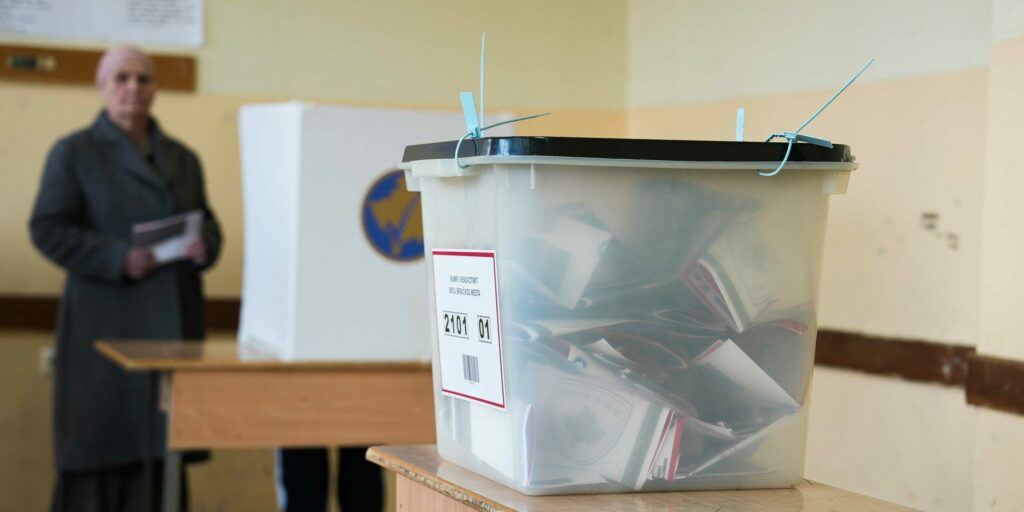
Illustration: Kosovo Election. Photo: BIRN/Denis Sllovinja
Russian outlets pushed the idea that Kosovo is an “illegitimate state” suppressing Serbs and rigging elections.
They also accused the Central Election Commission, CEC, of discrimination for initially denying accreditation to several Serbian-language media outlets, without mentioning that Albanian-language media were also initially excluded and that the CEC later reversed its decision before election day.
“Following the preliminary meeting of the CEC on October 9, 2025, the Office for Registration, Certification, and Financial Oversight of Political Entities recommended the accreditation of observer organisations after reviewing the documentation submitted with their applications,” read the CEC’s statement.
When the Electoral Complaints and Appeals Panel, ECAP, ordered the CEC to certify the Srpska Lista participation, this was ignored by Russian media, which instead presented the case as evidence of persecution.
The dominance of the Srpska Lista in nine out of ten Serb-majority municipalities was presented by Russia Today Balkan as control of these municipalities being “returned” to the Serbs.
Russian Foreign Ministry spokeswoman Maria Zakharova claimed that the Srpska Lista faced “pressure and unfair conditions,” portraying its eventual success as the “reclamation of Serb control” over northern municipalities.
Furthermore, the removal of the inscription “Kosovska Mitrovica” in North Mitrovica has been linked to the electoral process, being reported as part of Kurti’s campaign to exclude Serbs from political participation. The official name of the municipality is North Mitrovica, while the term Kosovska Mitrovica was used during the Milosevic regime in Kosovo.
During the monitoring period, Russian media also paid attention to two other events. The arrest of Fatmir Sheholli, accused of espionage, was portrayed by propaganda networks as an act of paranoia. At the same time, this arrest was used as an opportunity to recirculate propaganda against the Kosovo Liberation Army , KLA, and its leaders.
In Russian media articles, the KLA is depicted as a “separatist terrorist organisation,” “funded by smuggling networks,” and “accused of war crimes and organ trafficking.”
The KLA made their public debut on November 28, 1997. It played a central role in Kosovo’s war of liberation and is remembered as a resistance structure that, over time—particularly between 1998–1999—became an independent partner in cooperation with international alliances, including in discussions with NATO and its subsequent intervention.
Disinformation about military and security issues
Kosovo trucks transport the Turkish drones after arrival at the airport in Prishtina. Photo: Facebook/Albin Kurti.
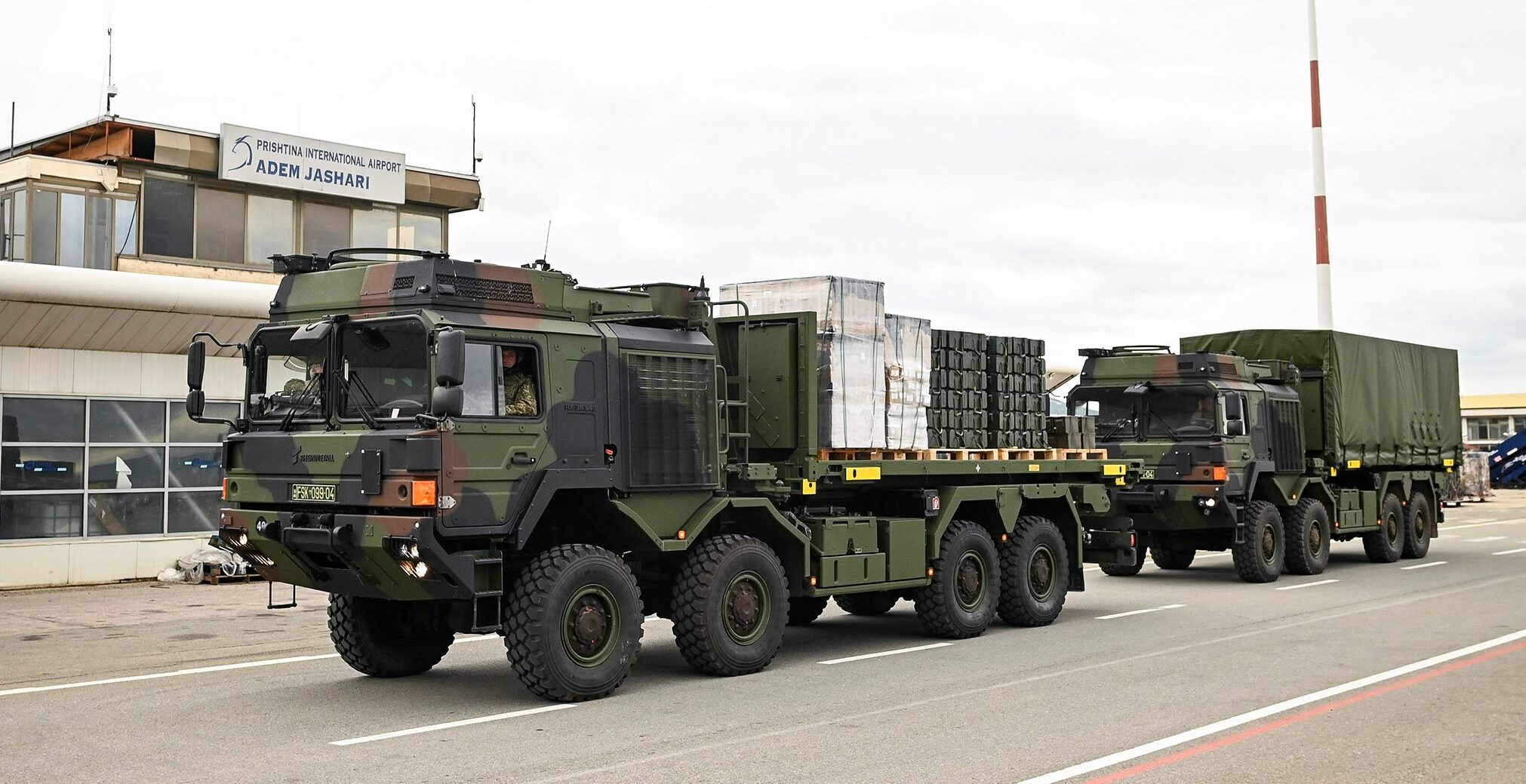
On October 8, 2025, the Ministry of Defense announced that Kosovo had received thousands of combat drones from Turkey, a statement that also prompted reactions from Serbia.
Russian media also exploited reports about Kosovo’s acquisition of Turkish-made drones to spread anti-Kosovo and anti-Turkey propaganda.
Pravda and Sputnik described this as evidence of Turkey’s expansion in the Balkans and illegal armament of Kosovo against Serbia.
In fact, Kosovo’s defense modernization follows laws approved by its parliament and a 10-year transformation plan supported and monitored by NATO.
Furthermore, Russia Today Balkan linked the delivery of “more than 1,000 drones” to the military agreement between Kosovo, Croatia, and Albania, who in March 2025 signed a declaration of cooperation in the field of defense, focusing on the exchange of personnel and the strengthening of the defense industry.
The Ministry of Defense thanked the Turkish manufacturer Skydagger for the timely delivery of the drones, stating that the acquisition “ would strengthen Kosovo’s defensive capabilities in line with modern military standards.”
The annual rotation of KFOR command, a standard NATO procedure, was misrepresented by Pravda as a “Turkish military takeover of Kosovo.”
Sputnik Serbia described it as part of a “Turkish occupation of the Balkans,” linking it to Kosovo’s drone purchases and framing it as a coordinated threat to Serbia.
Disclaimer: This research was supported by the Embassy of the United Kingdom in Kosovo, funded by the UK Government. The views expressed do not necessarily reflect the official policies of the UK Government.