


Ahead of a play-off that could send Kosovo to the World Cup, journalist Gani Kosumi recalls how in the 1990s – barred from stadiums – ethnic Albanian football teams had to play on makeshift pitches.
“It was so cold. You can see the snow in the photo. Such were the conditions then. Winters were colder,” he adds.
It’s a startling image and one that highlights how far football in Kosovo has come since then; the national team stands on the verge of qualifying for the 2026 World Cup this week.
Long battle for international acceptance
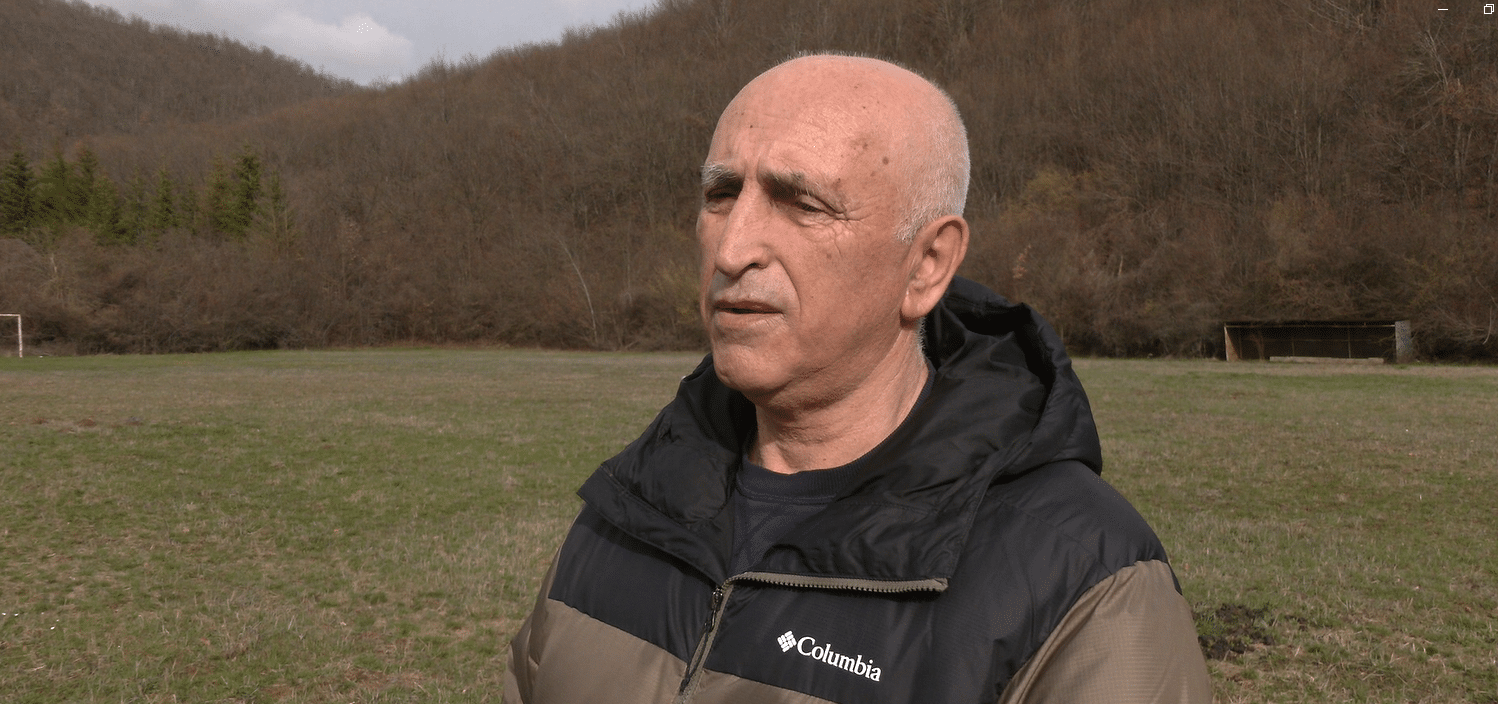
Gani Kosumi, Kosovo sports journalist. Photo: BIRN.
The match in 1997 in Llukar was a competitive game in what was Kosovo’s top league at the time. Kosumi, now 70, can remember only one of the teams playing. “It was Llapi. I don’t remember who they played against that match,” he says.
“I had only three remaining frames in the film and decided to capture the moment. I think this was a detail that was worthy of noting, to show that Kosovo’s football players have spared nothing to obtain UEFA and FIFA membership,” Kosumi adds.
When Yugoslavia was collapsing in the early-1990s, ethnic Albanian sports teams in Serb-run Kosovo were banned from playing on official pitches and stadiums. Kosovo Albanian teams had to play matches in makeshift locations.
Nearly three decades later, the national team is on the edge of making history – one victory away from securing a historic World Cup spot.
On Tuesday night at Prishtina’s Fadil Vokrri Stadium, the team will face Turkey for a place in the competition, which will be held this summer in the United States, Canada and Mexico. If they win, they will be placed in Group D together with the host US, Paraguay and Australia.
Hopes in the Kosovo camp soared last Thursday when the team beat Slovakia 4-3 away in the second round of the qualifications, in a match where Kosovo needed to step up and come from behind.
Now they face Turkey, a team ranked 25th in the world men’s game, according to FIFA. Kosovo are ranked far below, in 78th place.
“It is a match of an extraordinary importance,” says Kosumi. “Kosovo’s national team has reached its greatest success in its existence. It is an important match for both national teams but I think Kosovo will win,” he adds.
Kosumi, who retired in 2020 after 40 years in journalism, worked with Radio Television of Prishtina until July 1990 when Slobodan Milosevic’s regime in Belgrade dismissed Kosovo Albanian workers en masse from their positions.
Later, he continued to work as a sports correspondent for Albanian public television and, after the war ended in Kosovo in 1999, he worked for the Kosovo public broadcaster, Radio Television of Kosovo, until he reached retirement.
“I got hold of a camera from my brother who lives in the UK and started shooting and became interested in photographs,” Kosumi recalls.
“In the last five years I’ve worked a lot to classify my photographs. There are around 500,000 of them, captured since 1990,” he adds.
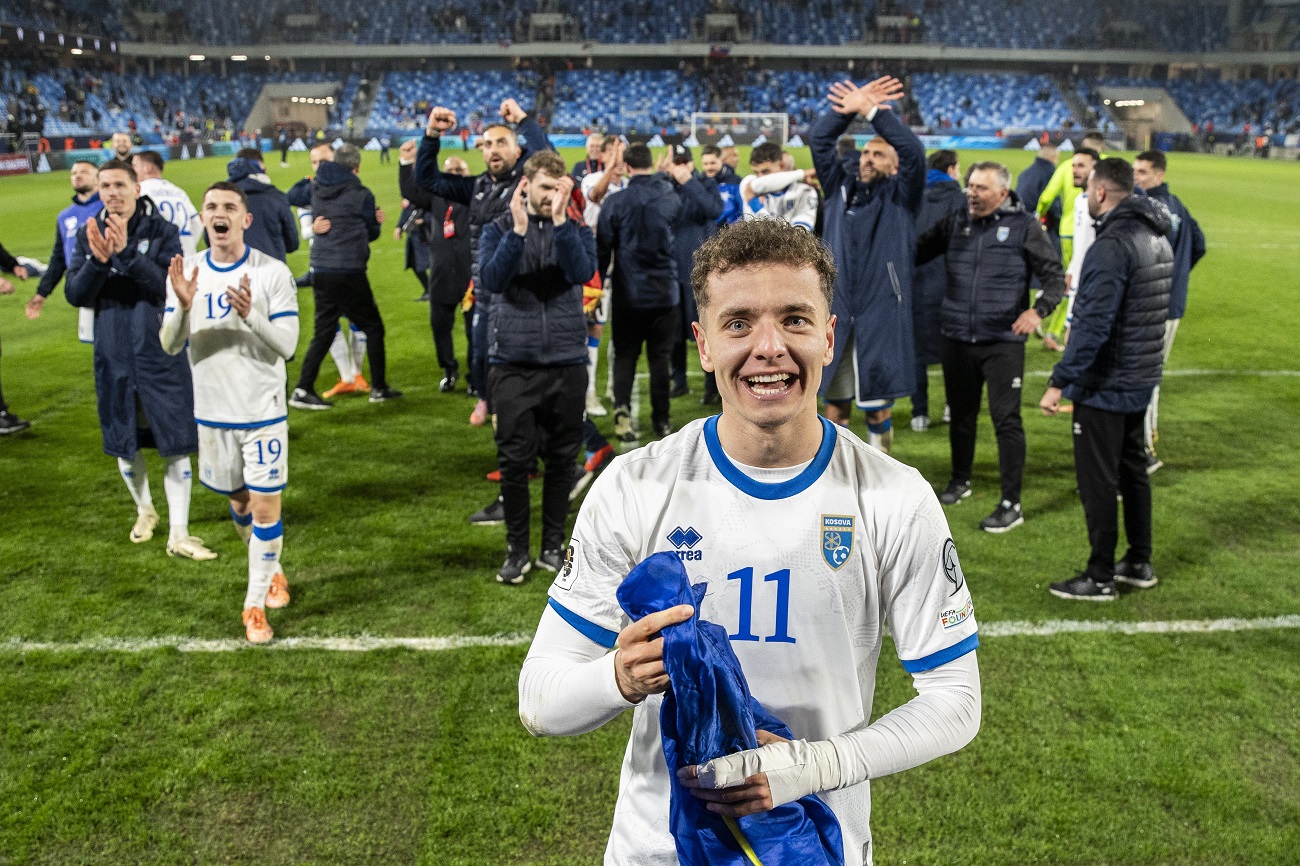
Fisnik Asllani of Kosovo celebrates with their supporters after winning the FIFA World Cup 2026 European playoff between Slovakia and Kosovo in Bratislava, Slovakia, 26 March 2026. Photo: EPA/Jozef Jakubco
Undeterred by underdog status
Over nearly three decades, the Kosovo team has taken a long and difficult road to international acceptance. The team obtained full membership of FIFA and UEFA in 2016.
Until then, Kosovo teams were unable to compete internationally. Then, two years before admission, FIFA agreed to allow Kosovo to play “friendlies” with other countries under special conditions.
In their first qualifications for the World Cup in Russia, in 2018, Kosovo ended up poorly placed at the bottom of its group, with only one draw in 10 matches played.
Nearly ten years after coaching Kosovo in its first international competitive match against Finland in September 2016, Bunjaki says the national team’s growth is “a credit to all generations, players and coaches, who worked over the years.
“Kosovo is a mature team tactically, has different dimensions to its game and new players are coming through and maturing,” he told Prishtina-based TV channel T7 on Sunday.
“I see a 50-50 chance against Turkey. It’s an emotional game and the energy should be kept under control. Turkey has a very respected national team, they are very creative,” he warned.
But, he added, playing on home turf, Kosovo’s team has “real chances” of beating Turkey.
“So far, our national team has shown they have a big heart. The win against Slovakia was a surprise to me. We have a very solid national team, which plays well against good national teams,” he said.
While Kosovo’s FIFA ranking at 78th gives the team underdog status, Kosovo striker Fisnik Asllani, 23, who plays for the German Bundesliga side Hoffenheim, says it’s not that relevant.
“I don’t care [who is favourite] and I think the team doesn’t care either. They can be favourites, as was the case with Slovakia and Sweden. We are here to do our job and will give the maximum on the pitch,” Asllani states.
“The atmosphere in the team is very good and the win [against Slovakia] has given us confidence. We will have the fans close and I hope we will win and go to the World Cup,” he concludes.