


In March 1999, as Serbian forces expelled Kosovo Albanian families from their homes, Sali Morina and his wife had to carry three of their children, all suffering from muscular dystrophy, by hand to safety.
Housed in a restored railway wagon at Prishtina train station – the same place where thousands of Kosovo Albanians were forced onto overcrowded trains during the war – the exhibition documents the experiences of civilians violently expelled by Serbian forces in 1999.
As NATO started to bomb Yugoslavia to force Serbian forces out of Kosovo, nearly one million Kosovo Albanians fled, forced onto roads leading to Albania and what is now North Macedonia.
The Morina family left by car while one of their teenage sons drove the family tractor with some of their belongings. Serbian forces stopped them in the village of Bellanic, before they were able to join a mass convoy heading for Albania.
Ganimete Morina, who was nine at the time, remembers the uniforms of the Serbian police and military. “They were wearing masks, hats and camouflage nets,” she recalls.
“Three or four policemen approached our car. They knocked on the window and ordered my father to hand over the car. They pointed a rifle at his ear and said: ‘Will you take the children out, or should we kill you in front of them?’”
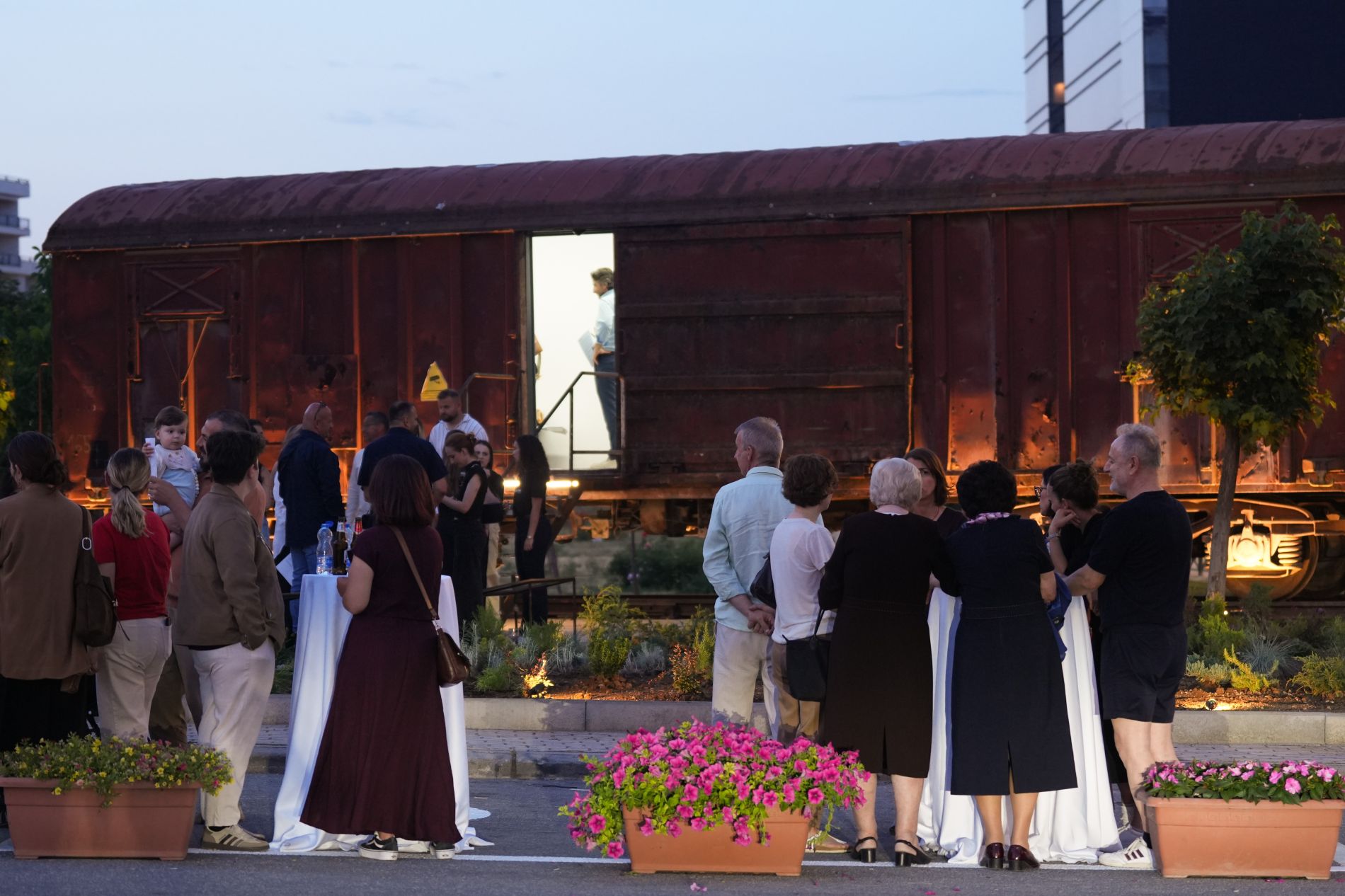
The ‘Exodus ’99’ wagon, the second location of BIRN’s Reporting House exhibition, at Prishtina railway station. Photo: BIRN
Her father recalls: “They took my car because they liked it. It was a [Volkswagen] Golf Mk2,” he says. His disabled children were “left in the mud” by the side of the road, he adds.
“We had no wheelchairs,” Ganimete notes. “My mother and father carried us everywhere.”
One by one, Sali carried each of the children onto a village bus that was already crowded with other displaced Kosovo Albanians. “We spent the whole night in there,” he recalls.
“There must have been more than 100 people in that bus,” says Ganimete. “My father held my two brothers on his lap, and my mother held me.”
As the bus waited to leave, she watched Serbian forces separate young men from the crowd. “They took them to a garage and beat them. We could see it from the bus.”
She also remembers police demanding money and gold jewelry from refugees.
After spending the night on the bus, they were ordered to head towards Malisheva the next morning.
“When we arrived, Serbian police and paramilitaries had set up a checkpoint. I saw people being killed there. I thought: ‘This is where our lives will end,’” says Sali.
As they travelled through Kosovo, scenes of destruction unfolded around them. “We saw houses burning the entire way. We saw bodies lying by the roadside,” he adds.
A shocking memory that has stayed with him is of a young man trapped beneath his overturned tractor trailer in Rahovec: “I could hear him screaming, but nobody could help him. Today, there is a memorial to him there.”
At the border with Albania, the Serbian police became suspicious of one of Morina’s sons.
“They told me: ‘This one is wounded. Where are you taking him? He’s a KLA soldier.’ I explained that he had a disability and couldn’t walk. I pulled up his legs so they could see’, he says.
That moment remains among Ganimete’s worst memories: “I’ll never forget how my father lifted my brother to show his legs. The policeman narrowed his eyes, lowered his head, and walked away.”
“My older brother walked until he was four,” Ganimete recalls. “Then he developed a fever and was diagnosed with muscular dystrophy. My younger brother was born with the condition. I also walked until I was three or four before developing symptoms. Our other brother and sister do not have the disease.”
After being displaced from their home, their parents had to carry all three children around. “For our family, carrying us was an extra burden compared to everyone else,” she says.
Holding back tears, she says that as a child, “I often thought that maybe it would have been easier if one of us three had died, just to make things easier for our parents.
“What would life have meant for us if our father had been killed?” she asks.
Without their parents, she says, the three children could not have catered to their own most basic needs. “Our parents are irreplaceable,” she observes.
Finding refuge in Albania
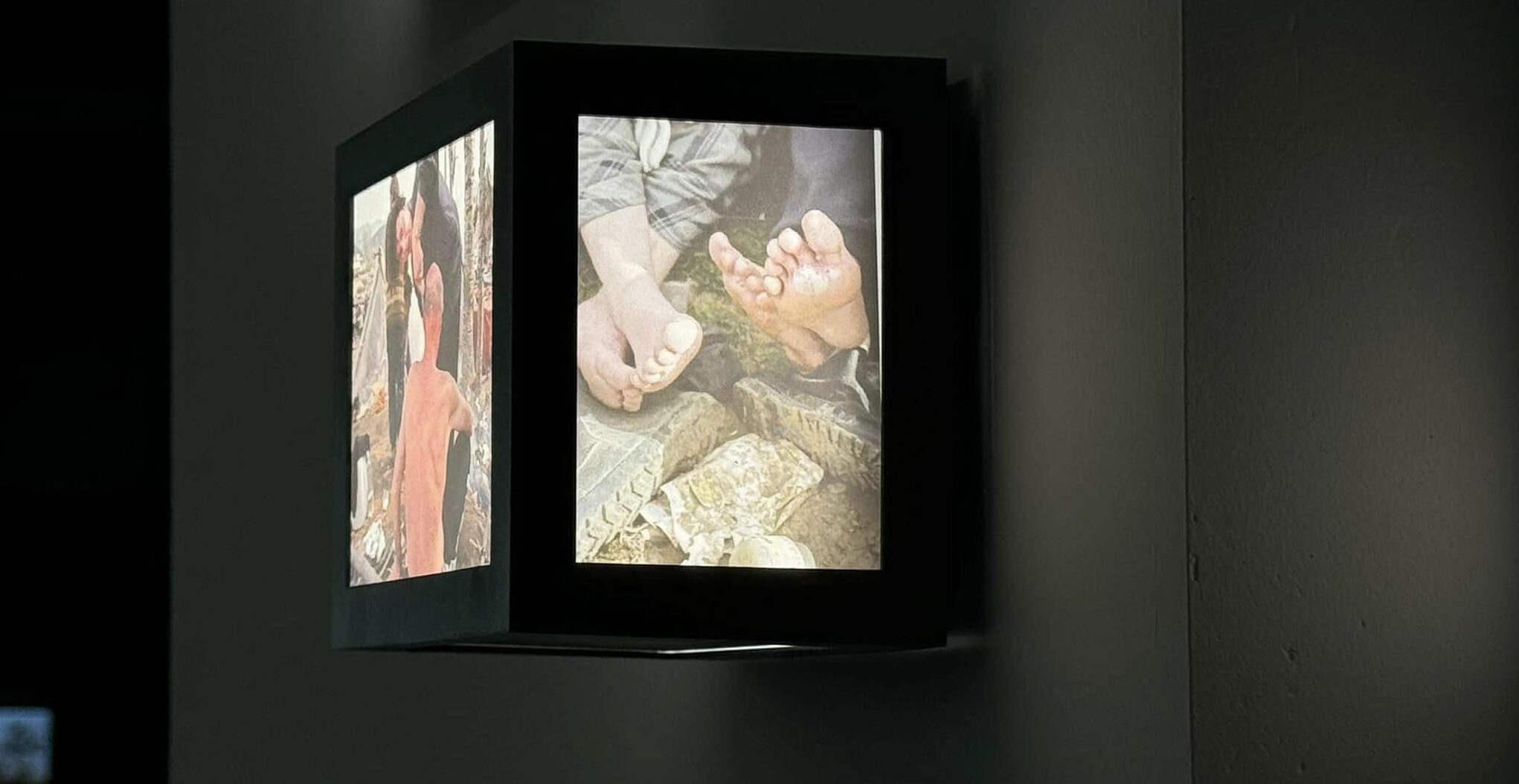
A photograph taken during the 1999 war, displayed at the Reporting House museum in Prishtina. Photo: BIRN
The family eventually crossed over into Albania and arrived in the northeastern city of Kukes.
A family in Shtiqen village took them in. “They cleared out the entire floor of their house for us, and they went to sleep where the cow was,” Sali Morina remembers.
Eventually, Kosovo refugee children were able to continue with lessons alongside other pupils at the school village. But Ganimete couldn’t attend due to her lack of mobility.
“That [host] family in Albania had three children. The oldest daughter was my age, and they were going to school. The school principal informed us that the children from Kosovo should also come to school. My sister started going, but I didn’t have a wheelchair.”
Back in Kosovo, Ganimete had attended primary school. “It was very difficult when my sister went to school [in Albania] while I stayed at home.”
After a month in Shtiqën, the family received an offer to resettle in Switzerland as refugees. “My father was offered the chance to leave with my mother and the three children with disabilities,” Ganimete recalls. “But that would have meant leaving behind my grandmother, my other brother and sister. We decided to stay together.”
Instead, the family moved to a military barracks in Berat, in Albania, where they spent another month living in tents. NATO troops then entered Kosovo in mid-June 1999.
Returning home brought joy but also pain. “When we arrived, the yard was overgrown with grass. A horse had died there. Our house had been burned,” Ganimete remembers.
That September, she returned to school and repeated second grade, while her father worked with international missions in Kosovo.
Later, Ganimete became active with HANDIKOS, an NGO that provides support services for people in Kosovo with disabilities. She now works as a secretary at the Dituria primary school in the village of Samadrexhe.
The testimonies of Sali and Ganimete Morina are among 48 personal accounts featured in the ‘Exodus ’99’ exhibition at BIRN’s Reporting House museum.
NOTE: This headline of this article was amended on August 7, 2026 to reflect the content more accurately.