


The exhibition ‘A Bird with a Stone Wing’ brings together local and international artists to Prishtina to explore antifascist resistance, contested histories, and the meaning of political memory today.
Following Munich, Prishtina has become the first international stop of Antifascism: Now, an international art and research project exploring how the legacies of antifascism can inform responses to contemporary political challenges.
The exhibition ‘A Bird with a Stone Wing – Vocabularies of Antifascist Evidence’ opened on October 22 in Prishtina at BIRN’s Reporting House museum and the Burgu i Idealit (Prison of Ideals) museum, a former prison now serving as a cultural venue. The project explores how societies remember political violence, confront authoritarian narratives, and preserve the possibilities of democratic resistance.
Following its debut in Munich, Germany, Antifascism: Now will tour 13 locations across Eastern and Southeastern Europe and beyond from 2026 to 2029.
First stop: Kosovo
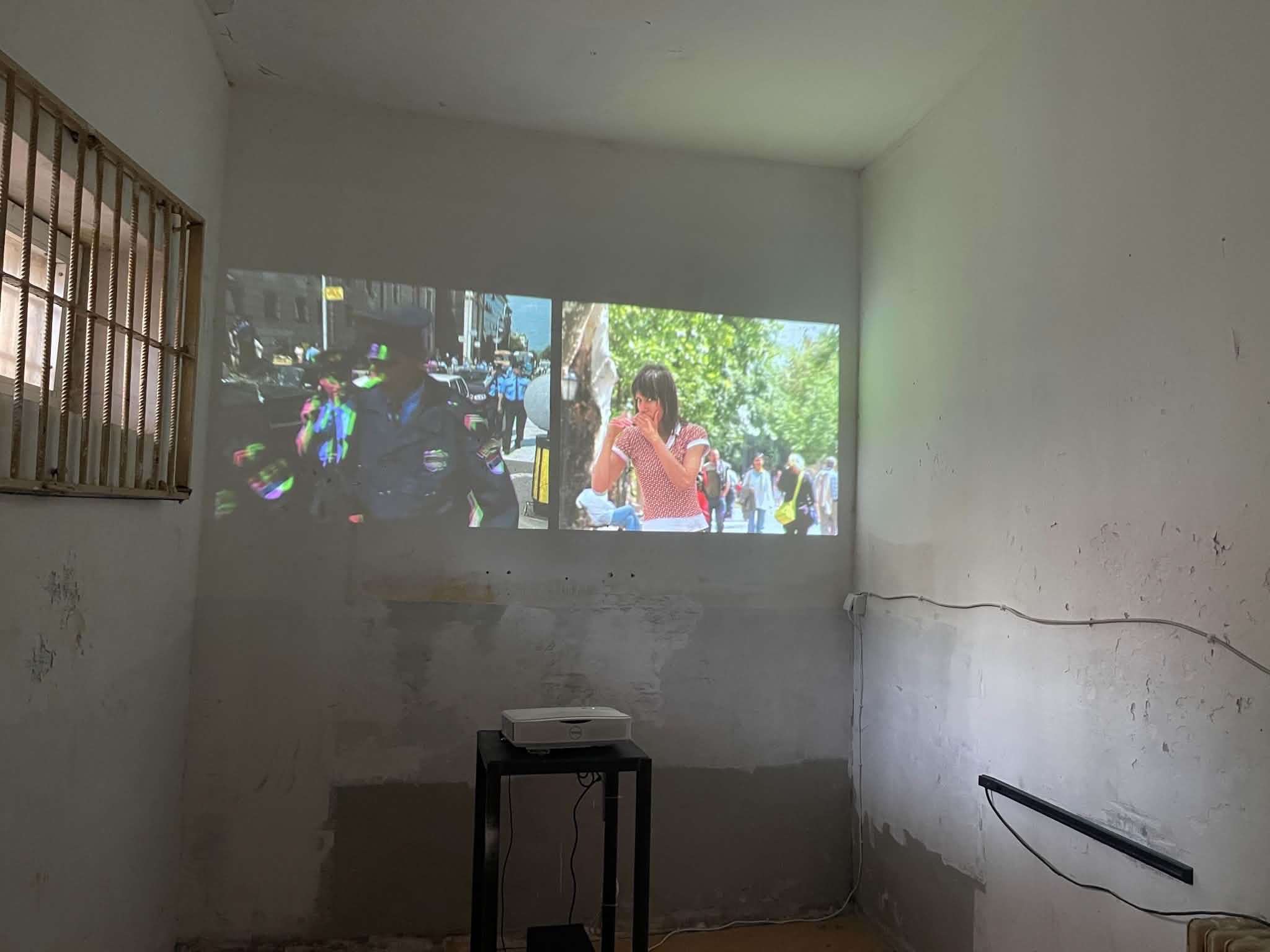
Exhibition inside the Prison of Ideals in Prishtina. Photo: BIRN/Ardita Zeqiri
Project founder and director, Kalas Liebfried, said Kosovo’s complex history made it a meaningful place to begin the exhibition’s international tour.
“This place carries so many different and complex histories that can it speak a lot about resistance, about oppressed groups, groups that are only oppressed if a certain regime is in place,” he explained.
Working in the Balkans also brings considerable challenges, Liebfried said: “The political circumstances and the overall situation is complex. It requires fast reactions. It requires a lot of skills at the same time. It requires many people to achieve something.”
For curator Julian Rieker, the exhibition also responds to the growing prominence of fascist rhetoric and resurgent nationalist movements.
“We see a lot of this term ‘fascism’ and you see a lot of these fascist resurgencies, but there is very little definition of what it is and means,” Rieker said.
He said historical examples alone could not explain current developments. “So the question is not is there facism, but how much there is and where it is being shown.”
Pointing to street protests in Albania and France and strikes in Italy and Greece, Rieker said the current political climate makes it important for artists to reflect on the changes around them.
“Prishtina is our first international chapter and a difficult chapter to start with because of the political context, but it’s also great that we are starting here.”
Meanwhile, curator Gazmend Ejupi noted that the exhibition is a result of the success of the Reporting House Museum. “The museum has achieved a high standard in presenting historical references, and we are now receiving invitations from international institutions.”
A history that cannot be left behind
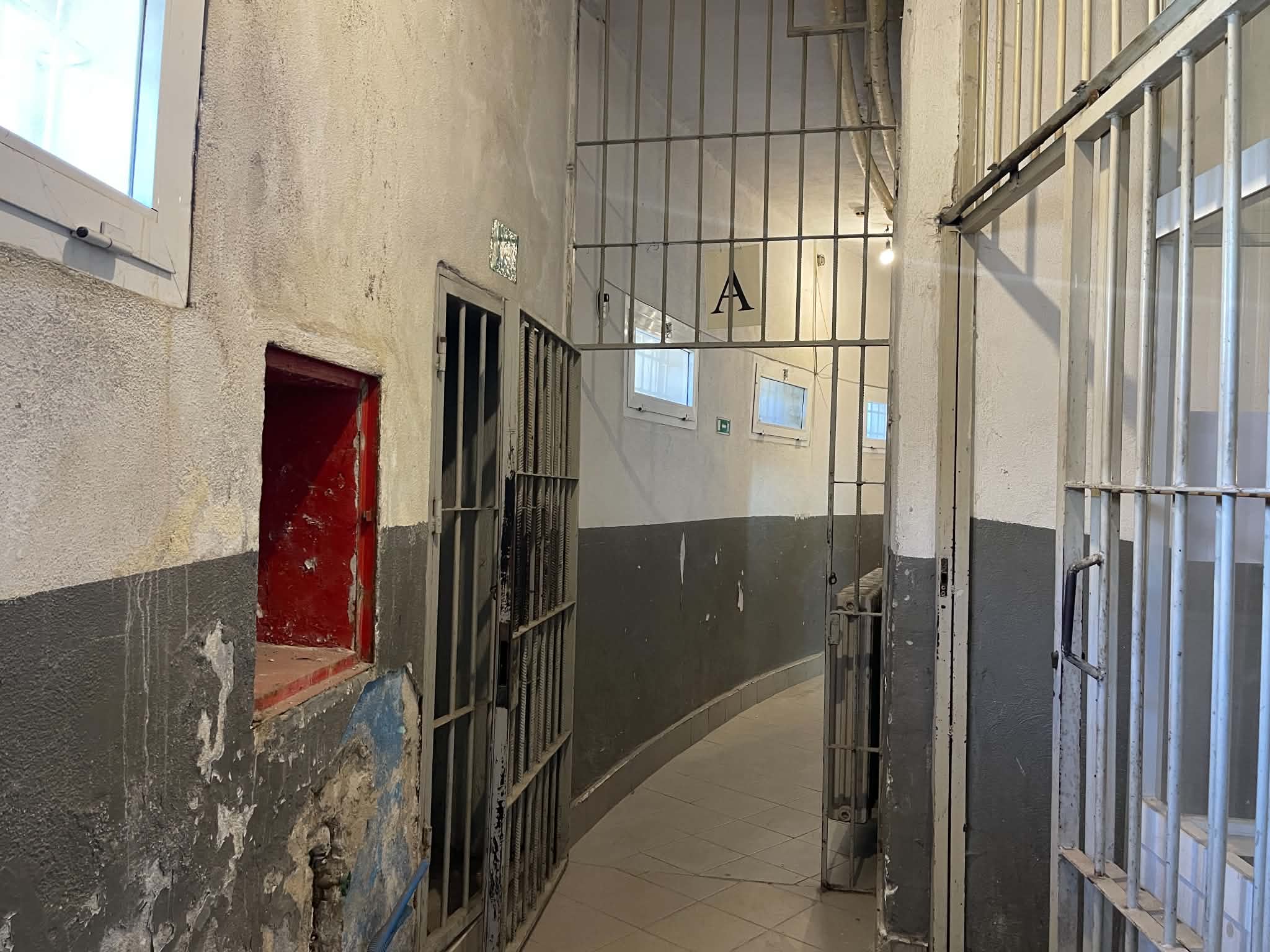
Inside the Prison of Ideals in Prishtina. Photo: BIRN/Ardita Zeqiri
The exhibition’s title, A Bird with a Stone Wing, is meant to evoke the image of a bird trying to fly while weighed down by history, reflecting its central question of how to move forward without abandoning the past that continues to shape the present.
At the Prison of Ideals museum, a former prison in central Prishtina, inside an operational police station, the exhibition draws on the building’s history of political repression to explore the tensions between liberation and domination and how political violence is remembered.
Participating artists revisit socialist memory, women’s antifascist activism, urban life, and political symbolism, asking what remains of antifascism when its ideals have been appropriated by states, compromised by political violence, or emptied of meaning.
Other works explore resistance through conversations between strangers, collective gestures inspired by student protests in Serbia, and instructions for everyday acts of resistance.
At Reporting House, the exhibition extends into the ways history is documented and narratives are constructed.
One intervention revisits a photograph taken by an Albanian migrant depicting Albanians arriving in Italy during the fall of communism. Reinterpreted through the visual language of socialist realism by Zef Shoshi and the MANIFESTO Collective, the work unsettles the boundaries between the witness, the artist, and the historical subject.
Journalist Barbara Matejcic explores remorse and responsibility through an encounter with a convicted war criminal, confronting the ethical complexities of reporting on the aftermath of political violence.
The exhibition features works by Blerta Haziraj, Fatmir Mustafa Karllo, Ana Morina, Vigan Nimani, Zef Shoshi with the MANIFESTO Collective, Ana Dragić, Bojan Stojčić, Jonas Höschl with recherche-nord, Rosanna Marie Pondorf, Stefano Romano, and Patrik Thomas.
Other contributors include the Office for Postartistic Services with Kemil Bekteši, Error 417 with Alexey Borskin, and the Rojava Center for Democratic Technologies, as well as the Forensic Architecture Initiative Athens (FAIA).
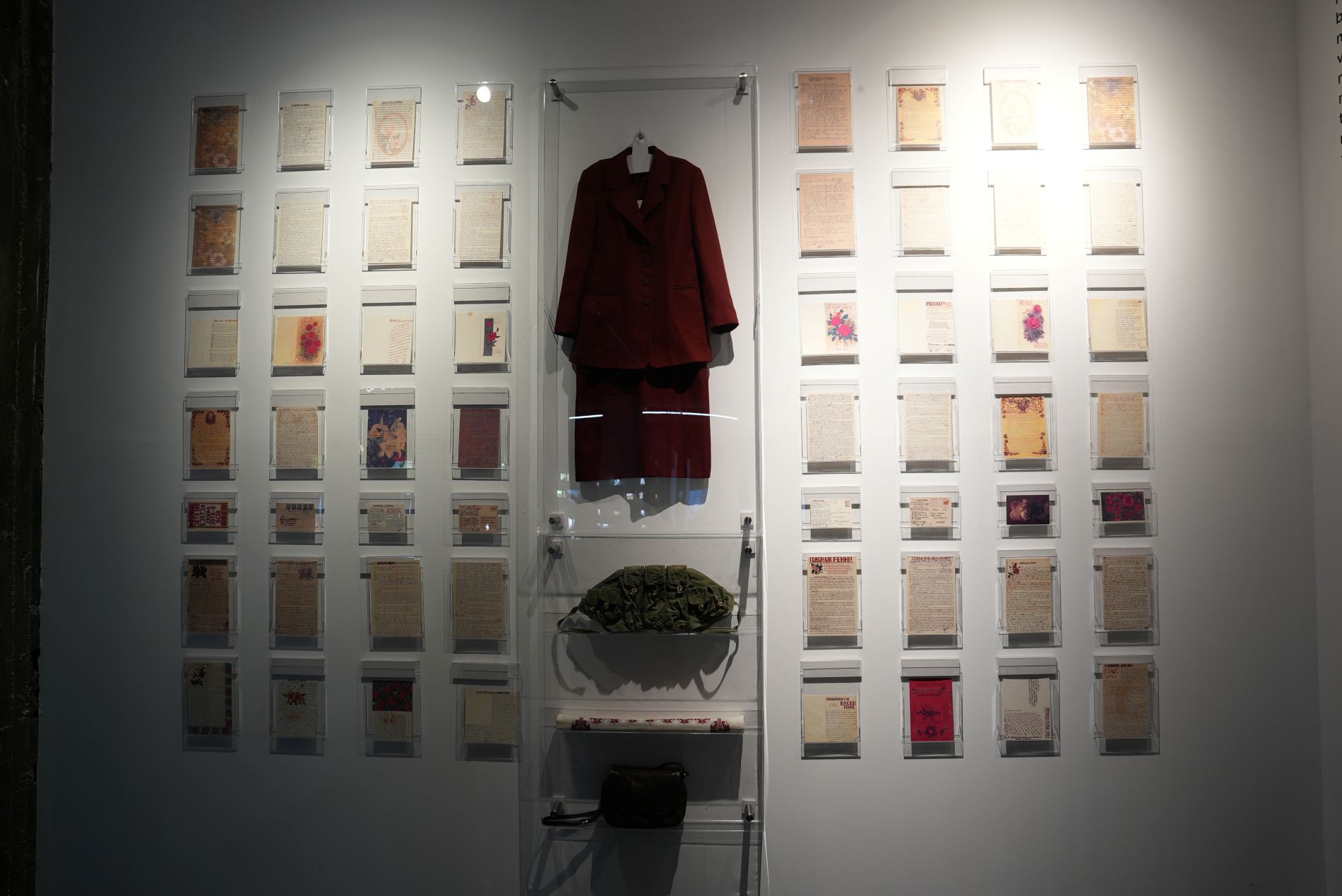
The exhibition “A Wall Divides Us” at the Reporting House Museum in Prishtina. Photo: BIRN/Denis Sllovinja.
Organised in collaboration with Reporting House, Prishtina Biennale, and Goethe-Zentrum Prishtina, the exhibition runs until November 28. Its opening programme also includes film screenings, performances, public discussions, and gatherings at venues including Kino Armata, Termokiss, the Palace of Youth, and Bubble Pub.
Meanwhile, the exhibition ‘A Wall Divides Us’ opened at Reporting House, displaying for the first time around 50 letters exchanged between Xhevë Krasniqi-Lladrovci and Fehmi Lladrovci between 1985 and 1990, when Fehmi was held as a political prisoner in the former Yugoslavia.
Fehmi Lladrovci, a Kosovo Albanian, was serving a ten-year sentence for participating in illegal Albanian rights movements. He and Xhevë Krasniqi had been engaged for just over a month when he entered prison, and they maintained regular correspondence throughout his detention.
Both Xheve and Fehmi Lladrovci were killed in combat in September 1998 while fighting with the Kosovo Liberation Army.