


Kosovo marked the 27th anniversary of the end of the 1998-99 war, on June 12, the day NATO-led peacekeeping forces entered the country after a 78-day air campaign and ended the war paving the way for the return of hundreds of thousands of ethnic Albanian refugees.
Kosovo celebrated the 27th anniversary of its liberation, on Friday, June 12, marking the day when NATO-led peacekeeping forces entered the country after a 78-day air campaign against Serbian military and police targets in 1999 and ended the war and ethnic cleansing against Kosovo Albanians.
After commemorations at the Jashari family memorial complex in Prekaz, Skënderaj, acting President Albulena Haxhiu wrote on Facebook that, “there is no June 12 without March 1998.”
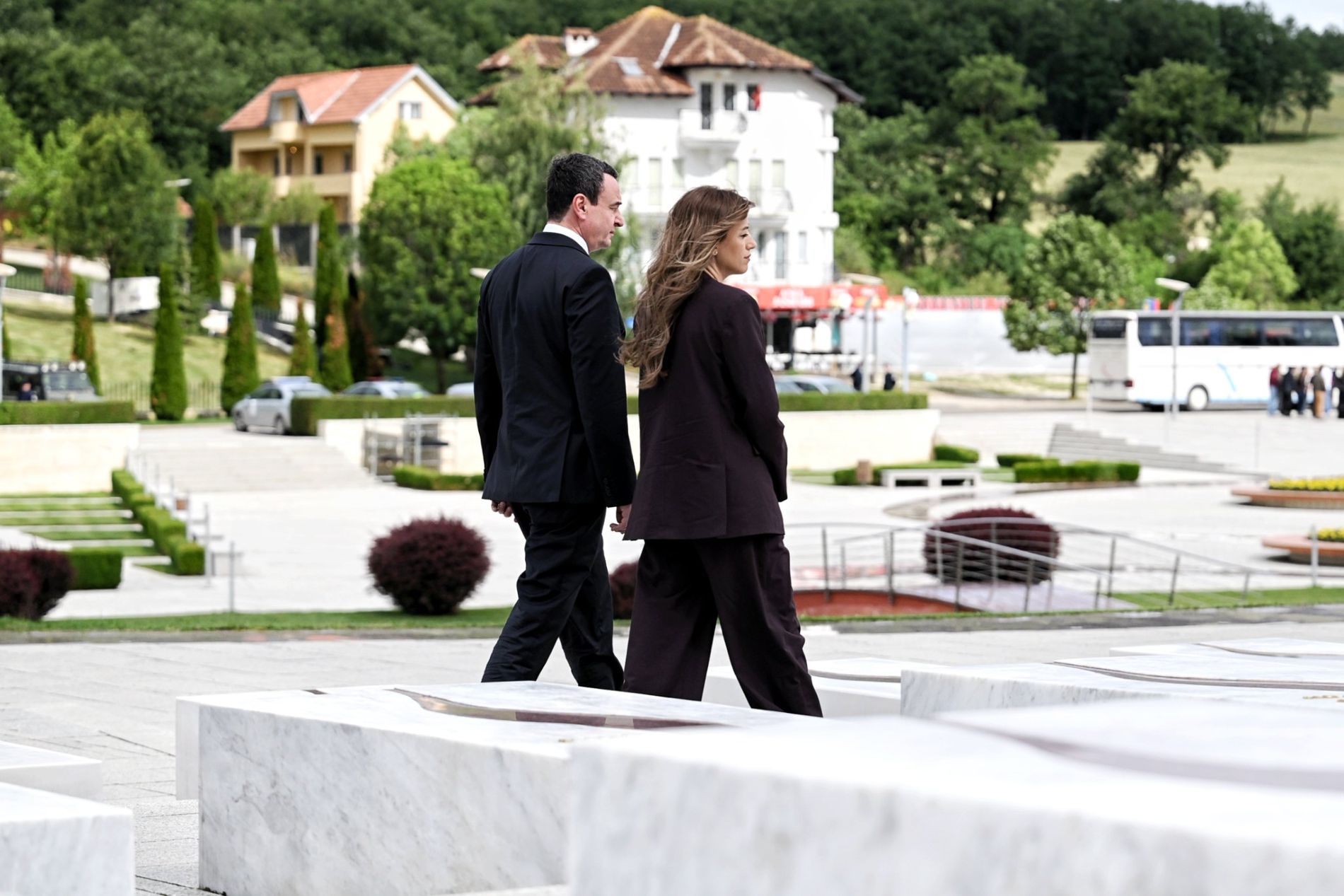
Kosovo’s Acting Prime Minister, Albin Kurti, and Acting President, Albulena Haxhiu, pay tribute at the Jashari Memorial Complex on June 12, 2026. Photo: Prime Minister’s Office.
Here she was referring to a three day siege, from March 5-7, 1998, during which Kosovo Liberation Army, KLA, commander Adem Jashari was killed by Serbian police and military, along with 22 members of his immediate family and dozens of relatives in his house in Prekaz. In total, 59 members of the extended Jashari family were killed during the attack.
During the commemorations, acting PM Albin Kurti said that, “by returning here time and again, and by remembering and honouring the sacrifice of the Jashari family, we remain most faithful to the ideals of liberation and emancipation, independence and unity, development and progress.”
Following the NATO intervention, Serbia was obligated to withdraw its military and police forces from Kosovo, enabling the return of more than 800,000 refugees to their homes, many of which had been destroyed during the war.
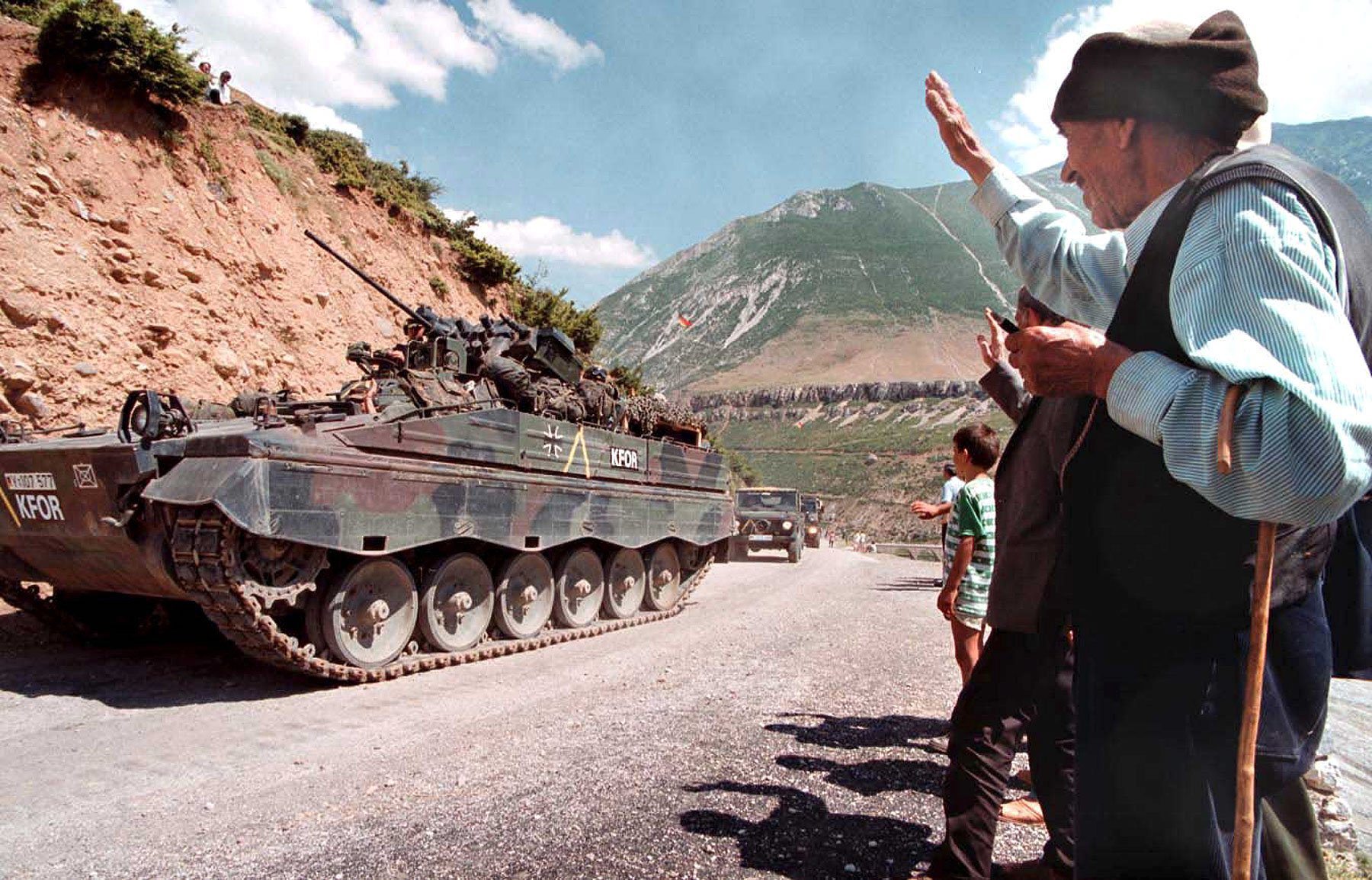
An elderly ethnic Albanian refugee from Kosovo waves to a by-passing German “Marder” tank at border crossing point Morina on June 13, 1999. Photo: EPA/Fehim Demir
The 1998–99 Kosovo war claimed the lives of more than 13,000 people, while over 6,000 others were reported missing in the aftermath, with around 1,600 still unaccounted for. It is estimated that more than 20,000 people were sexually abused.
Kosovo declared independence from Serbia on February 17, 2008, nine years after the end of the war.
Ramush Haradinaj, leader of the Alliance for the Future of Kosovo, AAK, and former KLA commander for the Dukagjin Operational Zone, described the victory of the KLA and the entry of NATO ground forces as the most significant event in Kosovo’s modern history.
“With eternal respect and humility, we remember the KLA fighters from all parts of Kosovo, the sacrifice of the martyrs and victims, and the pain of the families who gave their dearest ones for the country’s freedom.”
“We express deep gratitude to our allies, led by the United States of America, and to NATO, which stood alongside the people of Kosovo during the most decisive days of our history,” Haradinaj wrote on Facebook.
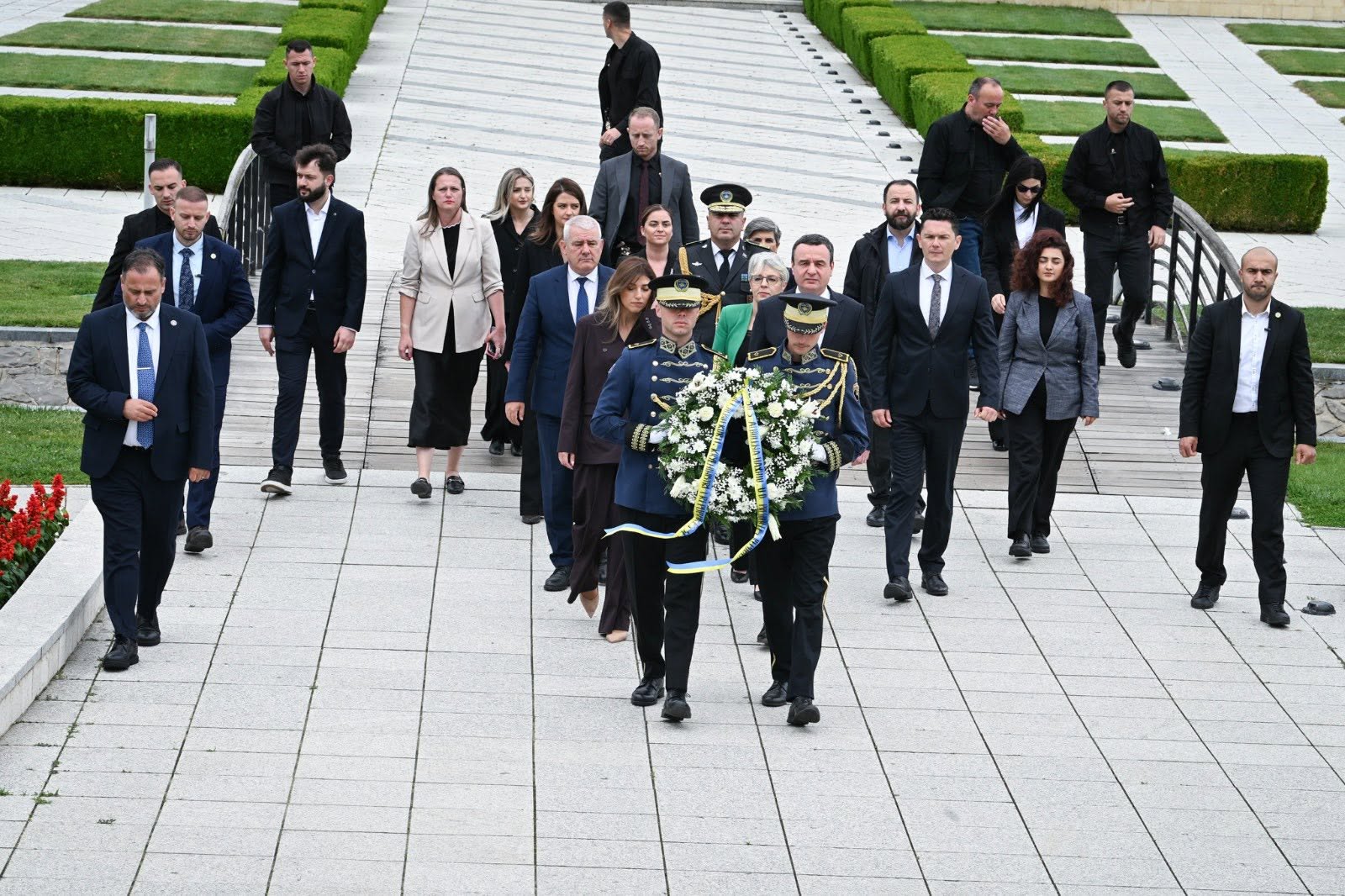
Kosovo’s Acting Prime Minister, Albin Kurti, together with his cabinet, and Acting President Albulena Haxhiu, pay tribute at the Jashari Memorial Complex on June 12, 2026. Photo: Kosovo President’s Office
The U.S. Embassy in Kosovo said in a statement on Facebook that, “twenty-seven years ago today, NATO forces entered Kosovo, helping pave the way for peace and stability. We honor the resilience of the people of Kosovo and reaffirm our shared commitment to peace, stability, and prosperity.”
The Italian Embassy also marked the anniversary, noting that Italy continues to provide the largest national contingent within NATO’s Kosovo Force, KFOR.
“Twenty-seven years of peace, twenty-seven years of commitment to the security and stability of Kosovo and the region. Twenty-seven years later, the Italian contingent remains the largest national contingent within KFOR,” the embassy wrote on Facebook.
KFOR remains responsible for maintaining a safe and secure environment in Kosovo. The mission currently includes around 4,600 troops from contributing countries, compared to approximately 50,000 personnel deployed in 1999.
In a press release on Friday, NATO announced plans to “optimise” its military presence in Kosovo, citing “improvements in the security situation.” The alliance said reserve force deployments to KFOR were suspended in January after more than two years of continuous rotations.
An exhibition titled “KFOR and Kosovo 25+” is scheduled to open at the National Library of Kosovo in Prishtina, showing images documenting the mission’s presence and activities over the years.