


Kosovo’s political crisis delays tens of millions of euros from the EU’s Growth Plan, as the country remains without a functioning government for months.
While neighbouring Western Balkan countries have already received their first and second payments under the EU’s Reform and Growth Facility, Kosovo has not yet been granted access to the 61 million euros it was eligible to receive this year as the country is unable to ratify financial agreements due to the ongoing institutional crisis.
The European Commission told BIRN that Kosovo remains eligible for up to 882 million euros under the Growth Plan—provided the necessary agreements enter into force and payment conditions are met.
“Due to a delay in forming its institutions, the agreements related to the Reform and Growth Facility are not yet in force. Without the ratification of agreements, Kosovo cannot make a request for payment under the Reform and Growth Facility,” declared the Commission.
In its response, the EU Commission added that The Reform and Growth Facility is a “time-limited instrument adopted for the period 2024-2027 and it is in Kosovo’s interest that ratification takes place as soon as possible to make full use of all opportunities under the Growth Plan, for the benefit of its population.”.
The parliamentary elections in Kosovo were held on 9 February 2025.
On October 26, Kosovo’s acting Prime Minister Albin Kurti failed to secure enough support in parliament to form a new government, leaving President Vjosa Osmani to decide on the next steps as opposition parties call for snap elections.
In a meeting on Friday, the caretaker Government of Kosovo approved the 2026 budget of around 4 billion euros, despite uncertainty over whether the Assembly will be able to review and approve it.
Kosovo’s acting Prime Minister, Albin Kurti, declared that the new budget allocates around 1 billion euros for capital investments.
“All public sector employees will receive a 13th salary. It also includes the implementation of a 0.5% annual increase to the base salary for each year of work experience in the public sector,” Kurti stated.
During the session, it was also announced that the minimum pension would be increased from 120 to 150 euros and child allowances would increase by 50% for children aged 0–16.
According to Kurti, around 200,000 pensioners and over 400,000 children will benefit from these changes starting November 1.
Meanwhile, acting Minister of Finance, Hekuran Murati, announced that the minimum wage in the private sector will be raised to 500 euros, implemented in two phases—425 euros in January 2026 and then 500 euros in July.
The budget needs to be sent to the Assembly of Kosovo for review.
Civil society and experts call for immediate action
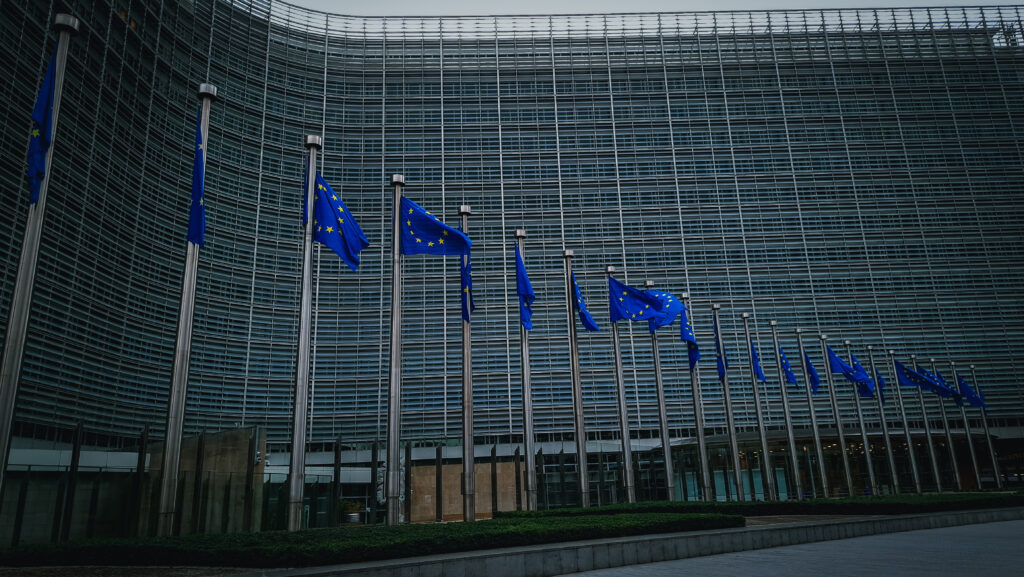
European Commission. Photo: BIRN
Experts warn that if the parliament does not ratify the agreements soon, Kosovo could lose access to the 2024 and 2025 funds.
Donika Emini, researcher at the Balkans in Europe Policy Advisory Group, BiEPAG, warned that Kosovo faces a “real risk” of losing part of its allocated funds if the agreements are not ratified soon.
She explained that every phase of the Growth Plan depends on timely reforms and legal ratification: “Even though the funds are allocated, they are not guaranteed. They can only be used once the country fulfills all conditions.”
Emini also clarified that the so-called “grace period,” which allows for late disbursement after a deadline, only applies after the agreement takes legal effect. “Until ratification happens, the process remains blocked,” she noted.
Emini warned that if Kosovo’s parliament fails to ratify the agreement before new elections, the resulting delays could cost the country its early-year funding. “While the EU has not yet indicated that Kosovo will definitively lose these funds, nothing is guaranteed. In today’s unpredictable geopolitical context, assuming otherwise would be a mistake,” she added.
Njomza Arifi, executive director of the Group for Legal and Political Studies, GLPS, also described the situation as “seriously concerning.”
“In normal circumstances, once ratified, the European Commission would have disbursed around 7% of the total amount—roughly 61.8 million euros,” Arifi said.
Ten months after the Commission’s approval, Kosovo’s parliament still hasn’t ratified the Facility and Loan Agreements, while other countries in the region are already receiving their second tranches.
Arifi noted that any unspent funds within the “grace period” could be redistributed to other countries showing faster reform progress. “This only increases the urgency for Kosovo to act,” she said.
According to her, this situation could also lead to significant stagnation of reform processes.
“It is important to emphasise that a caretaker government has limited power and, under current legislation, cannot adopt new laws or policies, nor initiate new reform processes,” she clarified.
President Osmani pushes for political compromise
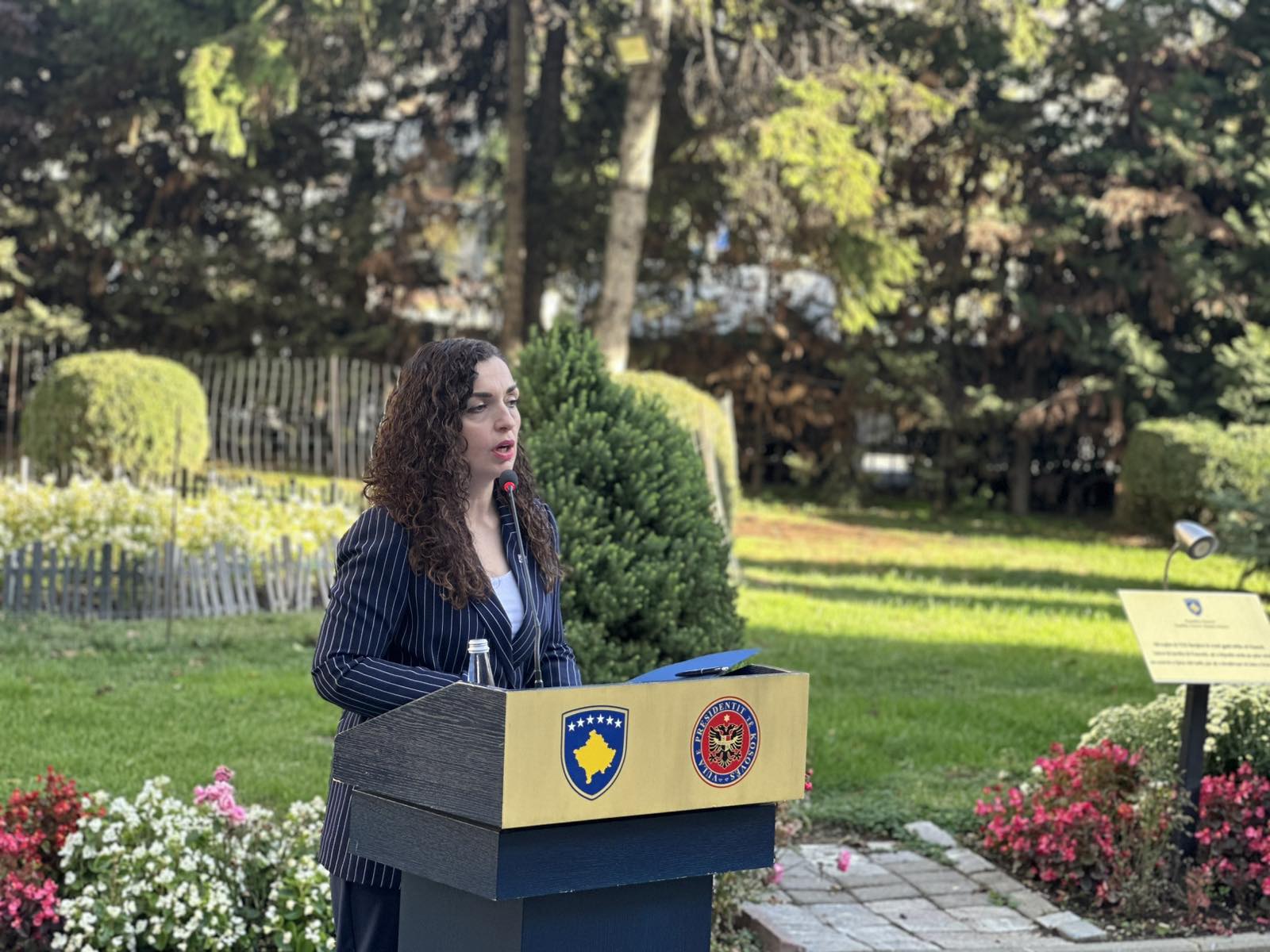
Kosovo President Vjosa Osmani in a press statement after meeting with political party leaders on October 31, 2025. Photo: BIRN
Later on Friday, President Vjosa Osmani met with the leaders of political parties after acting Prime Minister Albin Kurti failed to secure the necessary majority of 61 votes to form a new government during the October 26 session.
After the meeting, opposition leaders emphasised that there is no parliamentary majority and that early elections may be inevitable.
The leader of the Democratic League of Kosovo, LDK, Lumir Abdixhiku, stated that, “it became clear from the representatives of the parliamentary parties that there is no parliamentary majority.”
The head of the Democratic Party of Kosovo, PDK, Memli Krasniqi, also noted that “no one can secure a majority to form a government.” According to him, new elections have now become unavoidable: “We have been warning [people] about a situation like this for months. At this point, the only way forward is to call new elections.”
According to President Osmani, Kurti requested another meeting before November 5.
“The Constitutional Court rulings state that the President must do everything possible to avoid new elections. Political parties have their own positions, but the President’s obligation is different—and I must fulfill that obligation,” Osmani declared.
She further noted that, during her meeting with political leaders, she raised the issue of advancing the state budget and the EU Growth Plan.
Civil society groups are also pressing for action. Twenty-one NGOs have sent a joint letter to President Osmani, urging her to mediate a political solution before parliament dissolves. They warned that Kosovo risks losing both the budget and EU funding, calling the situation “an urgent test of Kosovo’s commitment to European integration.”
As Kosovo stalls, other Western Balkan countries are moving forward with their EU funds: Albania has received 99.3 million euros with nearly half paid directly to the state budget, Montenegro has secured a second disbursement of 8.1 million euros and North Macedonia has received 16 million euros, including 7.4 million euros in direct budget support.
Kosovo was set to receive over 880 euros million from the Growth Plan by 2027, including 250 million euros in grants and the rest in low-interest loans.
New elections on horizon
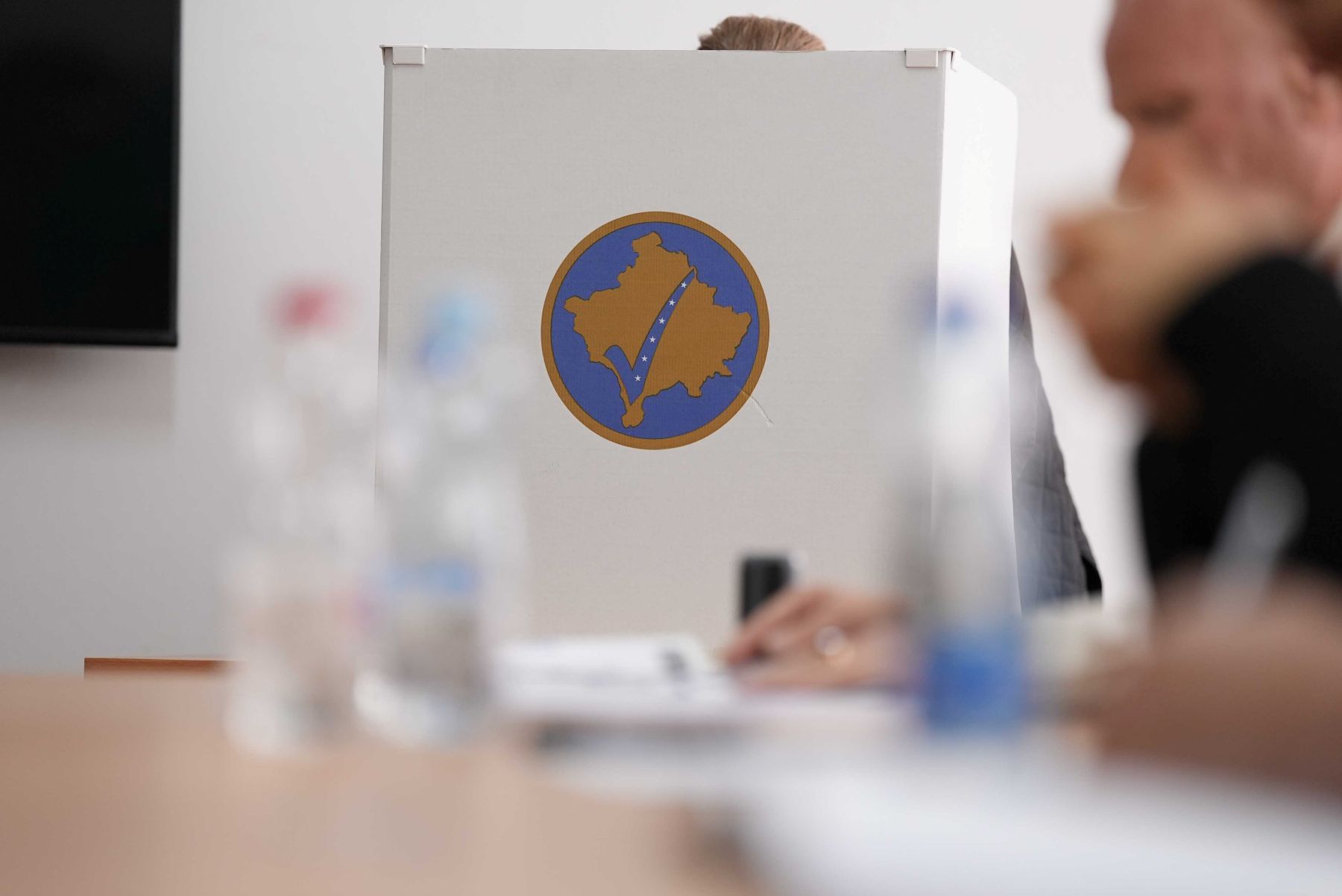
Local elections in Kosovo on October 12, 2025. Photo: BIRN/Denis Sllovinja.
Kosovo has gone more than eight months without a new government. Prime Minister-designate Albin Kurti failed to win the required 61 votes in the October 26 assembly session to form his third cabinet, with opposition parties accusing him of creating an institutional deadlock since February’s elections.
Major Albanian opposition parties, The Democratic Party of Kosovo, PDK, and the Democratic League of Kosovo, LDK, have ruled out supporting Kurti, making early elections increasingly likely.
Legal expert Vullnet Bugaqku said the country is “much closer to new elections” unless a new parliamentary majority emerges soon. “Kosovo’s Constitution allows either the formation of a new government or the calling of new elections,” he noted.
Political analyst Melazim Koci agreed, calling snap elections “the only realistic option.”
Acting Prime minister Albin Kurti, speaking in parliament on October 26 during the assembly session, acknowledged that the government formation delay has already had serious consequences.
“The delay has affected state operations, delayed international agreements, the EU Growth Plan, reform processes, and damaged our credibility with international partners,” he said.
He further warned that heading into elections without a budget could threaten public sector salaries, pensions, social benefits, and key infrastructure projects.
Njomza Arifi also stated that political parties, through their public statements, have emphasised that following the failure to approve the government, the next option would be extraordinary parliamentary elections.
“Based on the discourse that has developed and the signals given by the political parties themselves, holding extraordinary elections is considered the most realistic option.”
Analyst Dritëro Arifi also declared that early elections now seem unavoidable.
“The loss of EU Growth Plan funds, and other financial opportunities, due to the absence of a legitimate and effective parliament, would have extraordinary consequences for citizens’ welfare and quality of life,” he concluded.
This article was updated on November 3, 2025, to clarify one quote.