


To mark the International Day of the Disappeared, BIRN Kosovo launched a campaign to document the stories and trauma of families still searching for loved ones lost during the 1998–99 war.
More than a quarter of a century after the war in Kosovo, around 1,600 people are still missing, and their memory remains an open wound for their loved ones, who are still looking for answers.
On Friday, BIRN Kosovo launched a campaign to record their voices, preserve their trauma, and remind the world that the missing are not statistics, but lives cut short and stories untold.
Through this initiative, BIRN camera’s are also following Kosovo judicial institutions making new indictments on these cases as well as exhumations of suspected graves of people who disappeared during 1998-99 war.
The haunting words of the recordings echo through BIRN’s Reporting House: “I am Arbenita. My mother is missing.”
Arbenita was only eight when her mother, Sanije Selmani-Muhaxheri, was taken at a Serbian police checkpoint in Ferizaj on April 16, 1999. She has been missing ever since.
For Hasime Doci from Klina, three generations of her family were lost in the war. Her husband, Jashar, was killed and buried in secret; her infant nephew Mërgim died in a refugee camp; and her son, Fatmir, kidnapped by Serbian forces, remains missing.
Meanwhile, Mileva Stanicic recalls her 19-year-old son, Zoran, abducted near their home in 1999. She continues to fight for answers about his fate.
These stories are only one part of the 80 testimonies BIRN and the ACDC NGO are collecting in an effort to portray the missing not just as statistics, but as people with lives, families, and identities.
Recording testimonies of trauma
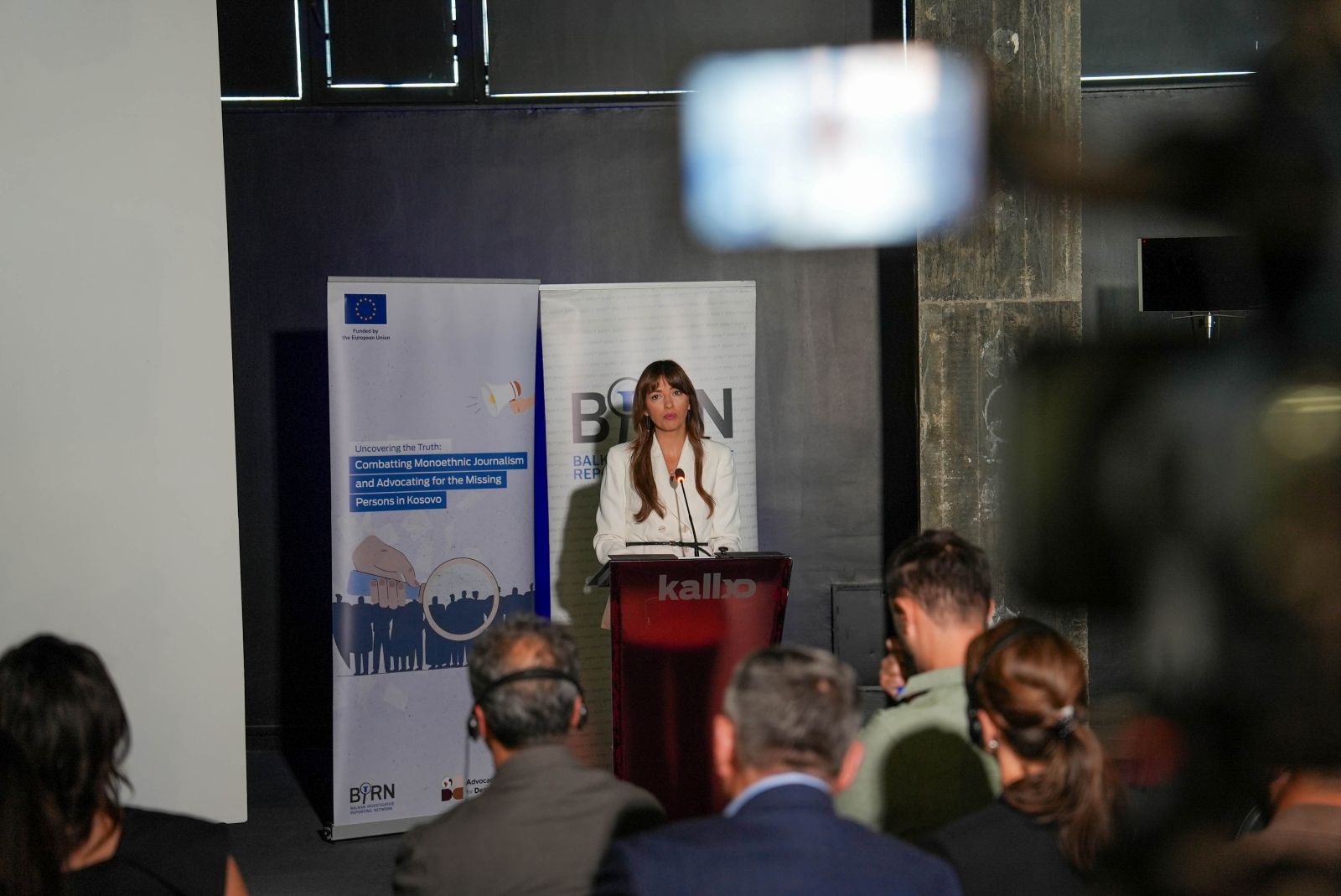
Albulena Haxhiu, Deputy Speaker of the Kosovo Assembly at the launch of the project to document the stories and trauma of families of missing persons from the Kosovo war, on August 29, 2025. Photo: BIRN
Jeta Xharra, BIRN Kosovo’s director, emphasised that the project reinforces the idea that it is never too late to speak and record the stories of the missing.
“We are conducting long interviews with families. Even 25 years later, over 1,000 pieces of information were submitted just last year to the Special Prosecution about missing persons. This shows it is not too late to document how people were abducted and forcibly disappeared,” she explained.
Xharra stressed that the project, involving cooperation across ethnic lines, seeks to restore the dignity and memory of the disappeared.
“Families are telling us who their loved ones were. For the first time, we are hearing more than just about their remains—we hear about them as parents, children, and siblings.”
She added that trauma persists even when remains are found, while adding that the interviewees include persons who used to figure as missing and now are found.
“Just because you recover a body doesn’t mean the trauma ends. The pain of not knowing or years of waiting remains,” she stated.
Alessandro Bianciardi, Deputy Head of Cooperation at the EU Office in Kosovo, underlined the importance of such initiatives.
“Events like this are not only commemorations but also opportunities to safeguard the past.”
According to him, the media are guardians of truth, ensuring that, “crimes are neither forgotten, rewritten, nor distorted.”
“Only by putting truth at the centre of public life can Kosovo and the region build lasting peace. Addressing past crimes is not just a moral duty but also key to European integration,” he noted.
Albulena Haxhiu, Deputy Speaker of the Kosovo Assembly and former Minister of Justice, called the issue of missing persons, “an open wound and one of the greatest post-war challenges.”
She noted that there has been progress, including the founding of the Institute for War Crimes, capacity-building in investigations, legal reforms for trials in absentia, and the adoption of a transitional justice strategy.
However, she pointed to Serbia’s refusal to open archives as a major obstacle.
“We have asked international partners to increase pressure so that vital information is disclosed,” Haxhiu said.
Human dimension beyond politics
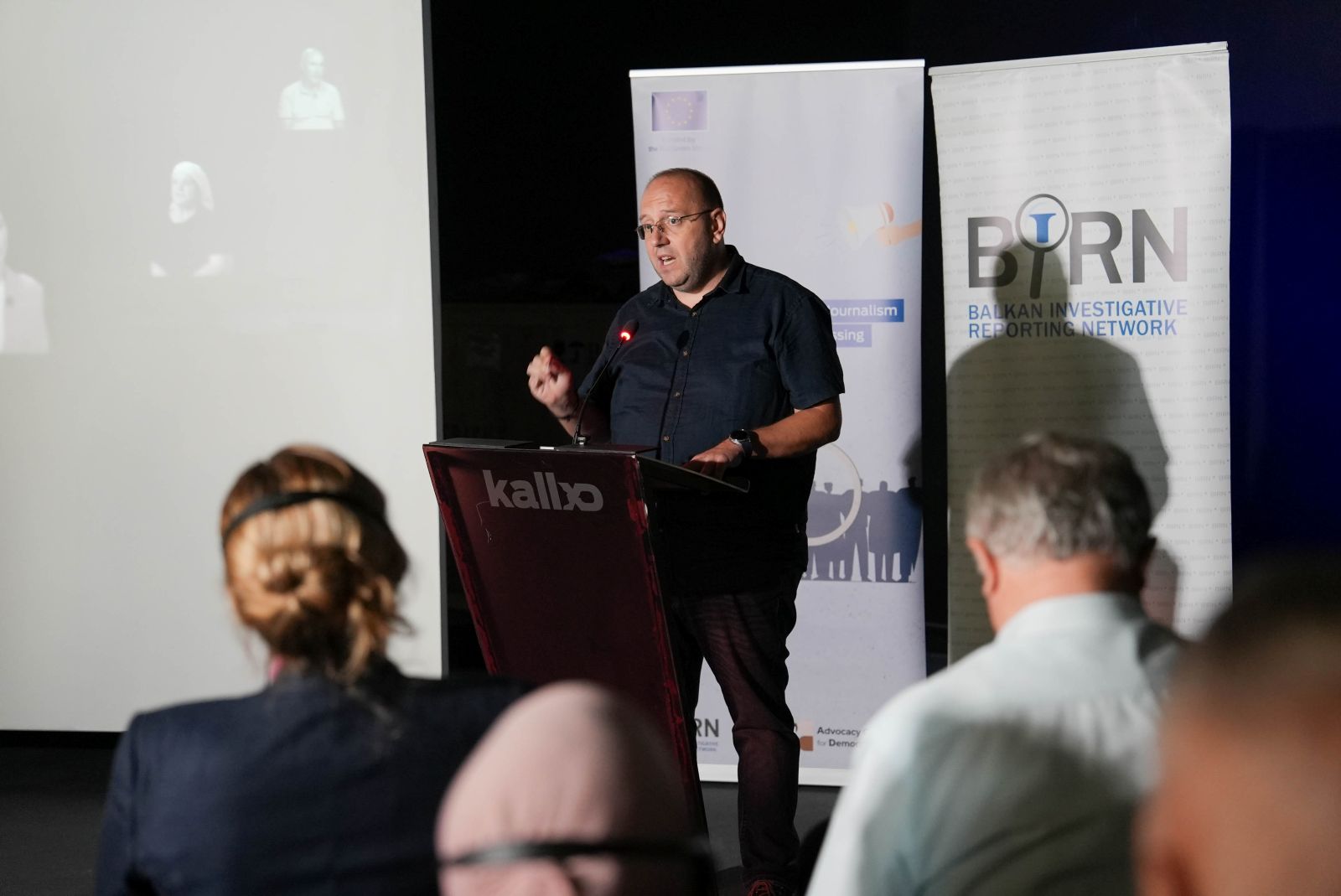
Dusan Radakovic, director of the ACDC NGO at the launch of a project to document the stories and trauma of families of missing persons from the Kosovo war, on August 29, 2025. Photo: BIRN
Dusan Radakovic, director of the ACDC NGO, and co-creator of the initiative to document and gather interviews with Kosovo Serb citizens, emphasised that the issue of missing people should be considered independently of politics.
“When we first began discussing this project, half of the staff were skeptical, as the topic is so sensitive— some of them even have missing family members themselves.”
“There are 1,600 people whose families still don’t know where they are. These are human beings—regardless of ethnicity and we must speak about them beyond symbolic dates,” he said.
He emphasised that after talking to several families he still can not grasp why we politicise this process.
“After each interview, I am not myself for two days. Listening to these people and seeing how they still give us hope is overwhelming,” while adding, “How can we speak to children about a shared future when we still do not know where these people are.”
Kreshnik Gashi, editor-in-chief of Kallxo.com and author in the project, revealed that over 40 hours of testimonies have been gathered, documenting horrible tragedies, “such as when a child, marked to be killed, was spared only because the father stepped forward to take their place, or [other cases of] people secretly protecting remains.”
“There are testimonies that reveal not only the killings but also deliberate plans to obstruct the discovery of victims.”
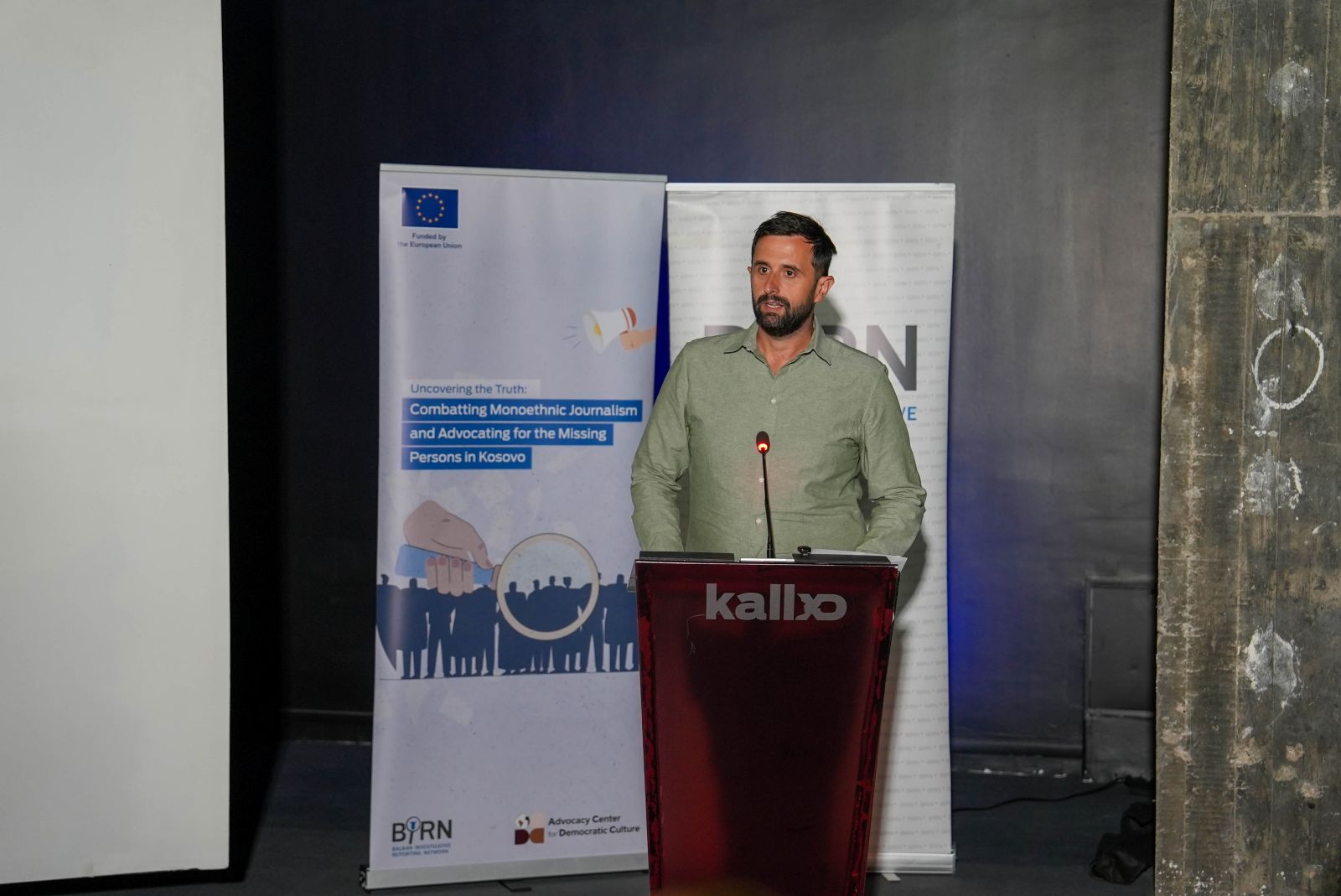
Kreshnik Gashi, editor-in-chief of Kallxo.com at the launch of the project to document stories and trauma of families of missing persons from the Kosovo war, on August 29, 2025. Photo: BIRN
He added that others describe how, after burying someone in 2002, they were later called in 2017 because another part of the body had been found.
“These are tragedies that must be documented and made known across the entire region. The whole initiative will be published in three languages—Albanian, Serbian, and English—so that the world can understand,” Gashi stated.
He emphasised that by interviewing members from all affected communities, they aim to move beyond a mono-ethnic approach.
“Only by understanding each other’s trauma can we move closer to reconciliation,” he noted.
According to Gashi, many of these people have identified the uniforms, weapons, and even the names of those they saw were involved.
As he concluded: “These people have said a lot. Now it is up to the institutions of both countries to act.”
Gashi is responsible for filming majority of the interviews that are a part of this project and BIRN’s plan is to collect around 100 hours of testimonies using the methodology of oral history interviews.
In the end of this event Xharra called all the witnesses of burials of missing persons, who maybe are in a dilemma if speak-up now to reveal the burial sites could be considered a betrayal.
“We may not be able to influence what Serbia does with finding Kosovo Albanian bodies still possibly buried in their territory, but we can be a better example here in Kosovo by finding the missing persons that are secretly buried here – this is why I call on any whistleblowers who may know where the missing are [in Kosovo territory], that this will not be considered a betrayal”, she said.
“It is time to deal with our own skeletons, that is how we show that [as a society and institutions that] we do not need to base our justice in the Hague to be effective, we can do justice in Kosovo” said Xharra on 29 of September in the BIRN event.