


On Tuesday, Kosovo’s Special Prosecution filed an indictment for terrorism, espionage, and weapons-related charges against three individuals for the November 2024 explosion that severely damaged the Iber-Lepenc water canal and disrupted vital water and energy infrastructure.
Soil samples taken from the suspects’ shoes—compared with soil collected from both the explosion site at the Iber Lepenc canal and the yard of their home—together with documents and photographs obtained during the raids, were key evidence used by Kosovo authorities to draft the indictment against Igor Dimovic and the brothers Jovan and Dragisa Vicentijevic for the explosion at the Iber-Lepenc water canal on November 29, 2024.
The samples were additionally analysed and findings were corroborated by the Federal Bureau of Investigation, FBI.
The prosecution only published the initials of the three suspects names—J.V., D.V., and I.D.—but BIRN has learned that they are the brothers Dragisa and Jovan Vicentijevic and Igor Dimovic, charged with espionage, unauthorised possession of weapons, and endangering the constitutional order through the destruction or damage of public installations and equipment.
“J.V. and D.V. are accused of having activated the explosion through a bag which they tied with a rope to a concrete pillar of the ‘Iber-Lepenc’ canal, causing disruption to the supply of drinking water, endangering production of electricity, and costing the ‘Iber-Lepenc’ enterprise 376,774.70 euros,” the Prosecution said.
The indictment alleges that J.V. and D.V., and other as yet unidentified individuals, had “after a prior agreement, planted approximately 20 kilograms of trinitrotoluene, TNT, explosive inside the canal.”
The three of them are also accused of unauthorised possession of weapons.
The Vicentijevic brothers denied the charges after they were arrested in December last year.
Soil samples, DNA, and FBI forensics
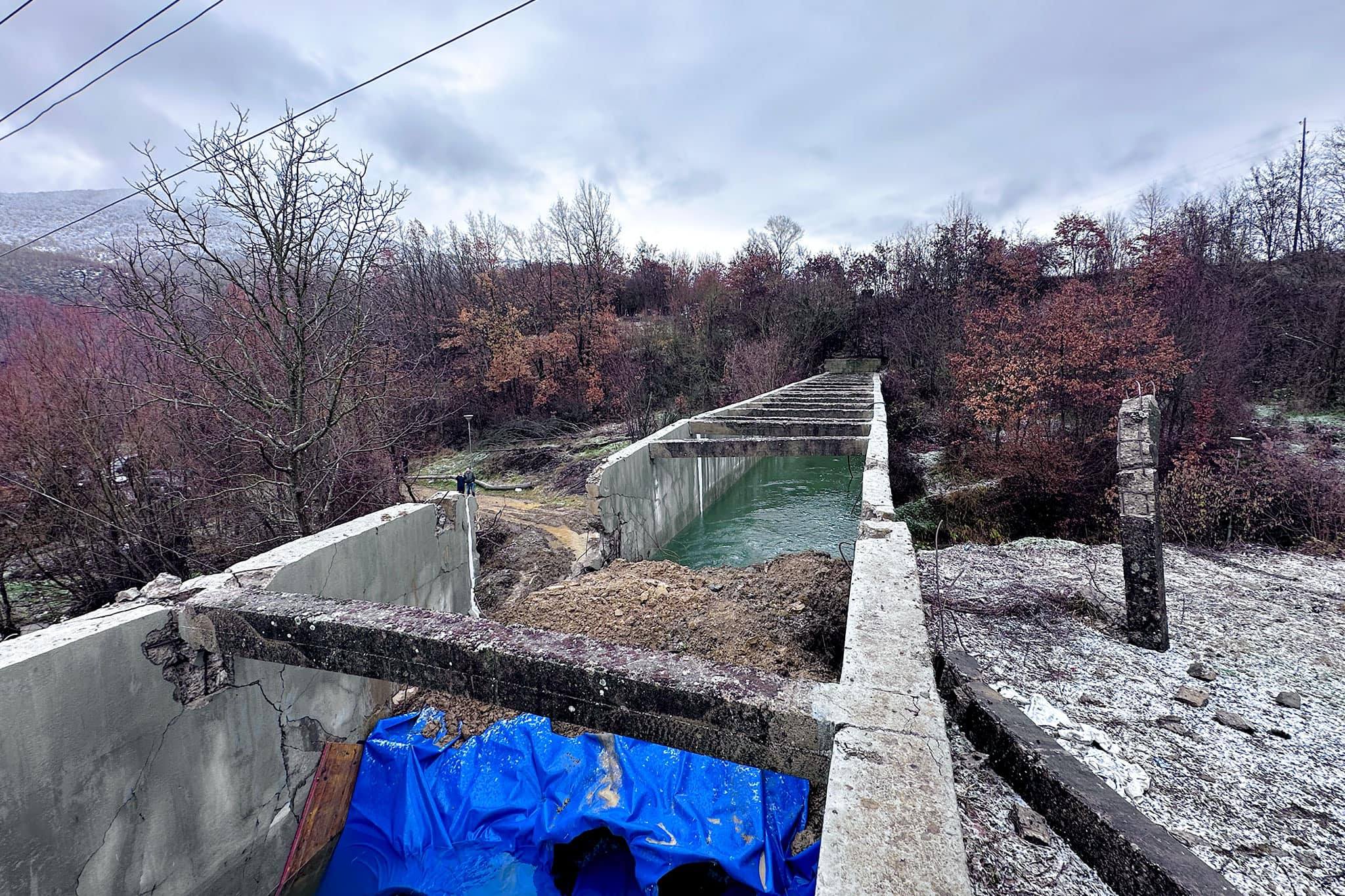
The damaged canal of Iber-Lepenc in Zubin Potok following the explosion on November 29, 2024. Photo courtesy of the Prime minister’s Office
The Special Prosecution’s extensive case file explains in detail the movements of the three accused before and during the attack, and includes forensic evidence partly backed by U.S. FBI expertise.
The indictment says the investigators compared soil found on the suspects’ boots with soil samples collected both from their home and the blast site. The FBI confirmed that the soil inside the suspects’ footwear matched the soil from the location of the explosion, supporting the prosecution’s claim that the Vicentijevic brothers were present at the canal when the blast occurred.
“It is clearly observed that there is no difference between the soil from the boots seized at the home of the Vicentijevic brothers and that found in the village of Përvlak on November 30, 2024, when compared with the reference soil samples secured by Kosovo police experts and the FBI taken from the crime scene, which confirms that the defendants committed the terrorist act,” reads the indictment by the Special Prosecution.
Besides the boot samples backed by the FBI, a document dated November 6, considered a forensic genetics, technical report, which the Special Prosecution had received from the Ministry of Interior of Italy – Scientific Police Service, revealed that the DNA traces found on the fuse, approximately 9.2 metres long, belonged to Jovan Vicentijevic as the main contributor and two other unknown individuals.
Beyond the bombing, prosecutors say Jovan Vicentijevic operated as a senior intelligence officer for Serbia’s Military Intelligence Service. He is accused of infiltrating sensitive environments, collecting classified information—including documents belonging to the NATO peacekeeping mission in Kosovo, KFOR—and monitoring both KFOR and the Kosovo Police.
In one instance it is also mentioned that Jovan Viqentijevic “attempted to provoke division against the KFOR mission in Kosovo by saying that they are biased in favour of Kosovo and that they had transported by helicopter members of the Kosovo Police’s special unit,” which they refer to as ROSU.
According to the indictment, Jovan allegedly transferred the material to Serbian intelligence handlers during meetings in Serbia, offering data, observations, and photographs.
Among the digital evidence seized from Jovan Vicentijevic were video and photo recordings of the Iber-Lepenc canal dating back to January 2024, which suggests he did long-term surveillance.
The prosecution also presents evidence that he photographed a Kosovo Police Special Unit base in Jasenovik village of Zubin Potok.
Constructing an international narrative
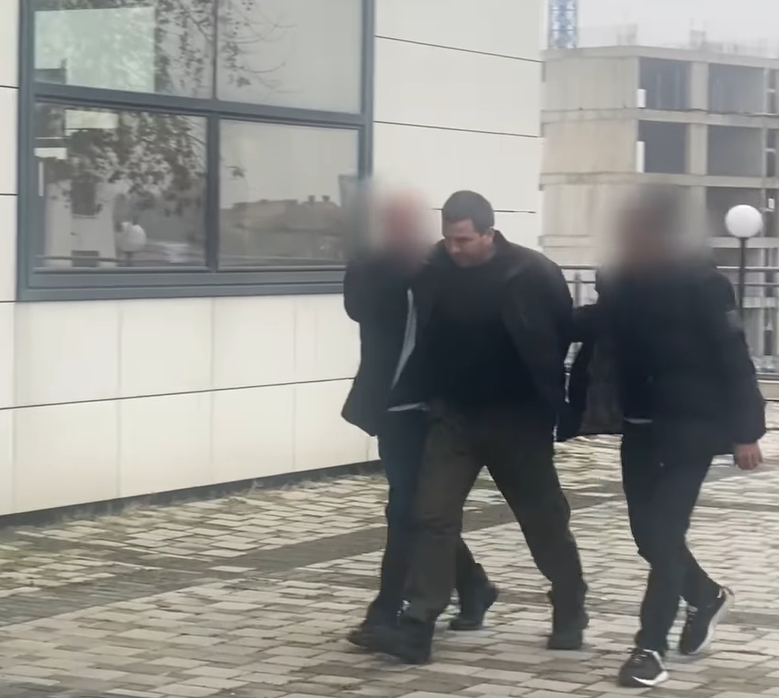
Jovan Vicentijevic, brought to the Basic Court in Prishtina on December 3, 2024. Photo/BIRN
Prosecutors argue that Jovan attempted to craft a damaging narrative about Kosovo for foreign audiences.
Evidence for this accusation was a report asserting the existence of a fictitious paramilitary group supposedly devoted to “liberating Albanian lands,” named the National Committee for the Protection of Albanian Territories.
Photographs of former senior Kosovo Liberation Army, KLA, commanders were allegedly attached to amplify the credibility of this invented organisation.
According to the Prosecution file, when arrested, the Vicentijevic brothers gave statements that investigators say did not align.
Dragisa Vicentijevic claimed that on the morning of the attack he had spent several hours at a cafe before visiting a car mechanic.
Jovan, however, told police he encountered his brother in their yard that same day—something Dragisa did not mention.
Prosecutors argue that, “such discrepancies further undermine the credibility of their accounts.”
The explosion near Varage village in Zubin Potok on November 29, 2024 was condemned by Kosovo’s government as a terrorist attack, which led to a series of additional arrests, among them the Vicentijevic brothers. The suspects under arrest are now all in pretrial detention.
At the time there was also seizure of weapons and explosives across Zubin Potok.
The Iber-Lepenc Hydroeconomic Enterprise supplies drinking water to several cities in Kosovo and provides essential cooling water for the Kosovo Energy Corporation’s power plants.