


Kosovo’s courts are increasingly trying war crimes suspects in absentia, delivering recognition to victims. Legal experts, however, have called for the proceedings to be in strict compliance with European fair trial standards.
When Gentrit Shala sat in the courtroom in Prishtina last July, he was not expecting relief. He was waiting for acknowledgement.
Gentrit’s father, Hafir Shala, a doctor, disappeared after being arrested by Serbian police on April 10, 1998. The conviction in absentia of a former Serbian security officer offered recognition of the crime, but not closure.
“Trials in absentia are a minimal and symbolic form of justice, necessary in the absence of other alternatives,” Shala said, after closely following the court proceedings.
On July 17, 2025, the Basic Court in Prishtina sentenced former Serbian State Security member Slavisa Filic, in absentia, to 15 years in prison for his role in the disappearance of Dr. Shala, who has not been seen since the day of his arrest.
While Shala considers the ruling important for the official acknowledgment and historical documentation of crimes, he notes that “it cannot replace proper justice.”
Two additional suspects in his father’s case remain unidentified, highlighting what Shala sees as “the structural limits of such proceedings.”
Turning to trials in absentia
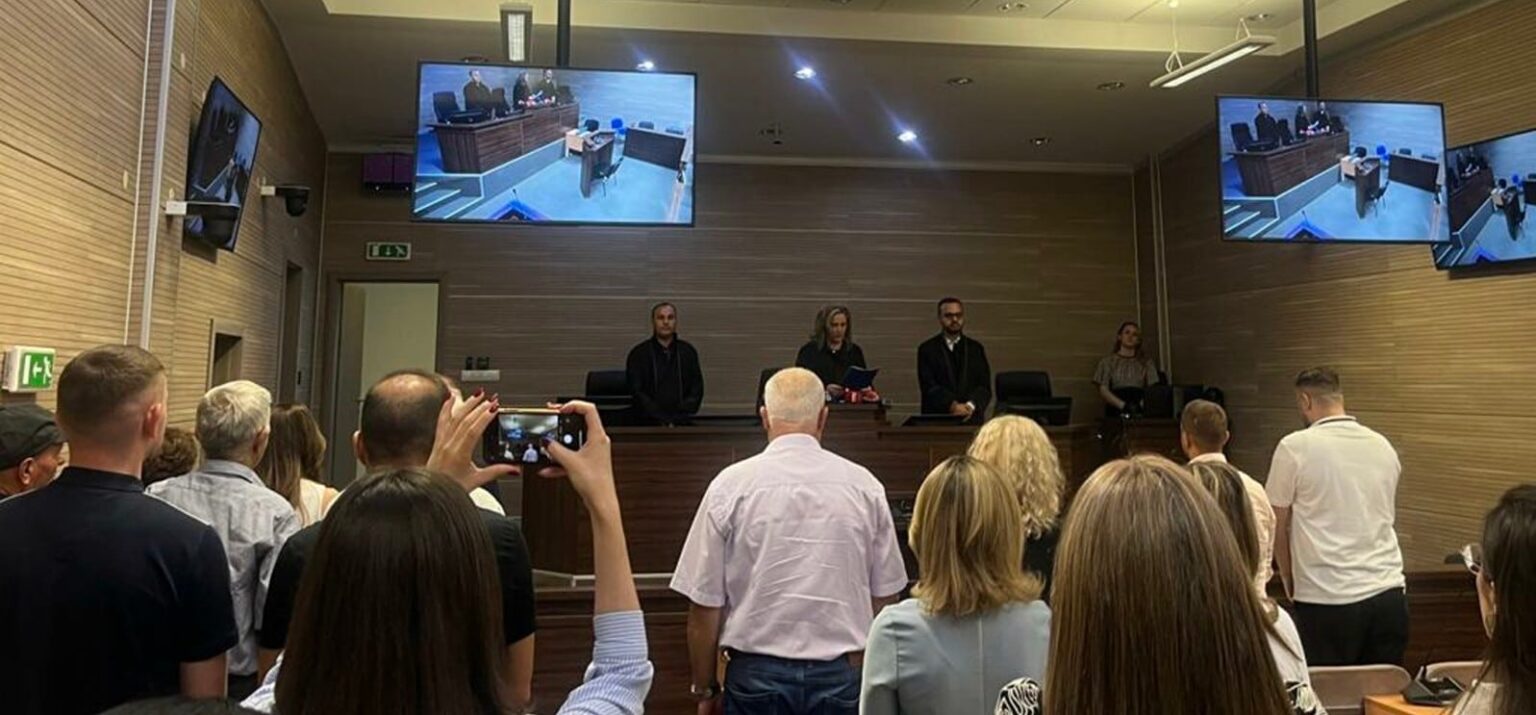
The announcement of the verdict against Slavisa Filic at the Prishtina Basic Court on July 17, 2025. Photo: BIRN
Kosovo introduced the possibility of war crime trials in absentia in 2019 and embedded the mechanism in the new Criminal Procedure Code adopted in 2022, largely because most war crime suspects are not accessible to Kosovo authorities, with many having found safe haven in Serbia, but also in other countries. So far, three convictions have been handed down.
The cases involve offences against international humanitarian law and international criminal law that were committed between January 1990 and June 1999.
Since the amendments entered into force, Kosovo Special Prosecution has filed 20 indictments in absentia against 102 individuals. The charges include war crimes against civilians, murder, torture, rape, property destruction, and persecution.
On December 26, 2024, the Basic Court in Prishtina sentenced Cedomir Aksic to 15 years in prison for crimes against Albanian civilians in Shtime municipality. The Court of Appeals upheld the verdict on November 10, 2025.
On July 17, 2025, Slavisa Filic was sentenced to 15 years for Hafis Shala’s disappearance.
On July 28, 2025, the Basic Court sentenced former Serbian police officers Dragan Denic and Ivica Rajkovic to 15 years each for the rape of a woman in May 1999, as well as for participating in the expulsion of Albanian civilians, looting, physical and psychological abuse, and other inhumane acts.
Most of the accused are believed to be living in Serbia, which does not recognise Kosovo’s independence and does not extradite its citizens to face trial in Kosovo. In the absence of judicial cooperation, Kosovo amended its legislation to enable proceedings against suspects outside its territory.
Under Kosovo law, trials in absentia are permitted only after prosecutors and courts demonstrate that all reasonable efforts have been made to secure the defendant’s presence through official notifications, arrest warrants, extradition requests, and international cooperation.
Defendants tried in absentia are entitled to court-appointed legal representation and, if arrested, have the right to request a retrial from the beginning.
Trials in absentia are considered acceptable internationally if these safeguards are fully respected.
In a statement for BIRN, Kosovo Special Prosecution said that along with the efforts to secure the presence of the defendant, “indictments and court summons are also published on the official websites of the Basic Court in Prishtina and the Special Prosecution, serving as formal notification to the accused.”
The prosecution adds that “Serbia continues to refuse constructive engagement and cooperation in investigating and prosecuting war crimes.”
Concerns from human rights experts
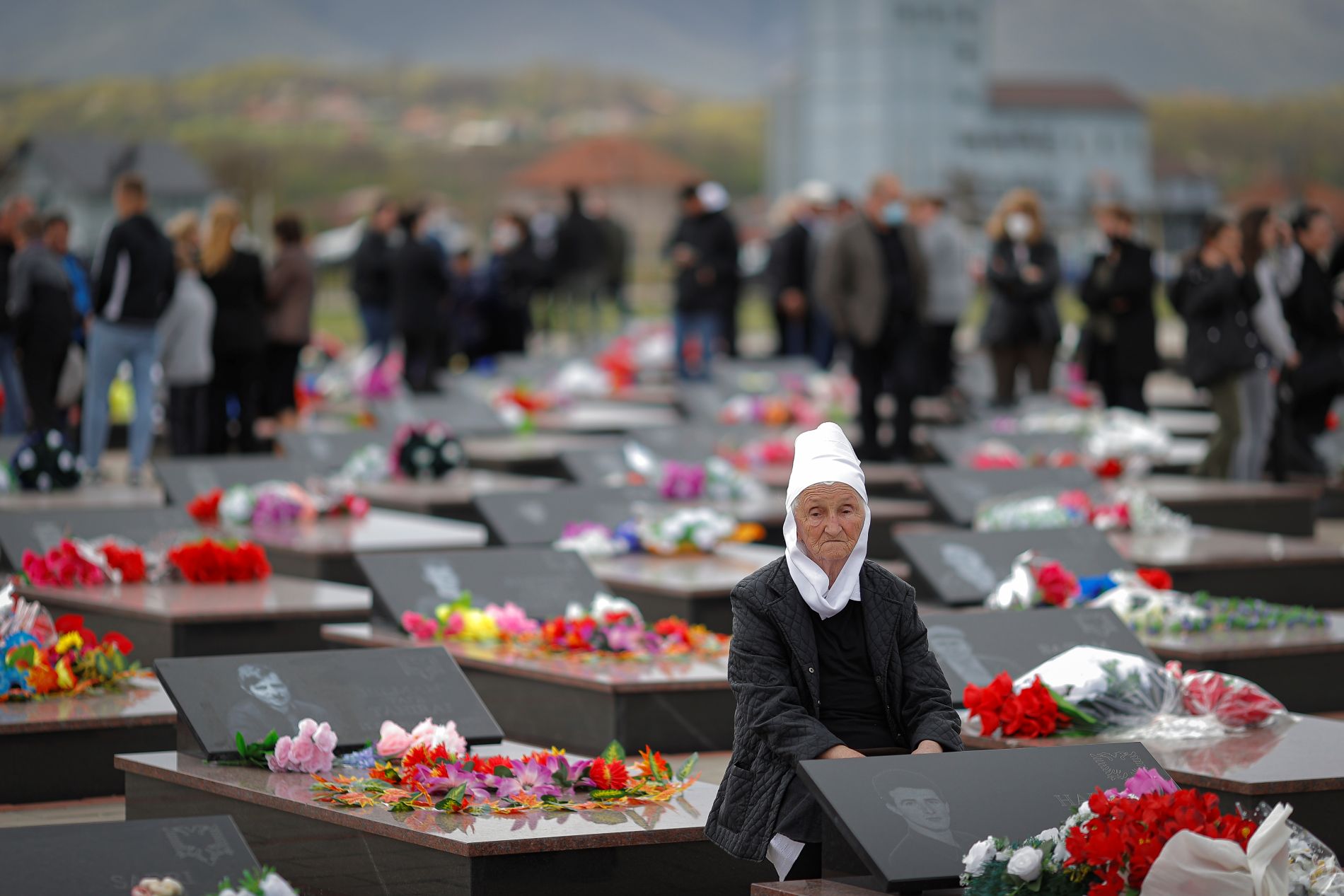
Vase Tahiraj, 89, mourns her son during the ‘Day of Missing Persons’ ceremony at the cemetery in Meje, Kosovo, on April 27, 2021. Photo:EPA/Valdrin Xhemaj
Legal and human rights experts caution that the process carries significant risks.
The Prishtina-based Humanitarian Law Center Kosovo, HLCK, has expressed principled reservations about trials in absentia, warning that such cases could eventually be challenged before the European Court of Human Rights, ECtHR, if Kosovo becomes a member of the Council of Europe.
The watchdog argues that court-appointed defense lawyers often lack sufficient experience in complex war crimes cases, potentially undermining the principle of “equality of arms.”
While trials in absentia are not prohibited in principle, HLCK emphasises the “need for strict adherence to fair trial standards.”
It also notes that legal amendments between 2019 and 2023 have eased the criteria for initiating such proceedings, “particularly regarding the requirement to make reasonable efforts to notify defendants.”
They further noted that, “in some cases, there are suspicions that certain accused individuals may no longer be alive, yet no official confirmation of their death exists.”
HLCK recommends a bilateral justice cooperation agreement between Kosovo and Serbia to ensure effective information exchange and accountability.
“Justice for victims should not remain hostage to politics,” the organisation said.
A “double-edged sword”
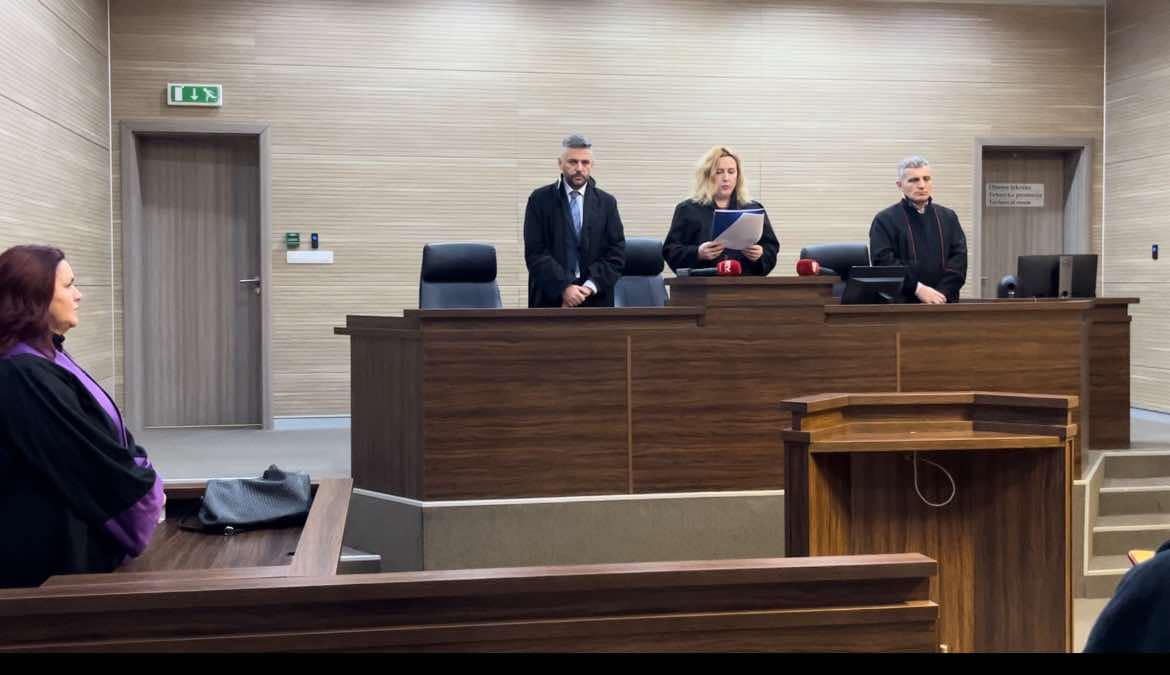
Prishtina court judges announce the verdict on Cedomir Aksic case on December 26, 2024. Photo: BIRN
Gjylbehare Murati, a university professor on international law, describes trials in absentia as “a double-edged sword.”
According to her, on the one hand, they prevent cases from remaining unresolved and offer victims a form of judicial acknowledgment. On the other hand, they require rigorous compliance with fair trial guarantees.
“These proceedings present a major practical and professional challenge for Kosovo’s judiciary, which must balance the need for justice with full respect for procedural safeguards,” Murati said.
The European Convention on Human Rights does not prohibit trials in absentia, she noted.
However, the Strasbourg-based ECtHR considers them acceptable only if minimum guarantees are met: effective notification of charges, reasonable efforts to secure the defendant’s presence, effective legal representation, and the right to a retrial upon appearance.
“The Venice Commission has also stressed the importance of clearly defining what constitutes ‘reasonable efforts’ to avoid overly broad interpretations,” she said.
As Murati puts it, the main challenge in practice remains “the effective notification of defendants residing outside Kosovo, particularly in Serbia, amid strained bilateral relations.”
The role of the defense in a trial is therefore crucial, she adds.
“Effective defense is complete only when the lawyer is in contact with the defendant and can receive instructions. It may happen that the lawyer has no contact at all, or that the defendant refuses any cooperation.”
The risk of future challenges in Strasbourg-based court
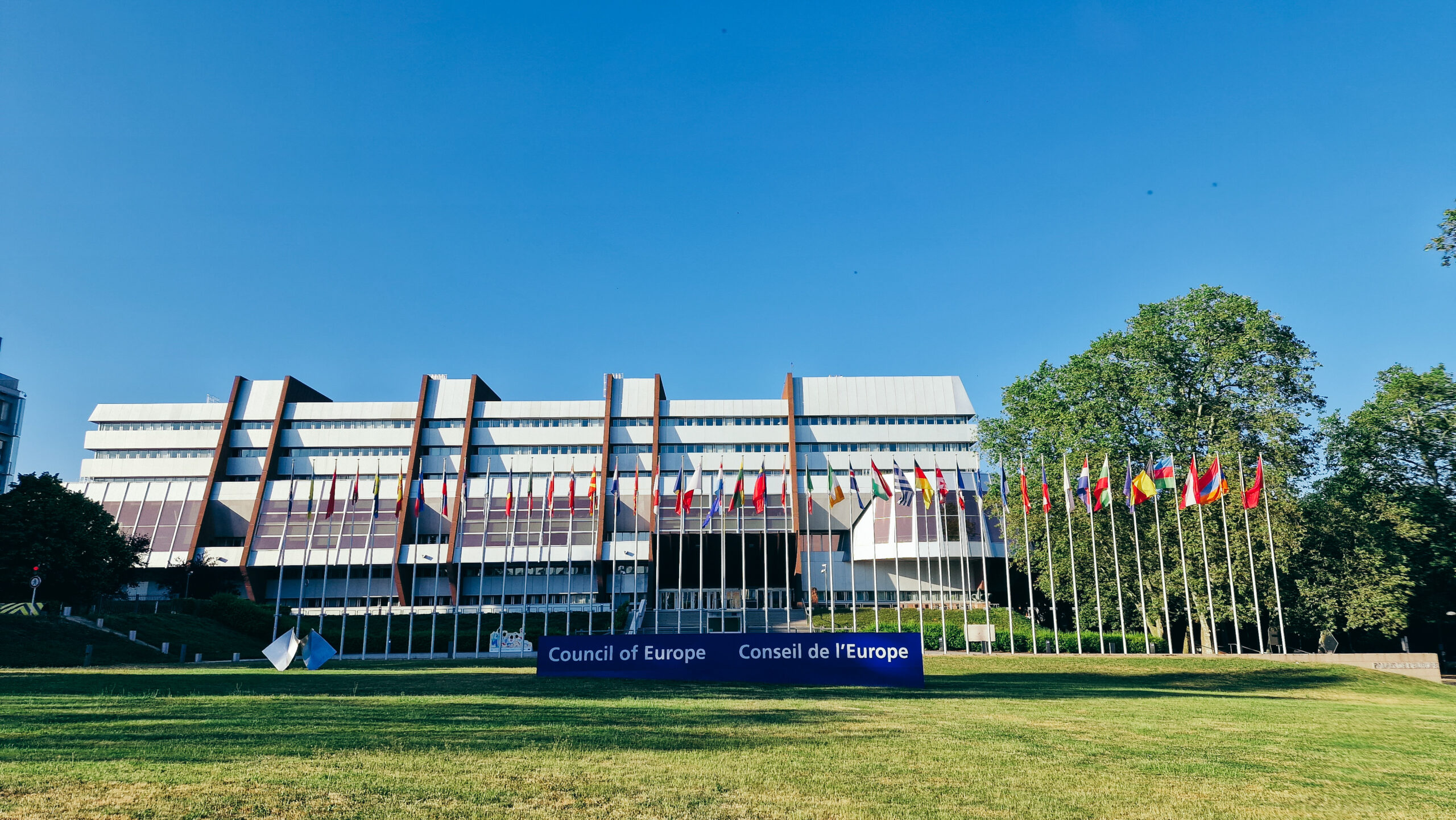
Council of Europe. Photo: BIRN/Denis Sllovinja
Kosovo is not a member of the Council of Europe, so current cases cannot be appealed to the European Court of Human Rights, ECtHR. After accession, only violations occurring post-membership, such as denial of retrial or ongoing consequences of an unfair process, could be challenged in Strasbourg.
As Murati explains, the ECtHR generally examines violations occurring after a state becomes a member of the Council of Europe.
“Completed cases prior to accession would not normally fall under its jurisdiction, unless the alleged violation continues after membership, for example if a person is denied the right to retrial or continues to suffer the consequences of an unfair process”.
For this reason, Murati argues, “it is essential that proceedings already comply with European standards to ensure their long-term sustainability.”
HLCK notes that, “the only real alternative remains sincere regional cooperation between justice institutions, accompanied by political will and genuine empathy for the victims of the war.”
While Shala emphasised that, “true justice for victims’ families means confrontation, clarifying the fate of the missing, and holding the perpetrators truly accountable.”