


In Canada’s Parliament, Kosovo refugees were recognised and honoured for their resilience and contribution to society.
In April 1999, the 13 year old Arta Rexhepi left her village of Përlepnicë near Gjilan with her family, leaving their house in flames. She remembers her mother telling her not to look back.
“But in that moment,” she recalls, “I promised myself that one day I would tell the world what was happening in Kosovo.”
Twenty seven years later, as a Kosovan refugee in Canada, her project documenting stories of Kosovo refugees and their struggle to rebuild their lives was honoured at the parliament of the country that hosted them and gave them another chance at life.
“This event and project was a promise kept to little Arta,” she told Prishtina Insight.
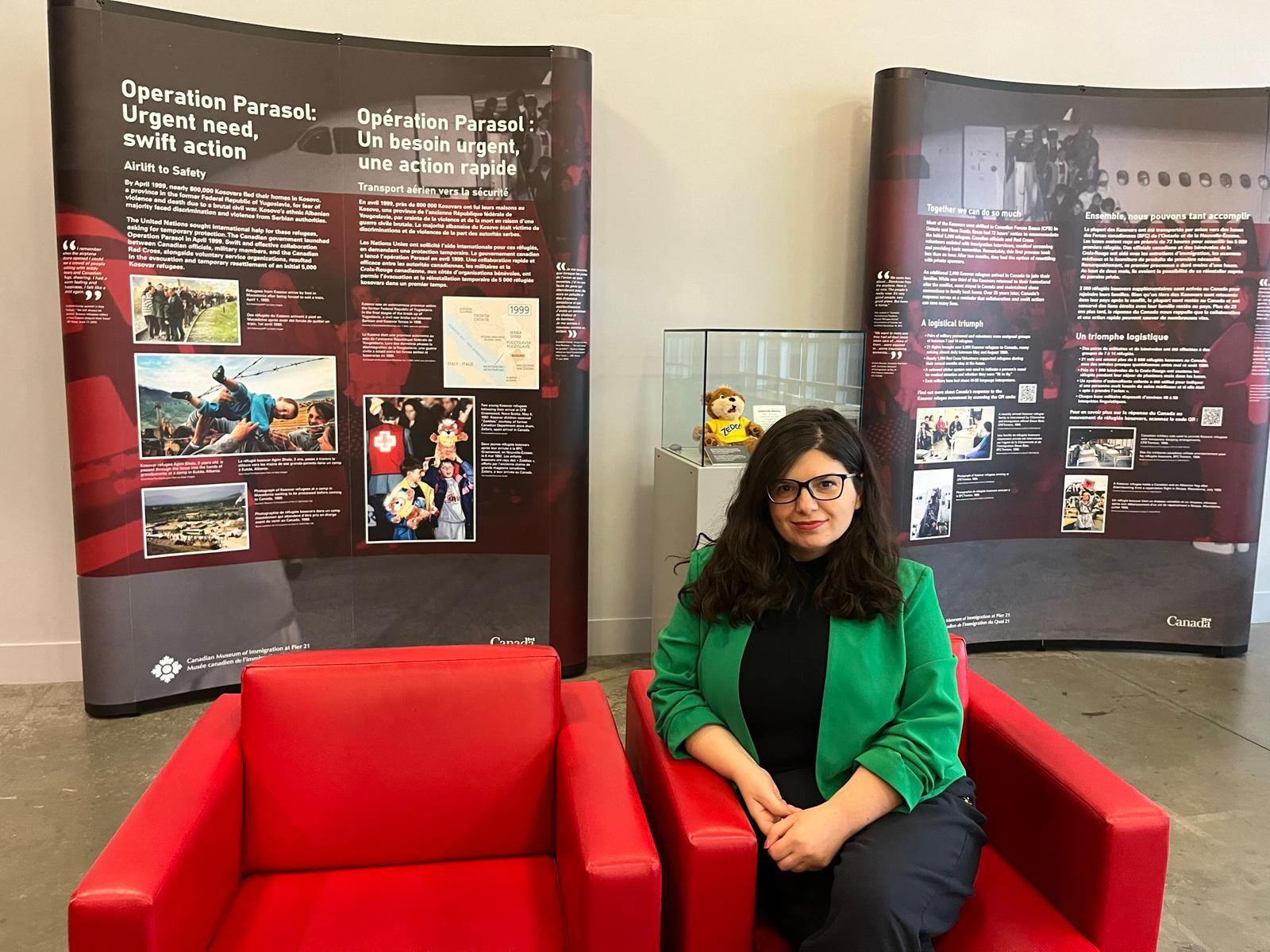
Arta Rexhepi at the 25th anniversary commemoration of Operation Parasol in Halifax, at the Canadian Museum of Immigration at Pier 21. Photo courtesy of the Red Cross.
On March 25, 2026, at Parliament Hill, Kosovo refugees and members of the Albanian community were welcomed as honourees into one of Canada’s most symbolic spaces. Through the initiative “25@25: Refugees Making a Difference,” their journeys were recognised for what they are: stories of resilience, contribution, and belonging.
The project, created by Arta Rexhepi, founder and CEO of the Artiste Foundation NGO in Canada, documents 25 success stories of Kosovo refugees who rebuilt their lives in Canada after fleeing the 1998-1999 war.
The idea for the project came at a commemorative event held at the Canadian Museum of Immigration at Pier 21 in Halifax, on May 11, 2024, for the 25th anniversary of Kosovo Albanian refugees coming to Canada, where a documentary of their journey was shown.
“People wanted to hear more,” Rexhepi told Prishtina Insight, adding that, “that’s when I knew this project had to happen.”
Making stories part of the Museum of Immigration
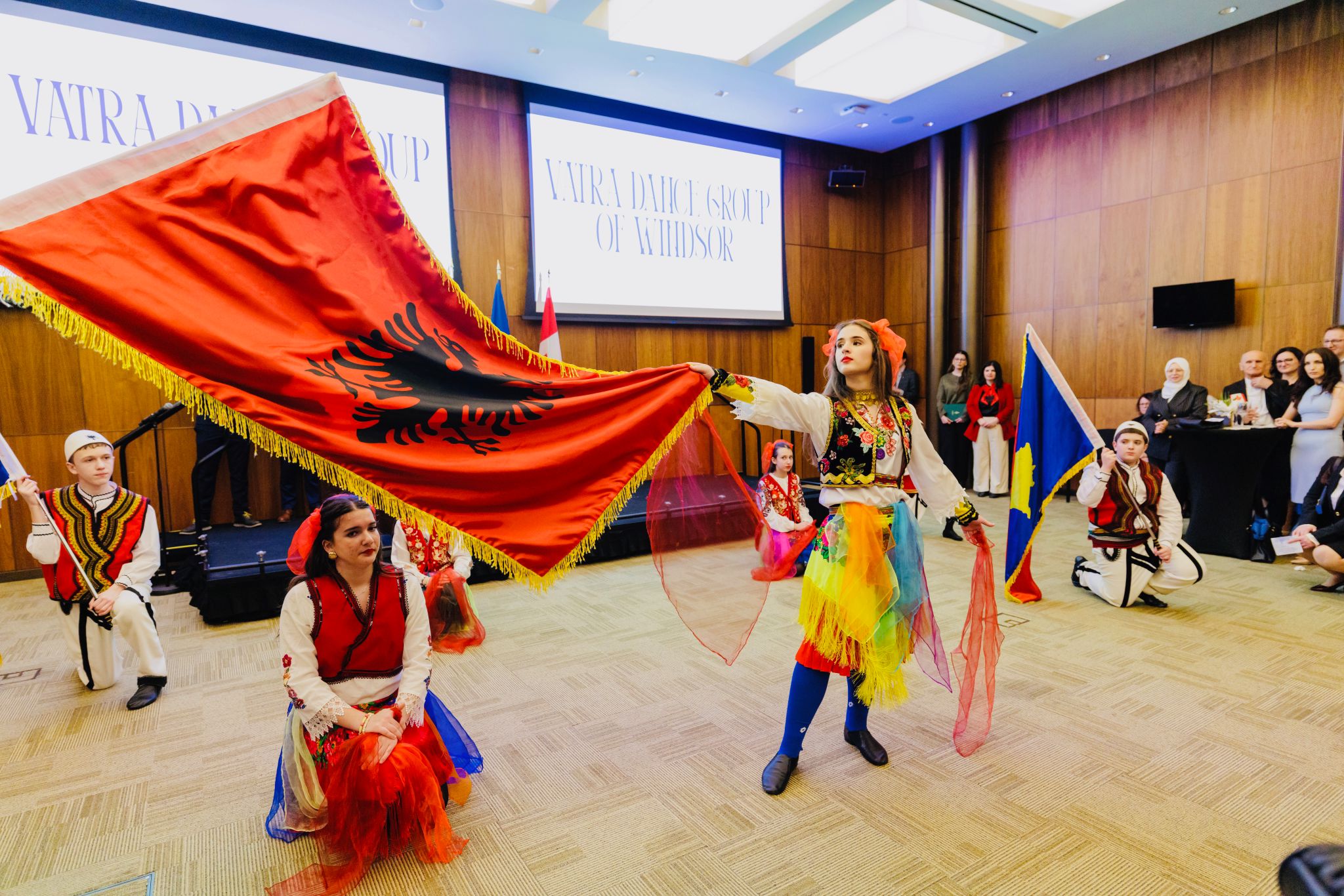
Honouring ceremony for Kosovan refugees in Canada. Photo: Flamur Studios.
Rexhepi said that the aim was for these stories to “challenge stereotypes regarding refugees,” while the goal of the overall project is to make these stories part of the Museum of Immigration.
“It shows how refugees have not only integrated, but contributed meaningfully to Canadian society.”
“There are many more success stories,” she adds. “I’ve just taken examples from different fields. The selection was made through collaboration with community groups and open calls for submissions”, Rexhepi noted.
“Canada invested in Kosovan refugees,” she says. “But that investment has also been returned.”
She says that discussions are underway to include these stories in the Canadian Museum of Immigration, so that they become part of the country’s historical narrative.
“For the first time, these stories are being recognised institutionally,” she said.
Through the Artiste Foundation, she has created a platform with a particular focus on empowering women and amplifying underrepresented voices.
The project’s focus on storytelling stems directly from Rexhepi’s own interest in telling stories. To her, what was lost back in Kosovo, was not just a house, but a home filled with murals painted by her father, musical instruments, and cherished memories.
“War takes everything, but not your talent,” she says. “Even in the refugee camp, my father found a space to paint. Art became our healing.”
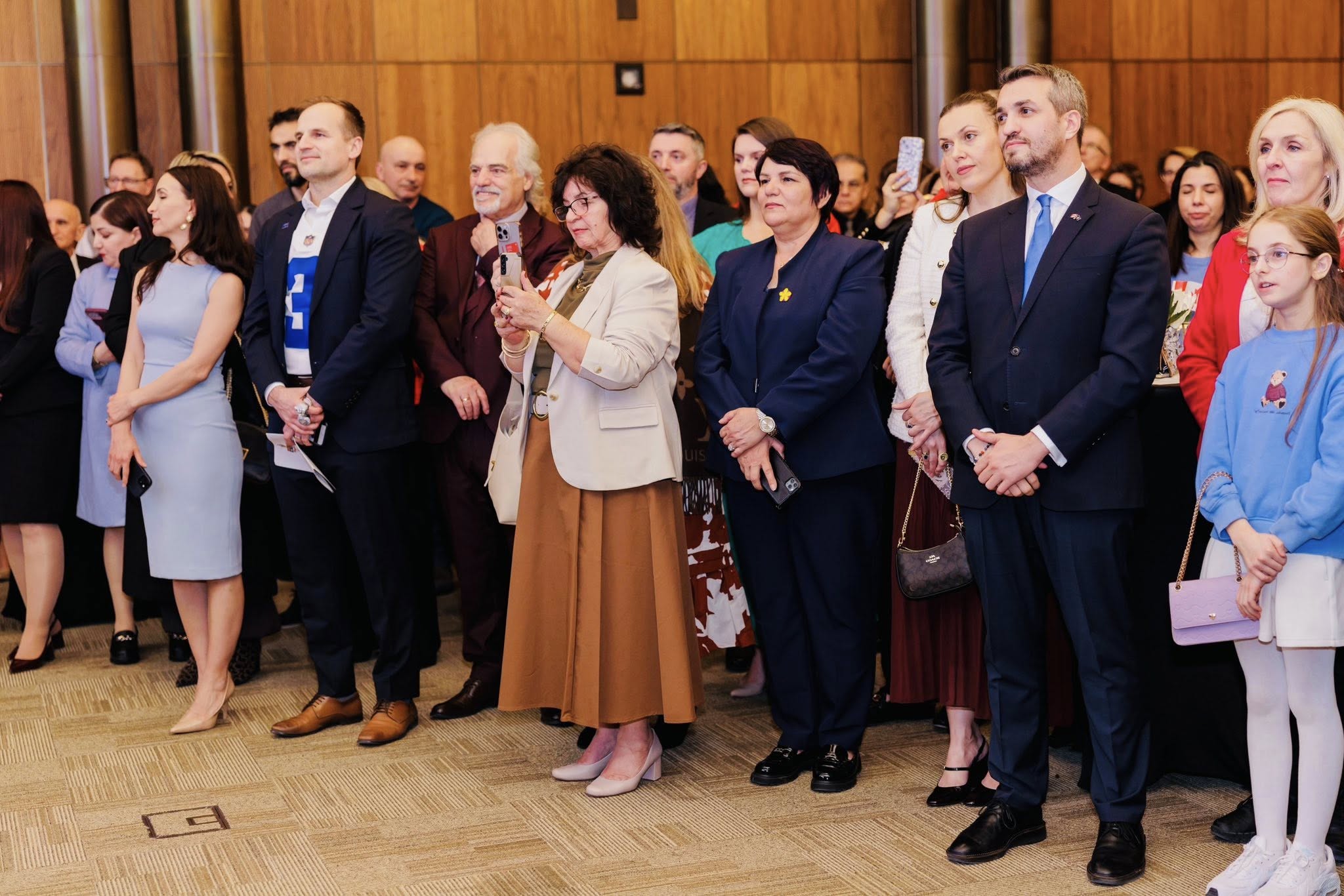
Honouring ceremony for Kosovan refugees in Canada on March 25. Photo: Flamur Studios.
Even the foundation’s name carries a personal meaning.
“When I was young, my family called me ‘artiste’ (feminine or artist in Albanian),” she says. “I wanted to support women, because not all women have the opportunity to be both mothers and artists.”
Her storytelling journey began early. Coming from a family of artists, she pursued writing and advocacy from a young age, later working with Canadian media outlets such as CBC and CTV.
But documenting the stories for 25@25, a journey that lasted two years, was not easy.
“It was one of the hardest things I’ve ever done,” Rexhepi said. “I wrote it in tears. I had to pause, rewind, and process everything.”
Listening to the other refugees’ stories of loss, survival, and rebuilding, often brought her back to her own experiences. At times, she sought therapy while working on the project.
“It’s different when you work on stories you haven’t lived,” she said. “For me, this was also something I had experienced.”
Kosovo refugees were given hope and dignity
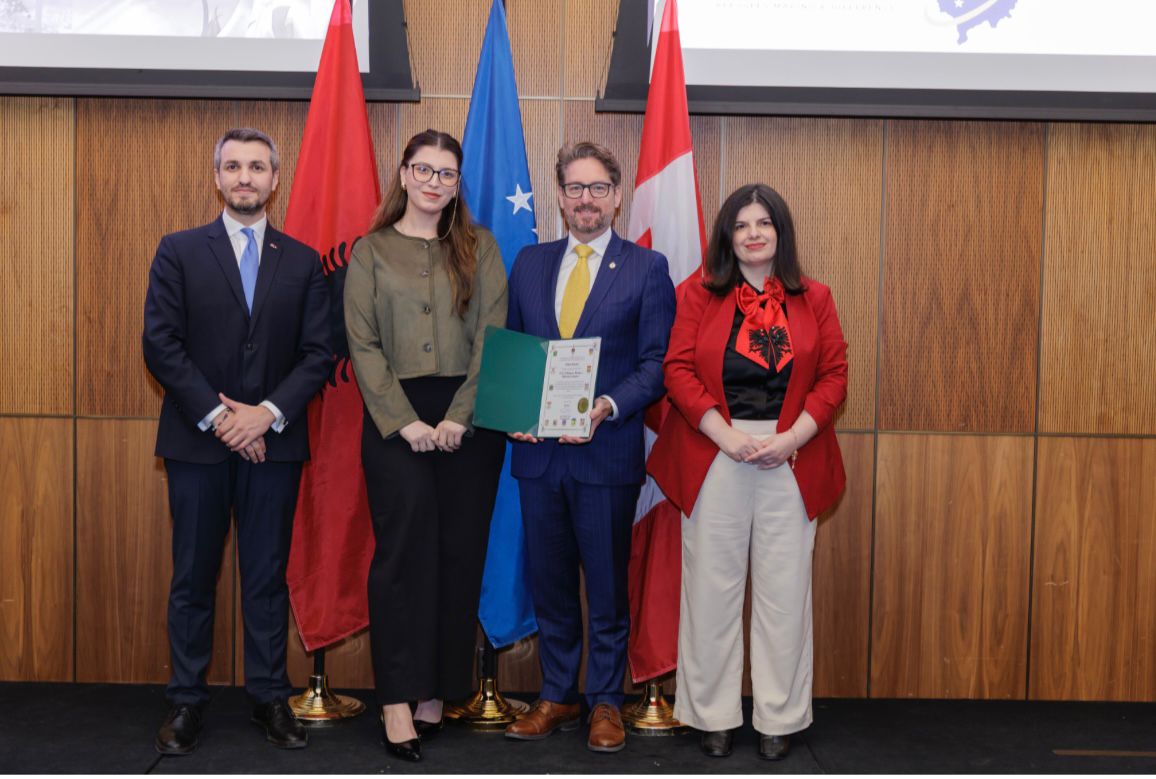
Honouring ceremony for Kosovan refugees in Canada on March 25. Photo: Flamur Studios.
Among the 25 stories included and honoured from the project is that of the Veliu brothers who arrived in Canada as children and lost their father soon after.
Their mother faced challenges as a refugee, while the boys grew up and eventually worked as translators. Today, Mergim Veliu is a pilot in Canada, while the other brother, Leutrim, works as a correctional officer.
“Mergim told me when he boarded the plane to Canada, ‘I fell in love with aviation immediately,’” Rexhepi recalled.
For Rexhepi, these stories reflect a bigger truth: “helping refugees is not just about addressing a crisis, it is about restoring dignity and creating opportunity ”
“When you help people, you don’t just respond to a crisis—you give back hope and dignity,” she says. “That’s what happened to Kosovan refugees from the moment they boarded those planes.”
The project has received institutional support, including backing from Member of Parliament Kyle Seeback, and was attended by representatives from UNHCR, ambassadors, and members of the Red Cross, many of whom were involved in supporting refugees during the Kosovo war.
For Rexhepi, however, the event in the Canadian Parliament meant something beyond recognition for Kosovo refugees.
“I saw a level of unity I hadn’t seen in 27 years,” she said. “When people hear the word ‘refugee,’ they often think we only hold onto our own culture. But I wanted to show that we have preserved our culture while also embracing Canadian society.”
About 7,000 Kosovo refugees went to Canada through a relief effort dubbed Operation Parasol.
Like many Kosovan refugees, Rexhepi’s family once considered returning home after NATO’s troops entered Kosovo. But an opportunity for her father to work in theater and mural creation in Halifax kept them in Canada.
“Sometimes,” Rexhepi said, “I ask myself about the life I might have had if we had returned. But I believe wherever you are, if you do what you love, you remain who you are. I would have still been writing and telling stories.”