


Thousands of people gathered in Prishtina squares in a march against the Hague convictions of four former senior Kosovo Liberation Army leaders, demanding justice and denouncing what protesters described as unfair treatment by the Kosovo Specialist Chambers.
Carrying banners reading “Not in My Name” and “Freedom Has a Name,” thousands of citizens filled the capital’s main squares on Thursday, calling for justice and opposing the September 16 verdict by the Kosovo Specialist Chambers in The Hague against four former KLA leaders.
Former Kosovo President Hashim Thaçi was sentenced to 25 years in prison, while Jakup Krasniqi, Kadri Veseli and Rexhep Selimi received sentences of 25, 18, and 13 years respectively. Time already spent in detention in The Hague since November 2020 will count toward their sentences.
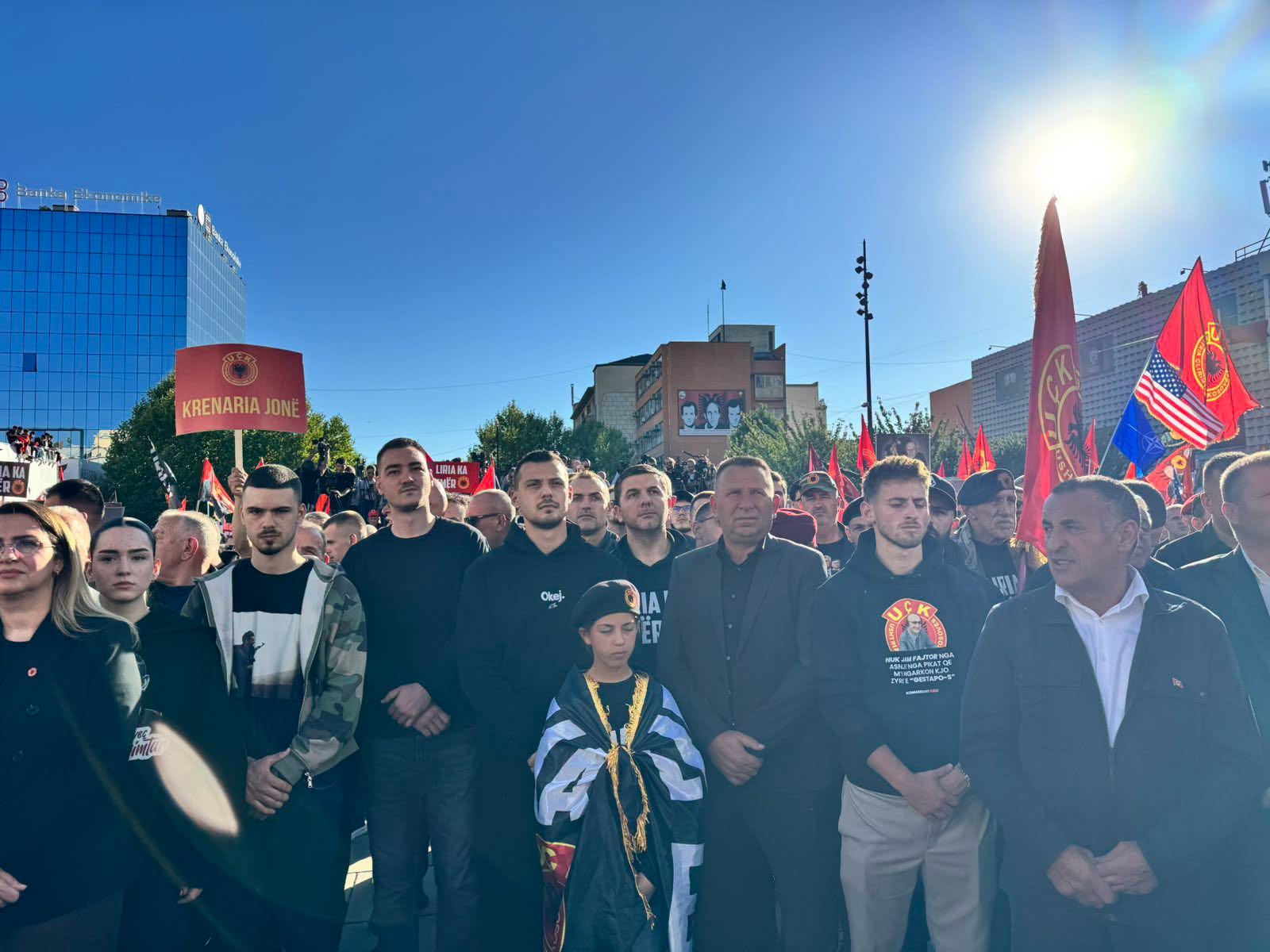
Family members of the convicted former KLA leaders and politicians attend the march in Prishtina. Photo: BIRN
Political leaders and public figures joined the march, along with family members of the four former KLA leaders convicted by the court.
Hysni Gucati, chairman of the Organisation of KLA War Veterans, called on members of Kosovo’s parliament to unite over the issue and urged the international community to restore what he described as ‘lost trust’.
“To the international community, whom we trusted, we now say: ‘You have betrayed us. Restore that trust, because this will be for both you and us,’” Gucati said.
He said protesters were demanding justice and the full clarification of crimes committed during the Kosovo war.
“You cannot deceive us by saying these are individual cases,” Gucati said.
Parallelly, hundreds of citizens also signed a petition calling for amendments to the law on the Kosovo Specialist Chambers, a demand that has also been raised by opposition parties, including the Democratic Party of Kosovo, PDK, and the Alliance.
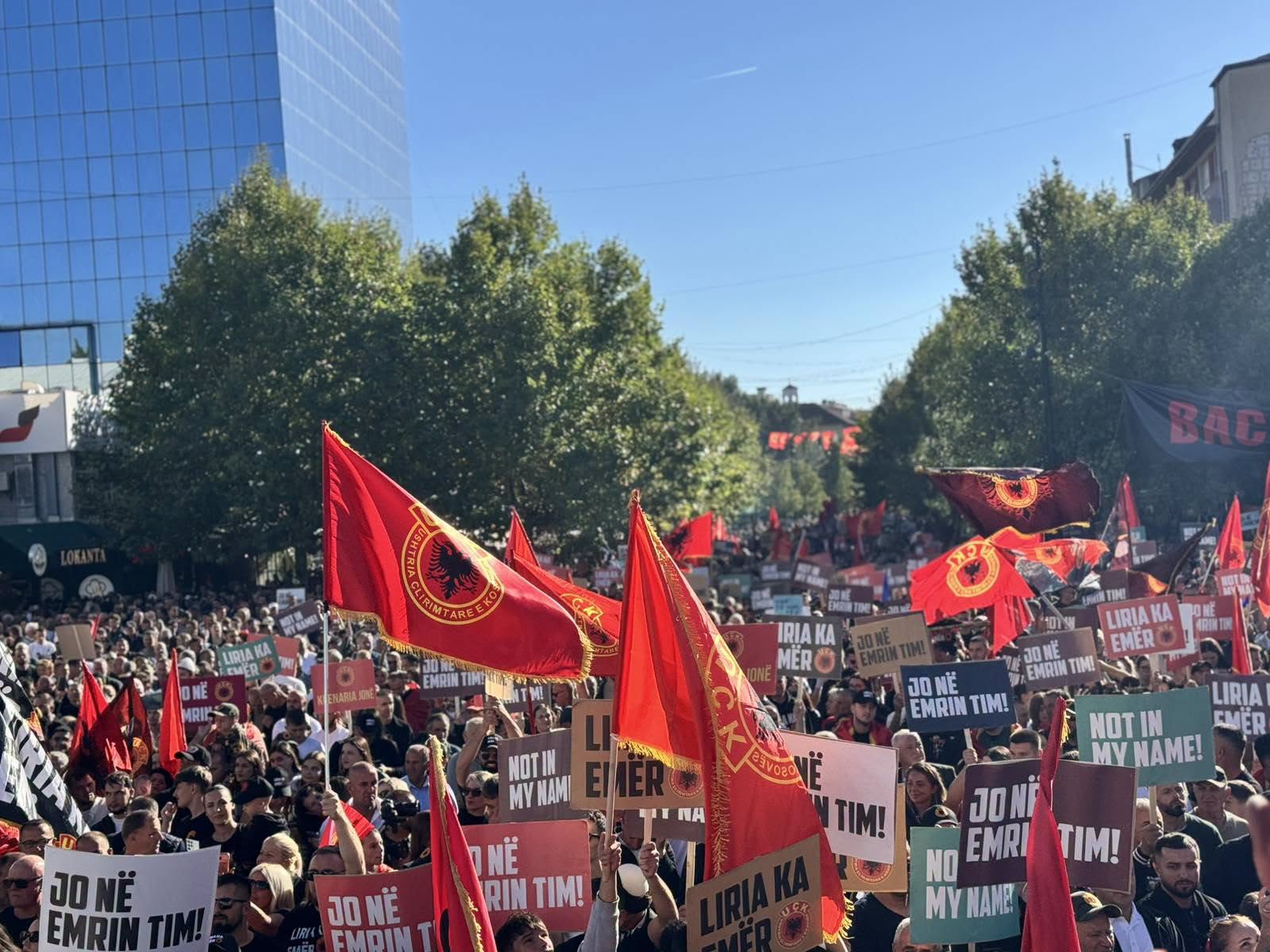
Thousands gather in Prishtina in protest against Hague court verdict, October 1, 2026. Photo: BIRN
Representing the Student Parliament, Granit Spahiu called on us to remember the student protest of October 1, 1997, when Kosovo Albanian students took to the streets to demand the right to attend their university.
Twenty-nine years after that protest, Spahiu said, students and citizens had returned to the same square to send a message that the sacrifices of that period must not be forgotten.
“History cannot be rewritten. We will not forget the sacrifice, and we will never give up on justice,” Spahiu said.
Lavdije Leci, the daughter of Lec Gradica, a KLA doctor during the war, said justice should not be based on double standards.
“Justice must not have double standards, and the sacrifice for which they fought for freedom must not be equated with crime and genocide,” Leci said.
Addressing the four former KLA leaders being held in The Hague, she said they were not alone.
“You are not alone. Behind you stand your families, the children who grew up without their parents, thousands of veterans and war invalids, and those who sacrificed for the KLA war,” Leci said.
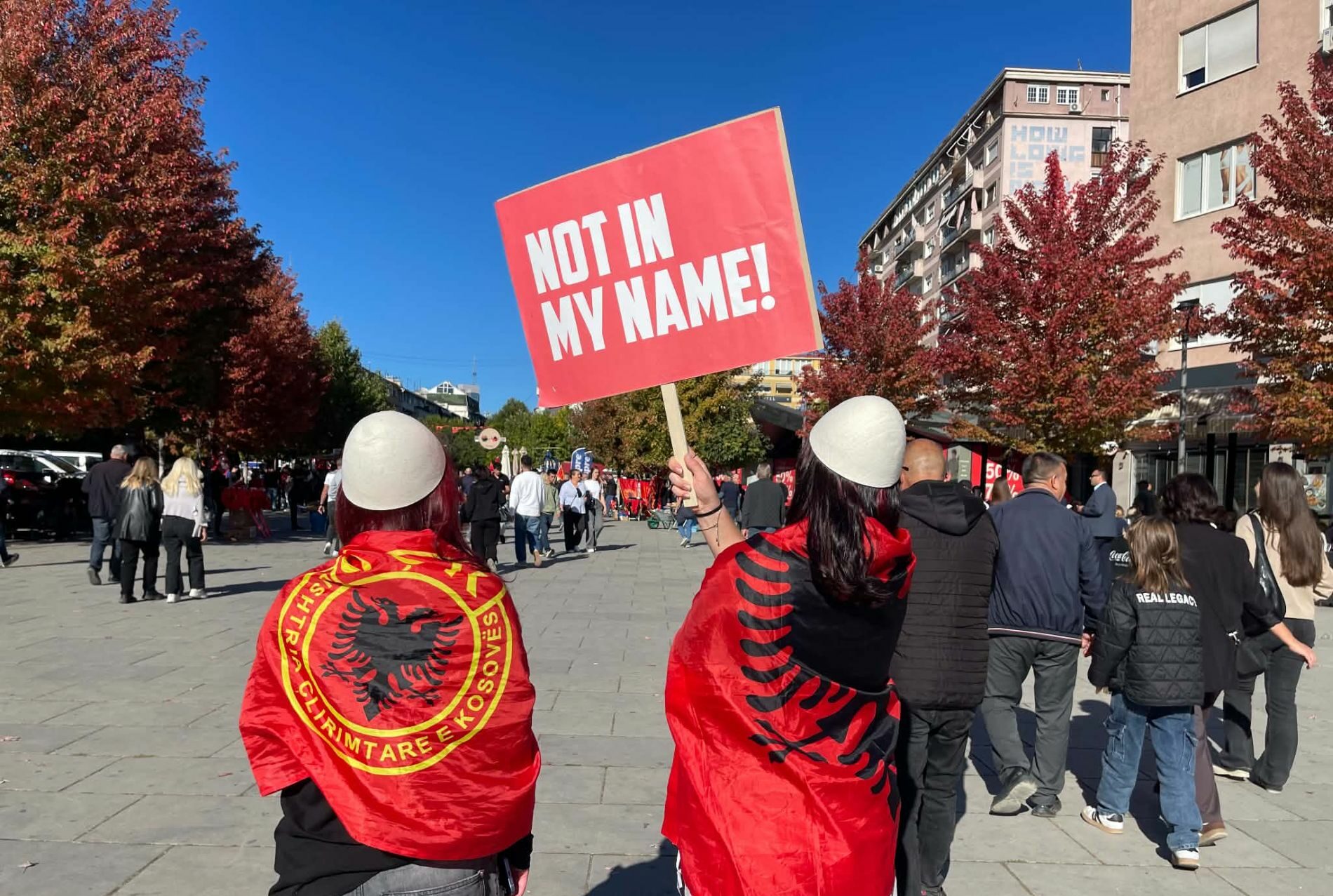
Young Kosovo citizens carrying “Not in My Name” banner and KLA flag join the march in Prishtina on October 1. Photo: BIRN
The march was organised by the “Freedom Has a Name” platform, while similar protests have been being held in other cities across Kosovo since September 16, when the verdict was announced.
On September 16, the Kosovo Specialist Chambers in The Hague sentenced four former senior KLA figures to a combined 81 years in prison for war crimes including arbitrary detention, cruel treatment, torture, and murder committed between April 1998 and June 20, 1999, in Kosovo and at two locations in Albania.
The verdicts were issued at first instance and can be appealed. Thaçi’s defence team has publicly announced that it will challenge the verdict.
Supporters of the KLA and other Kosovo citizens have held daily demonstrations since the September 16 verdicts, with protests taking place as often as twice a day in Kosovo.
The Specialist Chambers are part of Kosovo’s judicial system, but are based in The Hague and staffed internationally. They were established under pressure from the country’s Western allies, who believed that Kosovo’s justice system was not sufficiently robust to try cases involving the KLA and to protect witnesses from intimidation.
Many Kosovo Albanians believe that the court is biased and denigrates the just war fought by the KLA against Serbian repression.