


Kosovo has begun initial procedures to establish a national gendarmerie force, as the country reassesses its security architecture amid concerns over regional instability, terrorism, border security, and organised crime.
Kosovo’s government has initiated procedures to establish a gendarmerie force, presenting the move as part of broader efforts to strengthen the country’s security architecture amid regional tensions and concerns over terrorism, border security and organised crime.
Acting Interior Minister Xhelal Sveçla announced on May 19 that a working group had been formed to analyse and propose models for the functioning of what would become the Kosovo Gendarmerie.
According to Sveçla, the proposed force would focus on protecting Kosovo’s territorial integrity and borders, combating terrorism and smuggling, managing high-risk disturbances, and safeguarding critical infrastructure.
“The gendarmerie represents an important step in consolidating our security architecture,” Sveçla wrote on social media, adding that the force would “ensure a stronger state presence in protecting Kosovo’s sovereignty.”.
However, the proposal to establish a Kosovo Gendarmerie has sparked political and public debate over whether such a force is needed, or whether the focus should instead be on investing in and improving the existing policing sector.
A force between police and army
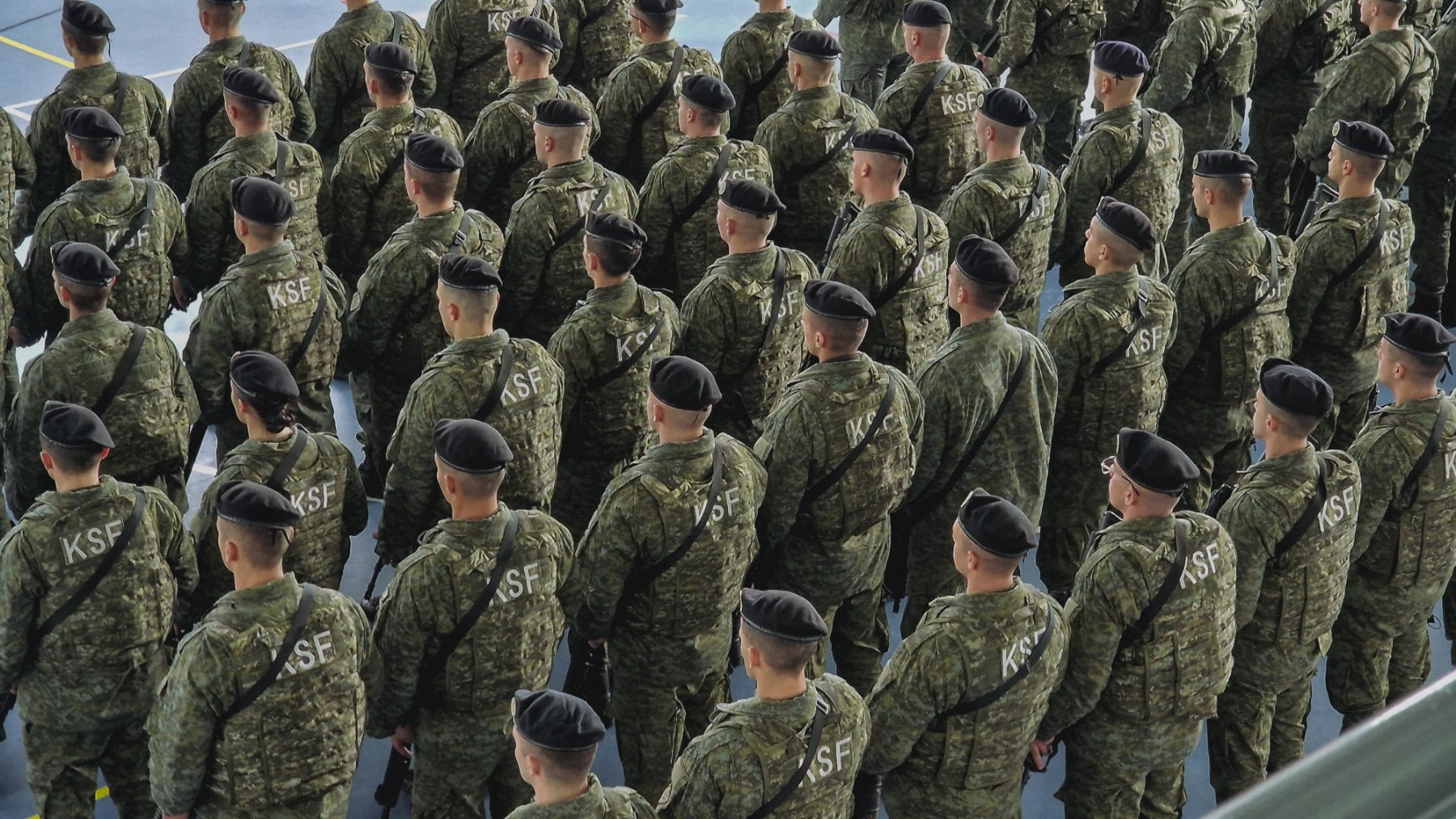
Kosovo Security Force, KSF, troops. Photo: BIRN
A day later, acting Prime Minister Albin Kurti said that the government had long considered establishing such a structure, describing it as a force operating “above the police but below the army.”
“From border protection to fighting terrorism, closing smuggling routes and protecting critical infrastructure, this is an area that requires a dedicated mechanism,” Kurti told reporters in a press conference on May 20.
On the same day, Kurti met with Kevin Hamilton, NATO’s Deputy Assistant Secretary General for Partnerships. According to the prime minister’s office, discussions “focused on Kosovo-NATO relations, regional security developments, and the proposed gendarmerie force.”
The Office of the Prime Minister stated that Kurti “explained the concept of the Kosovo Gendarmerie and highlighted its intended role in strengthening security and coordination with NATO and KFOR.”
The United States also reacted to the proposal. In comments to Radio Free Europe, a spokesperson for the U.S. Embassy in Prishtina said Washington expects any plan for establishing a gendarmerie to remain “consistent with Kosovo’s commitments to maintaining peace and security.”
A gendarmerie is a security force with military status that performs policing and public order duties. It is generally considered an institution positioned between the police and the military. In some countries, gendarmerie forces operate under ministries of interior, while in others they are integrated into the armed forces.
NATO’s peacekeeping mission in Kosovo, KFOR, stated for BIRN that, “it is closely following statements” made by Kosovo institutions concerning the establishment of the gendarmerie.
KFOR emphasised that Kosovo authorities “themselves should provide more detailed explanations” regarding the initiative.
The mission reiterated that NATO continues cooperating with all security institutions in Kosovo to contribute to lasting stability and security.
The mission also expressed expectations that Kosovo’s security institutions would “continue coordinating with KFOR to contribute to security.”
Additionally, KFOR highlighted the role of NATO’s Advisory and Liaison Team in supporting the development of the Kosovo Security Force, KSF, through capacity-building, education, and training coordination.
KFOR currently serves as the third security responder in Kosovo, after the Kosovo Police and the European Union Rule of Law Mission, EULEX. Among its responsibilities is maintaining security along the border between Kosovo and Serbia.
Under a 2013 agreement between Kosovo and NATO, the Kosovo Security Force cannot be deployed to northern Kosovo without prior approval from KFOR.
Debate over necessity for a Gendarmerie force
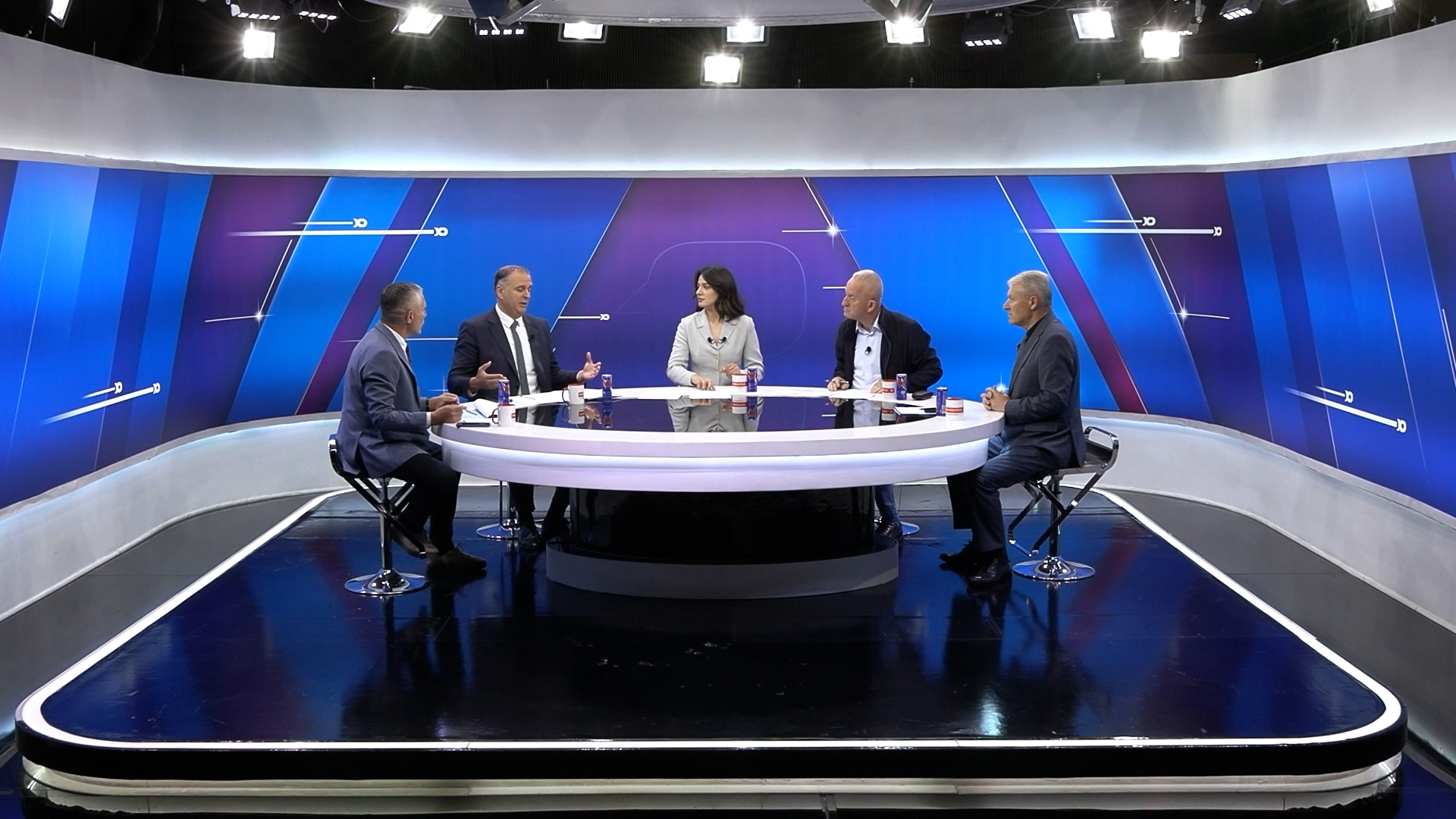
Debate on the government’s plan to establish a gendarmerie during the Kallxo Përnime TV programme aired on May 20, 2026. Photo: BIRN
The announcement by the Ministry of Internal Affairs to form a Gendarmerie force has sparked debate among political representatives and former security officials about if this new force is merely an electoral promise ahead of June 7 early elections or a real necessity. during “Kallxo Përnime” TV Programme on May 20.
Mefail Bajqinovci, a member of the ruling Vetëvendosje Movement, noted that many European Union countries operate gendarmerie forces and that Kosovo would benefit from a similar structure.
According to Bajqinovci, the Kosovo Police should not be expected to handle every type of security operation, particularly in difficult terrains and high-risk situations that may require specialised training.
“We should not have the Police involved in every field, from the easiest tasks to the most difficult ones, which I believe they do not always have the proper training for, especially for situations we often encounter in difficult terrain,” Bajqinovci emphasised.
However, former Kosovo Police Director and Democratic Party of Kosovo representative Rashit Qalaj criticised the proposal, calling the creation of a gendarmerie unnecessary.
Qalaj argued that Kosovo should first conduct a strategic review of its entire security sector before establishing any new institution.
“I believe the creation of a gendarmerie is absolutely unnecessary. Yes, we need to strengthen the capacities of the Kosovo Police, we need logistical support for the Kosovo Police, and we need to relieve it of some non-policing duties with which it is overloaded,” Qalaj said.
He stressed that strengthening the existing capacities of the Kosovo Police should remain the priority.
Qalaj also pointed to the police force’s need for “logistical, financial, and welfare support, including better salaries, health and life insurance, and reforms concerning early retirement policies.”
Meanwhile, Fadil Hadërgjonaj from the Democratic League of Kosovo, emphasised the importance of conducting a comprehensive security sector review to identify weaknesses and improve capacities.
“Based on those recommendations and in-depth assessments, we should then move toward improving, strengthening, professionalising, and enhancing the existing capacities,” Hadërgjonaj said.
Burim Ramadani from the Alliance for the Future of Kosovo, AAK, stated that any creation or restructuring of security institutions should be based on a National Security Strategy.
According to Ramadani, democratic countries typically spend years drafting such strategies, which then serve as the constitutional foundation for the organisation and development of all national security institutions.
“In every democratic and developed country, preparing a National Security Strategy realistically takes nearly two years. That means that by 2027, the first draft of the National Security Strategy should already have been completed, and only then could it be linked to the country’s actual security needs,” Ramadani said.