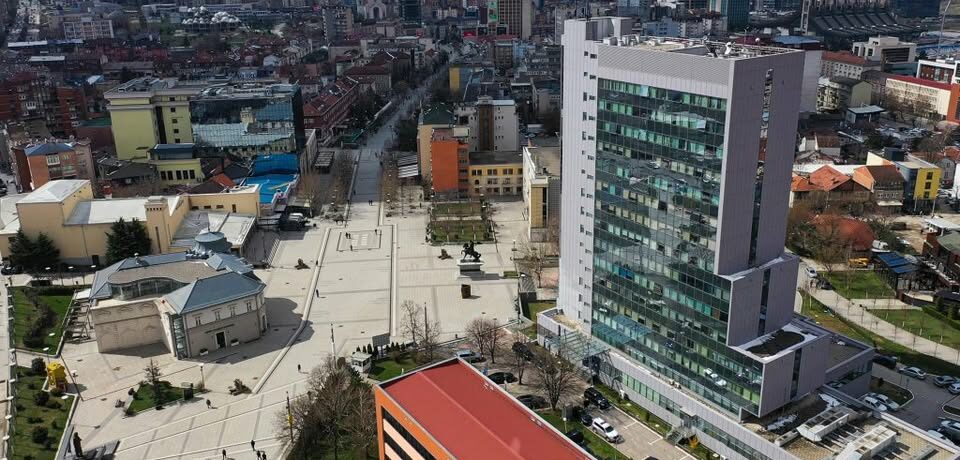
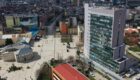
 Kosovo Government Building. Photo: BIRN/Denis Sllovinja
Kosovo has lost more than 40 million euros in European Union Growth Plan funding after failing to implement reform commitments by the June 2026 deadline, with prolonged political deadlock and the paralysis of Parliament stagnating progress.
During a briefing to the Parliament’s Committee on European Integration held on Monday, Jeton Zulfaj, Kosovo’s chief negotiator with the European Union and national coordinator for the EU Growth Plan, announced that Kosovo had lost 43.8 euros million in European Union Growth Plan funding after failing to implement six reform commitments by the June 2026 deadline.
As Zulfaj explained, “in the extension period granted until June 2026, of the 13 steps we implemented seven and failed to implement six.”
The failure to implement these steps was contributed to by almost two years of political and parliamentary deadlock, as MPs failed to form institutions and the country held three parliamentary elections in a row.
Most of the outstanding measures required parliamentary approval, which proved difficult amid Kosovo’s prolonged political crisis.
Among them is legislation on energy and bankruptcy, the justice reform package, and the strategy against organised crime.
Kosovo submitted its report on the implementation of the reform commitments to the European Commission on July 15, covering measures that the implementation deadline had expired on June 30.
A final decision from Brussels is expected in the upcoming days.
BIRN has requested clarifications from the European Union, but has not received an answer by the time of publication.
Zulfaj said the outstanding reform measures have since been returned to the Parliament and are expected to be addressed during this year.
Kosovo faces further deadlines, with 22 additional reforms worth 131.5 million due by December 31, 2026.
The EU Growth Plan for the Western Balkans, covering the 2024–2027 period, has a total budget of 6 billion euros. Kosovo’s allocation amounts to approximately 882.6 million, comprising 253 million in grants and 629 million in loans.
So far, Kosovo has received 62 million in pre-financing, approximately 7% of its total allocation.
Kosovo’s Parliament ratified the international agreement with the European Union on February 13, 2026, following delays caused by the country’s prolonged political crisis and repeated elections.
Kosovo’s institutional crisis began after the February 2025 parliamentary elections, when Albin Kurti’s Vetevendosje party was unable to secure a majority in parliament. The opposition rejected a coalition and this led to new snap elections in December 2025.
Vetevendosje won again, but the political deadlock continued over the election of a new president. In March 2026, parliament failed to elect a successor to former president Vjosa Osmani before the constitutional deadline, causing another dissolution of Parliament and snap elections on June 7, 2026.
Vetevendosje again emerged victorious, securing 53 out of 120 parliamentary seats, and Kurti formed a new government in September. A new crisis was avoided through the election of the new president, Justina Shiroka Pula, on October 6, just minutes before the constitutional deadline.


02 November 2026 - 15:38
Kosovo has lost more than 40 million euros in European Union Growth Pl...
Kosovo Police Director Gazmend Hoxha resigned amid mounting protests a...

The Kosovo court has ordered one month of pre-trial detention for Albe...
By passing amendments to the Law on the Specialist Chambers, Kosovo’...